Most businesses do not have a growth problem. They have a system problem. Revenue fluctuates. One quarter looks strong, the next feels uncertain. When sales happen, nobody can explain exactly why. When they slow down, panic sets in and tactics get swapped out. New campaigns launch. Different platforms get tested. More content gets published.
Motion increases, but clarity does not. This is what happens when growth is treated as a collection of tactics instead of an engineered system. Businesses chase what worked for someone else, hoping it will work for them. They react to what feels broken instead of diagnosing what is actually failing.
Predictable growth does not come from doing more. It comes from building a system where every part connects, compounds, and can be measured.
Why Tactic Chasing Fails
Tactics are not strategies. They are tools. And tools are only useful when applied within a system designed to produce specific outcomes. Most businesses accumulate tactics the way someone might collect kitchen gadgets—each one purchased with hope, most of them rarely used, none of them working together.
A business runs Facebook ads, publishes blog posts, sends emails, posts on LinkedIn, tries influencer partnerships, launches a podcast. Every tactic exists independently. None of them connect. There is no system tying them together, so results remain random. When something works, it cannot be replicated because nobody understands why it worked. When something fails, the business moves on to the next tactic instead of diagnosing the failure. This produces exhaustion, not growth.
What a Growth Engine Actually Is
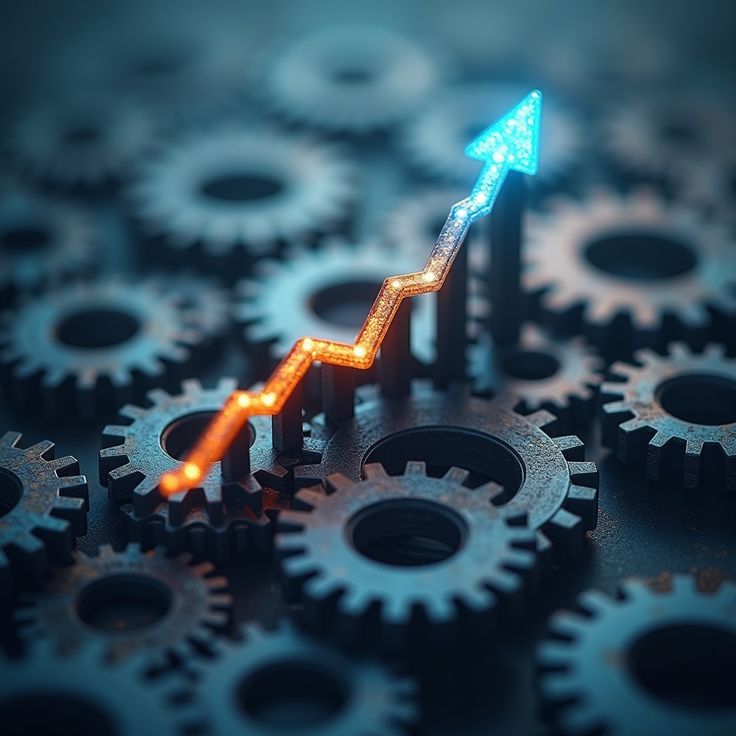
A growth engine is not a marketing channel. It is an interconnected system where each component feeds the next, and the output can be predicted based on the input. It starts with attracting the right attention. That attention is captured and nurtured. Trust is built through consistent value delivery. Interest is converted into decisions. Customers are retained and turned into repeat buyers or referrers. Each stage is designed, measured, and optimized. When one part breaks, the system exposes it immediately. When one part improves, the entire system benefits.
A growth engine allows a business to say: if we put this much in, we will get this much out. That is what makes growth scalable.
The Core Components of a Predictable Growth Engine
A growth engine is built from structure, not inspiration. It requires specific components working in sequence.
- A Defined Ideal Customer
Growth starts with knowing exactly who the business serves. Not a broad market. Not anyone who might buy. A specific person with a specific problem that the business solves better than anyone else. When the ideal customer is clear, messaging becomes precise. Marketing stops trying to appeal to everyone and starts speaking directly to the person most likely to buy. Waste decreases. Conversion increases. Most businesses skip this step because it feels limiting. But clarity does not limit growth. It focuses it.
- A Singular Value Proposition
A value proposition is not a tagline. It is the specific reason someone should choose your business over every alternative, including doing nothing. Most businesses explain what they do. A growth engine explains what someone gets—the outcome, the transformation, the result that matters. If a business cannot articulate its value in one sentence that makes someone want to learn more, its marketing will always underperform.
- A Traffic System That Compounds
Most businesses treat traffic as something to buy every month. Ads run. Traffic comes. Ads stop. Traffic disappears. A growth engine builds traffic assets that compound over time. Organic search content that ranks and drives visitors without ongoing spend. Email lists that grow and can be activated repeatedly. Communities or audiences that expand through referrals and engagement. Paid traffic is not excluded. It is used strategically to accelerate what already works, not to replace what should be built.
- A Lead Capture and Nurture System
Most website traffic leaves and never returns. A growth engine captures visitors who are not ready to buy immediately and continues the conversation until they are. This requires lead magnets that solve a real problem. Email sequences that build trust and move people toward decisions. Retargeting that keeps the business visible while someone considers their options. Lead capture is not about collecting emails. It is about staying connected to people who have expressed interest but need time before they commit.
- A Conversion Process That Does Not Depend on Effort
In most businesses, conversion depends on individual effort. A salesperson follows up manually. A proposal gets written from scratch each time. Calls are scheduled through back and forth emails. A growth engine removes friction from the conversion process. Calendars are integrated so booking happens instantly. Proposals are templated and personalized efficiently. Follow up is automated and consistent. The sales process is documented so it can be trained, replicated, and improved. When conversion requires less effort, more conversions happen.
Measurement That Exposes What Works
A growth engine measures inputs and outputs at every stage. How much traffic is arriving. How many leads are captured. What percentage converts. How much revenue each channel produces. What the cost per customer is. These numbers are not collected to impress anyone. They are used to diagnose where the system leaks and where leverage exists. Without measurement, improvement is guessing.
How to Build a Growth Engine When You Are Starting From Tactics
Most businesses already have tactics running. The work is not to throw everything out. It is to organize what exists into a system and fill the gaps that prevent predictability.
- Map the Current Customer Journey
Start by documenting how a customer actually moves from stranger to buyer in your business today. Where do they first hear about you? What makes them trust you enough to engage? What convinces them to buy? What happens after they buy? This map will expose where the system has gaps. Maybe traffic exists but lead capture does not. Maybe leads are captured but follow up is inconsistent. Maybe conversion happens but only when a specific person is involved. Identifying the gaps is the first step to fixing them.
- Focus on One Bottleneck at a Time
A growth engine is not built overnight. It is built by fixing one constraint at a time. If traffic is strong but conversions are weak, the bottleneck is not more traffic. It is the conversion process. Fix that before spending more on ads. If leads are plentiful but sales are slow, the problem is not lead generation. It is sales infrastructure or offer clarity. Fixing the wrong thing wastes time and money. Fixing the actual constraint produces immediate results.
- Systemize What Already Works
Most businesses have something that works. A referral source that consistently brings in customers. A piece of content that drives traffic. A sales process that closes when executed properly. The mistake is leaving these things as isolated successes instead of turning them into repeatable systems. If referrals work, build a referral program that makes it easier and more consistent. If one piece of content performs, create more like it and build a distribution system around it. If a sales process closes deals, document it so everyone can use it. Repeatable outcomes come from systemized success.
- Build Infrastructure Before Scaling Spend
Pouring money into ads or campaigns before the infrastructure is ready does not accelerate growth. It exposes weaknesses faster. Before increasing spend, make sure the website converts. Make sure leads are captured and nurtured. Make sure follow up happens without reminders. Make sure the sales process is consistent. Infrastructure allows scale. Without it, more effort just creates more chaos.
Why Most Businesses Stay Stuck in Tactic Mode
Building a growth engine requires work that does not produce immediate dopamine. Mapping a customer journey is not as exciting as launching a new campaign. Fixing a broken follow up system is not as visible as posting content. Measuring what actually drives revenue is not as comfortable as celebrating vanity metrics. Most businesses choose the work that feels productive over the work that produces results. But feelings do not create predictability. Systems do.
What Changes When You Have a Growth Engine
When a business operates from a growth engine instead of a pile of tactics, everything becomes clearer.
Marketing spend is no longer a gamble. It is an investment with predictable returns. Growth is no longer dependent on individual effort or motivation. It runs because the system is designed to run.
Hiring becomes easier because new people can be trained on the system instead of reinventing the process. Decision making becomes faster because data shows what works and what does not.
Most importantly, growth stops feeling random. It becomes something the business controls, measures, and scales intentionally.
How Dgazelle Digital Builds Growth Engines for Businesses
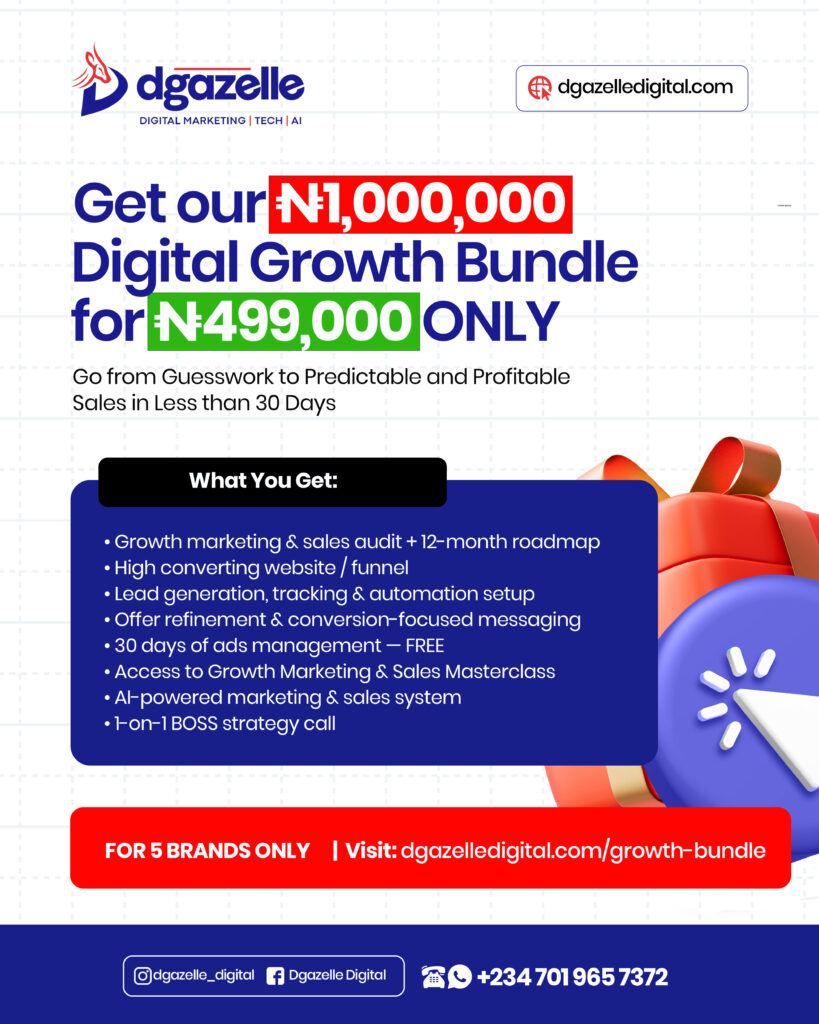
Dgazelle Digital does not help businesses chase tactics. We build growth engines that turn attention into revenue predictably. We map the customer journey, identify where the system breaks, and build the infrastructure that makes growth scalable. Strategy, execution, and measurement work together—not as separate projects, but as one continuous system.
Growth does not have to feel like chaos. When it is engineered properly, it becomes predictable, measurable, and controllable.