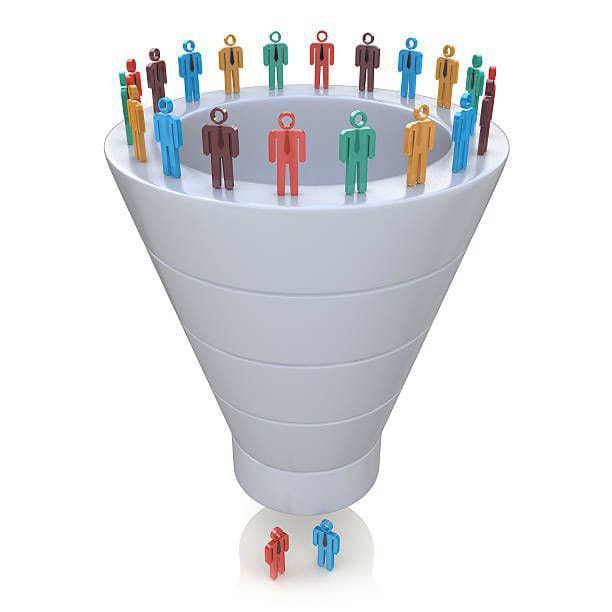
Funnels Are Not Pages — They Are Sales Processes

Most businesses think a funnel is a landing page connected to a thank you page. Someone clicks an ad. They land on a page. They fill out a form. They see a confirmation message. The funnel is complete.

Revenue does not follow. Leads do not convert. The business concludes the funnel did not work and builds a different one. This is what happens when funnels are treated as page templates instead of sales processes.

A funnel is not a design project. It is not a sequence of web pages. It is a structured journey designed to move someone from awareness to decision, with each step engineered to reduce friction and increase commitment. When funnels fail, it is rarely because the pages look wrong. It is because the process was never designed to sell.

What Most Businesses Think Funnels Are

Most businesses use funnels as lead capture mechanisms. A visitor lands on a page. They download a free resource. They enter the email list. The funnel ends. What happens next is either unclear or inconsistent. Some leads get followed up with. Others do not. Some receive a sales email. Others get a newsletter. There is no continuity between the funnel and what happens after it.

This is not a funnel. It is a form with no follow through. A real funnel does not stop at lead capture. It guides someone through awareness, interest, consideration, and decision. Each stage builds on the previous one. Each step moves the prospect closer to buying. When the process is incomplete, the funnel fails regardless of how well the landing page converts.

Why Funnels Fail When Treated as Pages

Building pages is easy. Building a process that converts is not.

  • The Offer Is Not Matched to Awareness Level

Most funnels assume everyone who lands on the page is ready to buy. A cold visitor who has never heard of the business is presented with the same offer as someone who has been researching for weeks. The messaging does not match their stage. The call to action asks for too much commitment too soon. A funnel designed for cold traffic should educate and build trust before asking for a sale. A funnel designed for warm traffic can move faster because the relationship already exists. When the offer does not match awareness level, conversion rates collapse.

  • There Is No Value Ladder

Most businesses ask for the sale immediately. A visitor lands on a page and is told to book a call, request a demo, or buy a high ticket service. If they are not ready, the funnel has nothing else to offer. They leave and never return.

A value ladder moves people through progressively higher commitment steps. A free resource builds trust. A low cost offer qualifies intent. A mid tier product demonstrates value. A high ticket service becomes the obvious next step. Each stage prepares the prospect for the next. Without this progression, most people never reach the final offer.

  • Follow-Up Is Weak or Nonexistent

A funnel that captures a lead and does nothing with it is incomplete. Most businesses send one or two emails after someone opts in, then stop. There is no nurture sequence. No objection handling. No value delivery. The lead goes cold because the system was never built to keep them engaged. A funnel is not just the pages. It is the email sequences, retargeting campaigns, and sales processes that activate after someone enters the system. Without follow up, the funnel leaks.

  • The Process Is Not Tested or Measured

Most funnels are built, launched, and forgotten. Nobody tracks conversion rates at each step. Nobody tests different headlines, offers, or sequences. The funnel either works or it does not, and when it does not, the business builds a new one instead of diagnosing what broke. A funnel is a hypothesis. It should be tested, measured, and improved continuously. Conversion rates reveal where the process works and where it fails. Without measurement, improvement is guessing.

What a Real Funnel Actually Does

A funnel is a sales process translated into automated steps. It qualifies interest. It builds trust. It addresses objections. It moves people from skepticism to conviction. It makes the decision to buy feel natural, not forced. Most importantly, it does this without requiring manual effort at every stage.

  • It Matches the Message to the Market

A funnel starts by speaking directly to the person it is designed to convert. The headline names the problem they have. The copy reflects their current situation. The offer presents the outcome they want. When the message matches the market, the right people recognize themselves immediately. The wrong people filter out. This is not a weakness. It is precision. Broad funnels convert poorly because they try to appeal to everyone. Specific funnels convert well because they speak directly to the person most likely to buy.

  • It Builds Trust Before Asking for Commitment

Trust is not assumed. It is earned through proof, clarity, and value delivery. A funnel provides social proof early. It shares testimonials from people similar to the prospect. It demonstrates outcomes. It answers the question every visitor is asking: does this actually work? Trust is also built by giving value before asking for anything in return. A free resource that solves a real problem proves competence. An email sequence that educates without pitching builds credibility. When trust exists, the ask becomes easier.

  • It Removes Friction From the Decision Process

Every unnecessary step is a place where people drop off. A funnel reduces friction by making each step as simple as possible. Forms ask only for essential information. Calls to action are clear and specific. The path forward is obvious at every stage. If someone has to think too hard about what to do next, they will not do it.

  • It Handles Objections Proactively

Every funnel should anticipate the reasons someone might not buy and address them before they become barriers. If price is an objection, the funnel justifies value early. If credibility is a concern, proof is provided upfront. If timing is uncertain, urgency is created without pressure. Objections that are not addressed kill conversions. A strong funnel eliminates doubt before it derails the decision.

  • It Nurtures Over Time

Not everyone converts on the first interaction. A funnel captures people who are not ready and continues the conversation until they are. Email sequences educate and build trust. Retargeting keeps the offer visible. Sales follow up moves prospects through the final stages. A funnel does not end when someone opts in. It ends when they buy or definitively opt out.

The Stages of a Complete Funnel

A funnel is not one page. It is a series of stages, each with a specific job.

  • Awareness

The prospect becomes aware of a problem or opportunity. The funnel introduces the solution and positions the business as the guide. This stage is about attention and relevance. The message must resonate immediately or the prospect leaves.

  • Interest
    The prospect is interested but not convinced. The funnel provides value, shares proof, and educates without asking for a commitment. Lead magnets, free resources, and educational content belong here. The goal is to capture contact information and build trust.


  • Consideration

The prospect is evaluating options. The funnel addresses objections, demonstrates differentiation, and builds urgency. Case studies, testimonials, comparison content, and product demos work at this stage. The goal is to position the offer as the obvious choice.

  • Decision
    The prospect is ready to act. The funnel removes friction, clarifies the offer, and makes the next step simple. Clear pricing, easy checkout, consultation booking, or direct sales contact happens here. The goal is to convert intent into action.


  • Retention
    The prospect becomes a customer. The funnel continues by delivering value, encouraging repeat purchases, and generating referrals. Onboarding sequences, upsells, cross-sells, and referral programs extend the lifetime value of each customer. A complete funnel does not stop at acquisition. It maximizes the value of every relationship.


How to Build a Funnel That Actually Converts

Building a funnel is not about copying templates. It is about designing a process that matches how decisions are made.

  • Map the Journey Before Building Pages

Start by understanding how someone moves from stranger to customer.
What is the first touchpoint? What questions do they have at each stage? What objections arise? What proof do they need? Once the journey is mapped, the funnel can be designed to match it.

  • Design for One Specific Outcome

A funnel that tries to do too many things converts poorly. Define the single most important action someone should take. Is it booking a call? Purchasing a product? Signing up for a trial? Every element of the funnel should move someone toward that outcome. Anything that distracts gets removed.

  • Test One Variable at a Time

A funnel is never finished. It is continuously tested and improved.
Change one element—headline, offer, call to action—and measure the impact. If conversion improves, keep the change. If it drops, revert. Testing multiple changes at once makes it impossible to know what worked. Testing one variable at a time produces clear insights.

  • Build Follow-Up Into the System

A funnel without follow up is incomplete. Email sequences should be written and automated before the funnel launches. Retargeting campaigns should be set up. Sales processes should be documented. The goal is to ensure every lead that enters the funnel moves through a structured process, not a series of random touchpoints.

  • Measure Conversion at Every Stage

Track how many people enter the funnel, how many complete each step, and where drop off happens. If 1,000 people land on a page and only 50 opt in, the landing page is the problem. If 500 opt in but only 10 buy, the follow up is the problem. Measurement reveals exactly where the funnel breaks so it can be fixed.

Why Most Businesses Build Pages Instead of Processes

Building pages is faster and feels productive. A landing page can be launched in a day. A complete funnel takes weeks to design, build, and test. Most businesses choose speed over structure. But a page without a process behind it is just decoration. It might look professional, but it will not convert consistently.

The businesses that grow are not the ones launching the most funnels. They are the ones building processes that turn attention into revenue predictably.

Funnels Are Systems, Not Templates

A funnel is not something you copy from someone else and expect to work. It is a sales process designed specifically for your market, your offer, and your customer journey. It reflects how decisions are made in your business, not how they are made in someone else’s.

Templates can provide structure, but they cannot replace strategy. If your funnel is not converting, the problem is not the pages. It is the process. And processes can be fixed.
Subscribe To Our Newsletter

Get updates and learn from the best

Share This Post

Do you want more Sales & Qualified Leads?

Hey, I’m Sunday Samuel. At Dgazelle our core focus is to help individuals and business owners grow thier business predictably & profitably. My only question is, will it be yours?

About Dgazelle

We are a full service Digital marketing, Tech & Ai Solutions Company that is registered in Nigeria and the United States. Our story originates from our experience in advertising, marketing, technology and design. Our work is inspired by art, passion, and one simple principle – To consistently deliver excellence to every individual or business we serve

More To Explore

Uncategorized

Funnels Are Not Pages — They Are Sales Processes

Most businesses think a funnel is a landing page connected to a thank you page. Someone clicks an ad. They land on a page. They fill out a form. They see a confirmation message. The funnel is complete. Revenue does not follow. Leads do not convert. The business concludes the funnel did not work and builds a different one. This is what happens when funnels are treated as page templates instead of sales processes. A funnel is not a design project. It is not a sequence of web pages. It is a structured journey designed to move someone from awareness to decision, with each step engineered to reduce friction and increase commitment. When funnels fail, it is rarely because the pages look wrong. It is because the process was never designed to sell. What Most Businesses Think Funnels Are Most businesses use funnels as lead capture mechanisms. A visitor lands on a page. They download a free resource. They enter the email list. The funnel ends. What happens next is either unclear or inconsistent. Some leads get followed up with. Others do not. Some receive a sales email. Others get a newsletter. There is no continuity between the funnel and what happens after it. This is not a funnel. It is a form with no follow through. A real funnel does not stop at lead capture. It guides someone through awareness, interest, consideration, and decision. Each stage builds on the previous one. Each step moves the prospect closer to buying. When the process is incomplete, the funnel fails regardless of how well the landing page converts. Why Funnels Fail When Treated as Pages Building pages is easy. Building a process that converts is not. The Offer Is Not Matched to Awareness Level Most funnels assume everyone who lands on the page is ready to buy. A cold visitor who has never heard of the business is presented with the same offer as someone who has been researching for weeks. The messaging does not match their stage. The call to action asks for too much commitment too soon. A funnel designed for cold traffic should educate and build trust before asking for a sale. A funnel designed for warm traffic can move faster because the relationship already exists. When the offer does not match awareness level, conversion rates collapse. There Is No Value Ladder Most businesses ask for the sale immediately. A visitor lands on a page and is told to book a call, request a demo, or buy a high ticket service. If they are not ready, the funnel has nothing else to offer. They leave and never return. A value ladder moves people through progressively higher commitment steps. A free resource builds trust. A low cost offer qualifies intent. A mid tier product demonstrates value. A high ticket service becomes the obvious next step. Each stage prepares the prospect for the next. Without this progression, most people never reach the final offer. Follow-Up Is Weak or Nonexistent A funnel that captures a lead and does nothing with it is incomplete. Most businesses send one or two emails after someone opts in, then stop. There is no nurture sequence. No objection handling. No value delivery. The lead goes cold because the system was never built to keep them engaged. A funnel is not just the pages. It is the email sequences, retargeting campaigns, and sales processes that activate after someone enters the system. Without follow up, the funnel leaks. The Process Is Not Tested or Measured Most funnels are built, launched, and forgotten. Nobody tracks conversion rates at each step. Nobody tests different headlines, offers, or sequences. The funnel either works or it does not, and when it does not, the business builds a new one instead of diagnosing what broke. A funnel is a hypothesis. It should be tested, measured, and improved continuously. Conversion rates reveal where the process works and where it fails. Without measurement, improvement is guessing. What a Real Funnel Actually Does A funnel is a sales process translated into automated steps. It qualifies interest. It builds trust. It addresses objections. It moves people from skepticism to conviction. It makes the decision to buy feel natural, not forced. Most importantly, it does this without requiring manual effort at every stage. It Matches the Message to the Market A funnel starts by speaking directly to the person it is designed to convert. The headline names the problem they have. The copy reflects their current situation. The offer presents the outcome they want. When the message matches the market, the right people recognize themselves immediately. The wrong people filter out. This is not a weakness. It is precision. Broad funnels convert poorly because they try to appeal to everyone. Specific funnels convert well because they speak directly to the person most likely to buy. It Builds Trust Before Asking for Commitment Trust is not assumed. It is earned through proof, clarity, and value delivery. A funnel provides social proof early. It shares testimonials from people similar to the prospect. It demonstrates outcomes. It answers the question every visitor is asking: does this actually work? Trust is also built by giving value before asking for anything in return. A free resource that solves a real problem proves competence. An email sequence that educates without pitching builds credibility. When trust exists, the ask becomes easier. It Removes Friction From the Decision Process Every unnecessary step is a place where people drop off. A funnel reduces friction by making each step as simple as possible. Forms ask only for essential information. Calls to action are clear and specific. The path forward is obvious at every stage. If someone has to think too hard about what to do next, they will not do it. It Handles Objections Proactively Every funnel should anticipate the reasons someone might not buy and address them before they become barriers. If price is an objection, the funnel justifies value early. If credibility is a concern, proof

Online presence

How Real Businesses Build Traffic Assets Instead of Depending on One Platform

Most businesses rent their audience. They build followings on Instagram, Facebook, LinkedIn, or TikTok. They invest time creating content, engaging with followers, and growing reach. The numbers go up. The business feels momentum. Then the platform changes its algorithm. Organic reach drops. Engagement falls. What used to work stops working. The business scrambles to adapt, posts more content, tries new formats, and watches results stay flat. Or worse—the account gets suspended, the platform shuts down, or the audience simply stops seeing the posts. Everything built on that platform becomes worthless overnight. This is what happens when traffic is rented instead of owned. The Difference Between Renting and Owning Traffic Rented traffic exists on platforms controlled by someone else. Social media followers, YouTube subscribers, podcast listeners on Spotify—these audiences belong to the platform, not the business. The platform decides who sees the content, when they see it, and whether they see it at all. A business can spend years building an audience of 50,000 followers and reach less than 2,000 of them per post. The platform owns the relationship. The business is just a tenant. Owned traffic is different. It lives on infrastructure the business controls. An email list is owned. A blog with organic search traffic is owned. A website with direct visitors is owned. These audiences are not subject to algorithm changes. They do not disappear when a platform changes its terms. They compound over time and provide leverage that rented traffic never will. Why Platform Dependency Is Dangerous Most businesses do not realize how fragile their traffic is until it breaks. Algorithms Change Without WarningPlatforms optimize for their goals, not yours. Facebook prioritizes content from friends and family, not businesses. Instagram favors Reels over static posts. LinkedIn boosts certain types of engagement and buries others. YouTube changes recommendations based on watch time and click-through rates. These changes happen constantly. A strategy that works today might fail tomorrow. Businesses that depend on one platform wake up to discover their reach has been cut in half with no explanation and no recourse. Owned traffic does not have this problem. Search algorithms change, but less frequently and more predictably. Email deliverability can be controlled. Direct traffic is unaffected by external changes.   Accounts Can Be Suspended or BannedPlatform policies are enforced inconsistently and often without appeal. A business posts something flagged by an automated system. The account gets suspended. Appeals go unanswered. Years of work disappear. This is not rare. It happens to businesses that follow the rules but get caught in overly aggressive content moderation. It happens when competitors report accounts maliciously. It happens when platforms make mistakes and offer no way to fix them. A business that depends entirely on one platform is one suspension away from losing its entire audience.   Organic Reach Declines Over TimeEvery major platform has followed the same trajectory. Early adopters get strong organic reach. The platform wants to grow, so it rewards creators with visibility. Businesses build audiences. Growth feels easy. Then the platform matures. Organic reach gets restricted. The business is told that to maintain the same visibility, they need to pay for ads.What was free becomes expensive. What felt like an asset becomes a liability. The Platform Does Not Owe You Anything Businesses treat platform audiences as if they are owned, but they are not. The followers, the reach, the engagement—all of it exists at the discretion of the platform. The terms of service make this clear. The platform can change anything, anytime, for any reason. A business that invests everything into one platform is making a bet that the platform will continue serving its interests. That bet fails more often than it succeeds. What a Traffic Asset Actually Is A traffic asset is a source of visitors that the business owns, controls, and can activate repeatedly without asking permission. It does not depend on algorithm changes. It does not disappear if a platform shuts down. It compounds over time, meaning the effort invested today continues producing results years from now. Organic Search TrafficA blog post that ranks in search engines drives traffic every day without additional effort. Most blog content is written, published, and forgotten. It gets a few views, then disappears. But content optimized for search continues attracting visitors months or years after it was created. This is compounding leverage. One piece of content, created once, drives ongoing traffic. Ten pieces drive more. One hundred pieces become a traffic engine that runs independently of social platforms or paid ads. Organic search is not fast. It takes time to rank. But once content ranks, it delivers consistent traffic without ongoing cost.   Email ListsAn email list is the most valuable owned audience a business can build. It does not depend on an algorithm. It cannot be suspended by a platform. It can be contacted directly, repeatedly, and without restriction. A business with 10,000 email subscribers has more leverage than a business with 100,000 social media followers because the email list can be activated anytime. Every subscriber can be reached. Every message can drive action. Email lists grow through lead magnets, content upgrades, and value exchanges. Once built, they become an asset that produces revenue on demand. Direct Traffic and Brand Recall Direct traffic happens when people type a URL directly into their browser or search for a brand by name. This does not happen by accident. It is the result of consistent brand presence, strong positioning, and repeated exposure. Businesses that invest in brand building create audiences that come directly to them instead of being funneled through third party platforms. This traffic is not dependent on SEO or algorithms. It is driven by recognition and trust. Communities on Owned Platforms A community built on a platform the business does not control is rented. A community built on infrastructure the business owns is an asset. Slack groups, Discord servers, private membership sites—these are owned. Facebook Groups and LinkedIn Communities are not. Owned communities provide direct access to an engaged audience.

Uncategorized

Why More Leads Won’t Fix Your Business (If Your Sales System Is Broken)

Most businesses believe their growth problem is a lead problem. Sales are slower than expected, so the assumption is simple: we need more leads. Marketing spend increases. New campaigns launch. Lead generation becomes the focus. Leads come in. Some convert. Most do not. Revenue increases slightly, but not proportionally to the effort or spend. The business concludes the leads were low quality and decides to find better leads. The cycle repeats. More money is spent. More leads arrive. Conversion stays flat. Frustration builds. The real issue is never addressed because nobody wants to admit it. The problem is not the leads. It is the system that is supposed to convert them. Why Businesses Blame Lead Quality Instead of Sales Systems Blaming leads is easier than fixing infrastructure. If leads are the problem, the solution is external. Find a better source. Target a different audience. Adjust the messaging. These changes feel productive and do not require confronting internal failures. But when the same pattern repeats across multiple lead sources—when Facebook leads do not convert, when Google leads do not convert, when referrals do not convert—the issue is not where the leads come from. It is what happens after they arrive. A broken sales system will waste good leads just as effectively as it wastes bad ones. Pouring more volume into a broken process does not fix the process. It exposes how broken it is. What a Broken Sales System Looks Like Most sales systems are not intentionally designed. They evolve through habit, individual preferences, and reactions to immediate problems. Nobody documented the process. Nobody tested what works. Nobody measured where leads drop off. The system exists, but it was never engineered to convert predictably. Follow-Up Is Inconsistent In most businesses, follow up depends on who handles the lead and whether they remember to do it. Some leads get contacted immediately. Others wait days. Some get multiple follow ups. Others get one message and are abandoned. There is no structure. No timeline. No accountability. Inconsistent follow up is indistinguishable from no follow up. A lead that is not contacted within hours is already less likely to convert. A lead that is contacted once and never again is a wasted opportunity. When follow up depends on effort instead of automation, leads disappear quietly. There Is No Qualification Process Most businesses treat every lead the same. A tire kicker gets the same attention as a serious buyer. Someone researching six months out gets the same urgency as someone ready to purchase today. The sales team spends equal time on people who will never buy and people who are one conversation away from closing. Without qualification, effort is wasted on leads that were never going to convert, and serious buyers do not get the attention they need. A qualification process filters leads based on intent, fit, and timing. It directs resources toward the opportunities most likely to close and removes friction for people who are ready to act. The Sales Process Is Not Documented In most businesses, every salesperson sells differently. One person sends long emails. Another prefers calls. One closes in two conversations. Another takes five. There is no standard process, no proven sequence, no repeatable structure. When the process is not documented, it cannot be trained, measured, or improved. New hires learn by trial and error. High performers cannot scale because their approach is personal, not systematic. Sales becomes dependent on individual talent instead of structural reliability. Objections Are Handled Reactively Most salespeople respond to objections as they arise instead of addressing them proactively. A prospect says the price is too high, and the salesperson defends it. A prospect says they need to think about it, and the salesperson asks when to follow up. A prospect says they are comparing options, and the salesperson waits. These objections are predictable. They come up in nearly every sale. Yet most businesses treat them as obstacles instead of building them into the process. A strong sales system anticipates objections and eliminates them before they become barriers. Pricing is justified upfront. Decision timelines are set early.  Competitive positioning is clear from the start. When objections are addressed proactively, they stop killing deals. Closing Depends on Pressure Instead of Clarity Many sales processes rely on urgency tactics to force decisions. Limited time offers. Scarcity messaging. Persistent follow up designed to wear the prospect down. This might produce short term conversions, but it does not build trust or create repeat customers. People who feel pressured into buying often experience regret and churn quickly. A sales system built on clarity instead of pressure converts better and retains longer. The offer is explained clearly. The value is demonstrated. The decision is made easier, not forced. What Happens When You Add Leads to a Broken System More leads do not fix a broken system. They make the problems more visible. Conversion Rates Stay Flat or Drop If the system converts 10% of leads and volume doubles, revenue increases—but so does waste. Twice as many leads are being mishandled. Twice as many opportunities are lost. The inefficiency scales with the volume. If the system was converting 30% and volume doubles, revenue triples. That is leverage. But most businesses are not converting at 30%. They are converting at single digits, and adding more leads does nothing to change that. The Sales Team Gets Overwhelmed A broken system cannot handle increased volume. When leads double, the sales team works twice as hard. Follow up falls further behind. Response times slow. Quality of interactions drops. Burnout increases. The bottleneck is not the number of leads. It is the structure required to manage them. Adding more volume without fixing the structure just breaks things faster. Cost Per Acquisition Increases More leads cost more money. If conversion rates do not improve, the cost to acquire each customer goes up. A business spending $5,000 on leads that convert at 10% pays $50 per customer. If they double spend to $10,000 and conversion stays at 10%, they are still

Do You Want To Boost Your Business?

drop us a line and keep in touch