10 Website Design Trend that will make your site stand out

Introduction

In today’s digital landscape, the importance of website design cannot be overstated. A visually appealing and user-friendly website has the power to captivate your audience and leave a lasting impression. To help you make your website stand out from the competition, we have compiled a list of 10 standout website design hack that will elevate your online presence and deliver an exceptional user experience.

I. Minimalistic and Clean Design

A. Simplified layouts for enhanced usability

Creating a clutter-free website with simplified layouts not only enhances usability but also allows your content to take center stage. By removing unnecessary elements and focusing on what truly matters, you can guide your visitors effortlessly through your website.

B. Effective utilization of white space

White space, also known as negative space, plays a crucial role in design. By strategically incorporating white space, you can provide visual breathing room, improve readability, and create a sense of elegance and sophistication.

C. Streamlined navigation menus

Streamlining your navigation menus is key to ensuring a seamless user experience. By simplifying and organizing your menu options, you can help visitors find what they need quickly and easily, reducing frustration and increasing engagement.

II. Bold and Vibrant Colors

A. Break away from traditional color schemes

Don’t be afraid to break away from traditional color schemes and experiment with bold and vibrant colors. Vibrant hues can evoke emotions, grab attention, and create a memorable visual experience for your visitors.

B. Utilize contrasting colors for visual impact

Contrasting colors add visual interest and help certain elements stand out. By carefully selecting complementary colors and using them strategically, you can create a visually stunning website that instantly captures attention and enhances the overall design.

C. Incorporate gradients for depth and interest

Gradients have made a comeback in web design and offer a modern and dynamic look. By subtly incorporating gradients into your design, you can add depth and visual interest, elevating the overall aesthetics of your website.

website design trend

Bold and vibrant colour | Image by abdularis on Freepik

III. Micro-interactions and Animations

A. Enhance user experience with subtle animations

Subtle animations, such as hover effects or loading animations, can greatly enhance the user experience by providing visual feedback and guiding visitors through your website. These microinteractions create a sense of interactivity and captivate your audience.

B. Use microinteractions to engage and guide visitors

Microinteractions, like interactive buttons or progress indicators, can engage visitors and guide them through complex processes. By incorporating these small yet impactful interactions, you can make your website more intuitive and enjoyable to navigate.

C. Optimize loading animations for a smoother experience

Loading animations are notorious for frustrating users. Optimizing your loading animations to be seamless and quick can significantly improve the user experience. Nobody likes to wait, so make sure your loading animations are snappy and enhance rather than hinder the overall experience.

IV. Mobile-First Approach

A. Importance of responsive design for mobile devices

In today’s mobile-centric world, a mobile-first approach is essential. Responsive design ensures your website adapts to different screen sizes and delivers a seamless experience across devices. By prioritizing mobile usability, you can reach a wider audience and provide a positive user experience for all.

B. Design strategies specifically for mobile interfaces

Designing specifically for mobile interfaces requires careful attention to detail. Simplifying layouts, optimizing touch targets, and prioritizing key content are just some of the strategies that can enhance mobile usability and ensure your website looks and functions seamlessly on smaller screens.

C. Prioritize mobile usability and functionality

Keeping mobile usability and functionality at the forefront of your design decisions will help you deliver a stellar mobile experience. Consider the limitations of mobile devices and ensure your website is optimized for speed and performance on smartphones and tablets.

V. Interactive User Interfaces

A. Integration of interactive elements for engagement

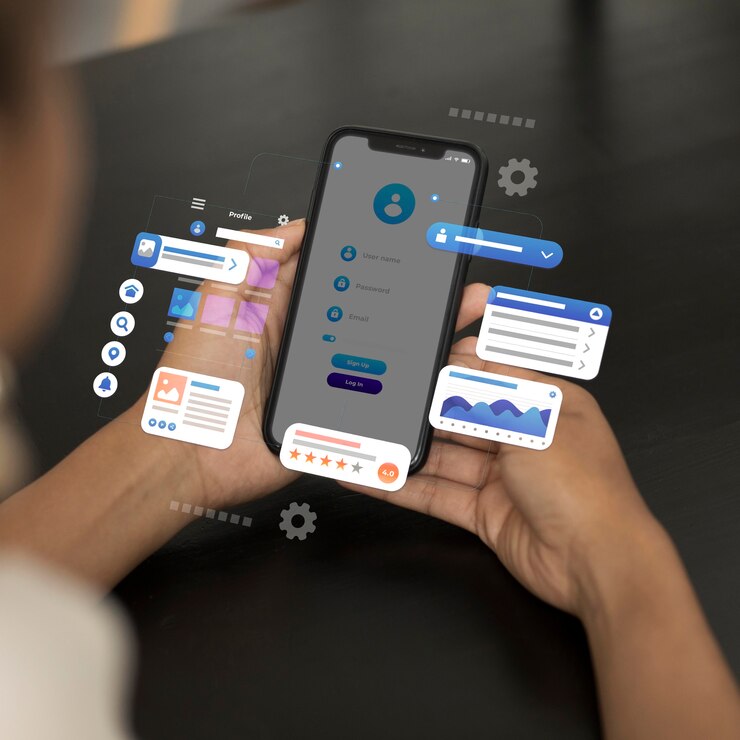
Interactive elements, such as sliders, quizzes, or interactive infographics, can greatly enhance user engagement and make your website more memorable. By allowing users to actively interact with your content, you create a personalized and immersive experience.

B. Employ chatbots and conversational interfaces

Chatbots and conversational interfaces have become increasingly popular in web design. These intelligent systems not only provide instant support and assistance but also create a human-like conversational experience. Incorporating chatbots can improve user satisfaction and streamline communication.

C. Gamify user experiences for increased interactivity

Gamification elements, such as progress bars, badges, or rewards, can transform the user experience into an interactive and addictive journey. By incorporating gamification principles into your website design, you can increase engagement and keep visitors coming back for more.
website design trend

Interactive User interface | Image by Freepik

VI. Typography as a Statement

A. Choose unique fonts for brand identity

Typography goes beyond just choosing a font. By carefully selecting unique fonts that align with your brand identity, you can create a strong visual representation of your brand and leave a lasting impression on your visitors.

B. Experiment with font sizes and spacing

Playing with font sizes and spacing can add visual interest and hierarchy to your content. Experimenting with different font sizes and line spacing enables you to emphasize key messages, guide readers through your content, and enhance overall readability.

C. Typography hierarchy for emphasis and readability

Establishing a clear typography hierarchy is crucial for guiding users’ attention and ensuring readability. By assigning different font weights, styles, and sizes to different content elements, you can create a hierarchy that enhances the overall user experience and makes your content easily scannable.

VII. Parallax Scrolling

A. Create depth and dimension with parallax effects

Parallax scrolling adds depth and dimension to your website by providing a layered effect. This visually stunning technique creates a sense of immersion and captivates visitors, making them more likely to explore your website further.

B. Utilize scrolling to tell a visual story

Scrolling can be used as a narrative tool to tell a visual story. By carefully choreographing the scroll experience and presenting content in a sequential manner, you can guide users through your website and create a memorable storytelling experience.

C. Combine parallax with other design elements

To maximize the impact of parallax scrolling, consider combining it with other design elements. Whether it’s integrating animations, bold colors, or typography, combining parallax with other design trends can create a visually striking and engaging website.

VIII. Video Backgrounds and Hero Images

A. Catch attention with captivating video backgrounds

Video backgrounds instantly capture attention and provide an immersive experience. Incorporating high-quality videos that align with your brand story can create an emotional connection with your audience and leave a lasting impression.

B. Use hero images to communicate your brand story

Hero images, large and visually captivating images, can communicate your brand story in seconds. By carefully selecting hero images that evoke emotions and represent your brand identity, you can instantly engage visitors and leave a lasting impression.

C. Optimize video size and loading time for seamless experience

While video backgrounds and hero images can be visually stunning, it’s crucial to optimize their size and loading time. Large video files can slow down your website, negatively impacting user experience. By compressing videos and optimizing loading times, you can ensure a seamless and enjoyable user experience.

IX. Personalized User Experience

A. Tailor content based on user preferences

Personalization is key to delivering a memorable user experience. By analyzing user data and tailoring content based on individual preferences and behaviors, you can provide a personalized experience that resonates with your visitors.

B. Implement dynamic landing pages for different audiences

Dynamic landing pages allow you to create customized experiences for different audience segments. By creating landing pages that dynamically change content based on user attributes or behavior, you can provide a tailored and relevant experience to each visitor.

C. Leverage user data for personalized recommendations

Leveraging user data can enable you to offer personalized recommendations, such as suggested content, products, or services. By analyzing user behavior and preferences, you can provide targeted recommendations that enhance the user experience and increase the likelihood of conversion.

XI. Summary

A. Recap of the 10 standout design trends

Incorporating these 10 standout website design trend can truly elevate your website and deliver an exceptional user experience. From minimalistic and clean design to bold colors, interactive elements, and personalization, each trend plays a crucial role in shaping a memorable online destination.

B. Importance of combining trends for optimal results

While these design trends are powerful individually, combining them strategically can lead to optimal results. By combining trends such as minimalistic and clean design with interactive user interfaces or bold colors with personalized experiences, you can create a website that truly stands out and captivates your audience.

In conclusion, incorporating these 10 website design trends will help your site stand out and deliver an exceptional user experience. By embracing minimalistic design, bold colors, interactive elements, and personalization, you can stay ahead of the curve and captivate your audience. Implementing these trends requires strategic considerations and meticulous execution, ultimately shaping your website into a memorable online destination.

Your website deserves to be more than just a digital placeholder—it should be a dynamic, interactive hub that engages and delights your visitors. With our proven strategies and cutting-edge design techniques, we’ll transform your website into a powerful tool for growth and success. Don’t settle for mediocrity—let’s unlock the full potential of your website together. Reach out to us now to learn more!

Subscribe To Our Newsletter

Get updates and learn from the best

Share This Post

Do you want more Sales & Qualified Leads?

Hey, I’m Sunday Samuel. At Dgazelle our core focus is to help individuals and business owners grow thier business predictably & profitably. My only question is, will it be yours?

About Dgazelle

We are a full service Digital marketing, Tech & Ai Solutions Company that is registered in Nigeria and the United States. Our story originates from our experience in advertising, marketing, technology and design. Our work is inspired by art, passion, and one simple principle – To consistently deliver excellence to every individual or business we serve

More To Explore

The Difference Between Random Marketing and a Growth System

Most businesses are drowning in marketing activities but starving for actual growth. They’re posting on social media daily.  Running occasional ad campaigns. Sending sporadic emails. Attending networking events. Creating content when they find time. And yet, despite all this effort, growth remains frustratingly inconsistent. The problem isn’t effort. It’s the difference between activities and systems. Activities vs. Systems: What’s the Difference? A marketing activity is a standalone task. It exists in isolation, disconnected from everything else you’re doing. You post on LinkedIn because you know you “should.” You send an email blast because it’s been a while. You create a piece of content because a competitor just did. A growth system is different. It’s a repeatable process where each component serves a specific purpose and connects to the next step. Activities feed into each other, data informs decisions, and every action is designed to move prospects through a predictable journey. Here’s the distinction in practice: Activity thinking: “We need to post more on social media.” Systems thinking: “We need a content distribution system that turns our core expertise into social posts, blog articles, and email sequences that nurture prospects from awareness to consideration to decision.” Activity thinking: “Let’s run some Facebook ads.” Systems thinking: “We need a paid acquisition system with audience testing, conversion tracking, landing page optimization, and automated follow-up that turns ad spend into qualified pipeline.” Activity thinking: “We should start a newsletter.” Systems thinking: “We need an email nurture system that segments subscribers by interest and behavior, delivers value consistently, and identifies sales-ready prospects.” See the difference? Activities are tasks. Systems are engines. Why Random Marketing Fails Random marketing feels productive because you’re busy. Your team is executing. Things are getting done. But busy doesn’t equal effective. Without systems, you face three critical problems: Inconsistency. Results swing wildly month to month because nothing is repeatable. You can’t predict what will work because you’re essentially starting from scratch each time. Wasted effort. Your team spends more time deciding what to do than actually doing it. Without clear processes, every campaign requires extensive planning, debate, and reinvention. No compounding value. Activities don’t build on each other. Last month’s social posts don’t make this month’s easier. Last quarter’s ads don’t inform this quarter’s strategy. You’re constantly spending energy without accumulating assets or insights. This is why so many businesses feel like they’re running on a treadmill. Maximum effort, minimum forward progress. What a Growth System Actually Looks Like A growth system has three essential characteristics: It’s repeatable. You can execute it again and again with consistent quality. Your team knows exactly what to do, when to do it, and how success is measured. New team members can be trained into it. It’s measurable. You track inputs and outputs at every stage. You know what’s working, what isn’t, and where the bottlenecks are. Data drives continuous improvement rather than gut feel. It’s connected. Each component serves the next. Your content strategy feeds your email strategy. Your email strategy feeds your sales process. Your sales feedback informs your content strategy. It’s a closed loop, not a collection of disconnected efforts. Let’s look at a real example. Instead of “doing content marketing,” a growth system might look like this: Every month, you conduct customer interviews to identify the questions prospects ask before buying. These insights become your content calendar. Each piece of content is created in a core long-form format, then systematically repurposed into social posts, email sequences, and sales enablement materials. Every piece includes strategic calls-to-action that move readers to the next step in your funnel. You track which topics drive the most engagement, leads, and revenue, then double down on what works. That’s a system. It’s predictable. It’s scalable. It compounds over time. How to Start Building Your Growth System You don’t need to overhaul everything overnight. Start with one system and get it right before expanding. Audit your current activities. List everything your team is doing for marketing. Social posts, ads, emails, content, events, all of it. Then ask: which of these are systematic and which are random? Choose one area to systematize first. Pick the marketing activity that’s most closely tied to revenue, or the one where you’re already seeing inconsistent results. For many businesses, this is lead nurture or content creation. Document the process. Map out every step from start to finish. Who does what? When does it happen? What tools are used? What does success look like? If you can’t document it, you don’t have a system yet. Measure what matters. Define the key metrics at each stage of your system. Don’t just measure vanity metrics like impressions or followers. Track the actions that indicate progression toward revenue. Iterate based on data. Run your system consistently for at least 90 days before making major changes. Collect data, identify bottlenecks, and make incremental improvements. This is how good systems become great ones. The Bottom Line Random marketing keeps you busy. Growth systems make you successful. Activities give you something to report in meetings. Systems give you predictable pipeline and revenue. The question isn’t whether your team is working hard. The question is whether your marketing is designed to compound or just to fill time. If you’re tired of inconsistent results despite consistent effort, it’s time to stop adding more activities and start building actual systems. Your future growth depends on it.  

Why Most Business Marketing Fails And How to Fix It

Why Most Business Marketing Fails And How to Fix It Most businesses are not struggling because they are lazy or unserious. They are struggling because their marketing is built on assumptions instead of structure. Campaigns are launched. Ads are run. Content is published. Money moves. Yet results feel inconsistent. One month looks promising, the next month feels flat. When growth happens, nobody can clearly explain why. When it disappears, nobody knows what broke. This is what marketing guesswork looks like in practice. Marketing fails when it is driven by activity instead of design. Visibility is chased without a system to convert it. Effort increases, but clarity does not. Growth becomes something the business hopes for rather than something it can predict. If marketing results cannot be explained, they cannot be improved. And if they cannot be improved, they cannot be scaled. Why Most Business Marketing Fails Most marketing fails because it is executed without a clear growth structure. Businesses focus on tactics instead of outcomes, and motion replaces direction. No Clear Marketing Objective Many businesses say they want more leads or more sales, but they never define what success actually means. There is no clear target, no measurable outcome, and no agreed benchmark for performance. Without a defined objective, every campaign feels necessary. Every idea seems worth testing. Marketing becomes experimentation without learning, and effort produces confusion instead of progress. Clear growth begins with precision. If a business cannot define what marketing is responsible for delivering, marketing will fail quietly. Marketing Is Treated as Activity Instead of Infrastructure Most businesses invest in what is visible and ignore what sustains results. Ads are launched without fixing the website.Content is published without a clear conversion path.Leads are generated without a follow up system. Marketing output without infrastructure leaks. Traffic increases, but conversions do not. More effort only exposes the weakness of the system underneath. Real marketing systems answer simple but uncomfortable questions. What happens after someone clicks. What happens if they are not ready to buy today. What happens when the sales team misses a follow up. If these answers depend on memory, reminders, or effort, marketing is already broken. Decisions Are Based on Assumptions Instead of Evidence Many marketing decisions are emotional reactions. Sales slow down, so ads are increased.Engagement drops, so content direction changes.A competitor launches something new, so the business copies it. Without data driven feedback loops, businesses repeat what feels right instead of what works. Campaigns are judged by opinions rather than outcomes. Learning does not happen, so mistakes repeat under different names. Marketing without evidence becomes expensive guessing. Marketing and Sales Are Disconnected In many businesses, marketing and sales operate as separate functions with different goals. Marketing focuses on visibility and leads.Sales focuses on closing revenue. When results fall short, blame moves instead of insight. Leads are considered low quality. Sales is seen as ineffective. The real issue is that the system connecting attention to revenue was never intentionally designed. Predictable growth requires marketing and sales to function as one continuous process, not isolated departments. The Real Cost of Marketing Guesswork Marketing guesswork rarely fails loudly. It fails slowly. Budgets are spent without clarity.Teams work hard without confidence.Revenue becomes unpredictable and difficult to plan around. Over time, leadership loses trust in marketing, not because marketing does not work, but because nobody can explain how it works in that business. When predictability is missing, growth becomes conservative. Businesses stop investing, not due to lack of opportunity, but due to lack of control. How to Fix Marketing That Is Not Working Marketing stops failing when it is designed as a system rather than a collection of tactics. Define a Clear Growth Marketing Strategy Every business needs a documented growth path that explains how attention turns into revenue. This includes who the ideal customer is, what problem moves them to act, what builds trust, and what converts interest into a decision. When this path is clear, marketing execution becomes focused and intentional. Build Systems Before Scaling Effort Traffic does not fix broken systems. It exposes them. Before increasing ad spend or content volume, a business must ensure its website guides action, its lead capture works, its follow up runs without reminders, and its sales process is consistent. Systems reduce dependence on effort. That is what makes scale possible. Measure What Drives Revenue Vanity metrics create comfort, not growth. Marketing performance should be measured by lead quality, conversion rates, customer acquisition cost, and revenue impact. These numbers reveal where growth leaks and where leverage exists. Measurement should be used to diagnose, not to impress. Turn Results Into Repeatable Processes One successful campaign is not growth. Repeatable outcomes are. When something works, it should be documented, analyzed, and systemized. Growth becomes predictable when success is no longer accidental. How Dgazelle Digital Helps Businesses Fix Marketing Failure Dgazelle Digital helps businesses move from random marketing activity to structured growth systems. We design performance driven marketing frameworks that connect strategy, execution, and measurement into one scalable engine. Marketing should not feel like gambling.When it is engineered properly, growth becomes predictable, measurable, and controllable.

Marketing tools
Uncategorized

The Best Marketing Tools Every Business Owner in 2025 Should Be Using to Grow Fast

You do not need to use every tool. The right approach is to look at your current stage and biggest bottleneck. If you lack leads, focus on CRM and ads. If you have traffic but no conversions, focus on email marketing and funnels. If you already have customers but low retention, focus on CRM and analytics. Choose tools based on your problem, not on hype.

Do You Want To Boost Your Business?

drop us a line and keep in touch