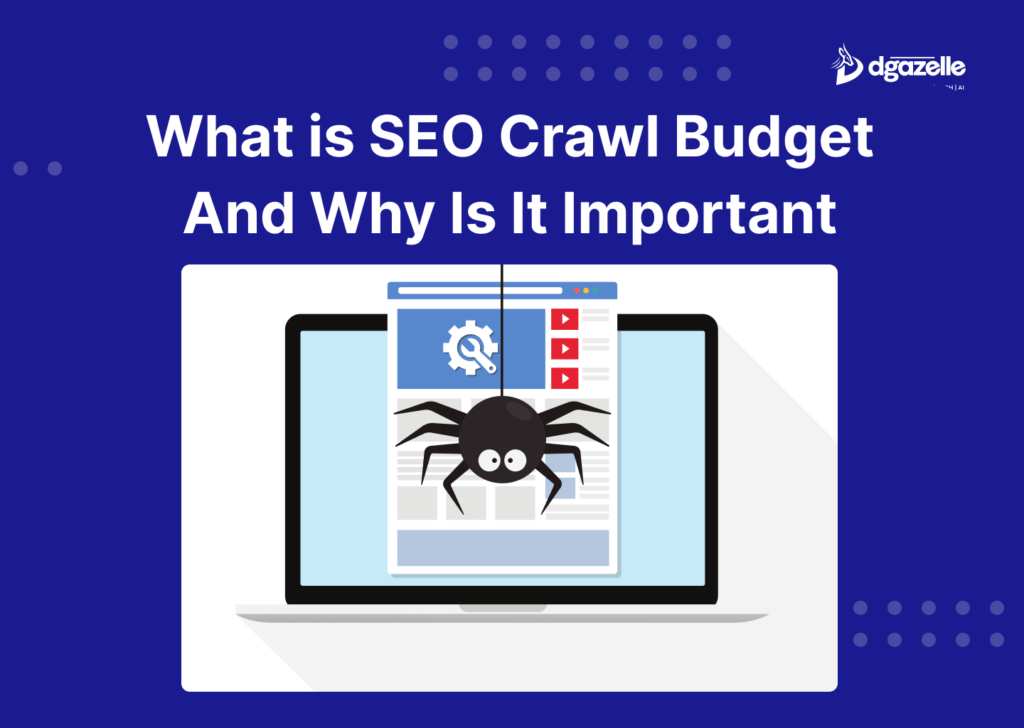
What is SEO Crawl Budget And Why Is It Important

Understanding your website’s SEO crawl budget is crucial, especially for business owners in Nigeria looking to boost their online presence. In simple terms, crawl budget is the number of URLs on your website that search engines like Google will discover and crawl within a specific time frame. Once that quota is met, the search engine moves on to other sites.

Here’s the thing: with billions of websites on the internet, search engines have limited resources. They can’t check every single site every day, so they prioritize which pages to crawl and when. This means that if your site isn’t optimized, important pages might not be indexed quickly or at all, potentially impacting your search rankings.

For Nigerian businesses, ensuring that search engines efficiently crawl your site can lead to faster discovery of new content and improved visibility in search results. At Dgazelle, we understand the unique challenges and opportunities of the Nigerian market. That’s why our web design services not only focus on creating visually appealing and user-friendly websites but also incorporate best SEO practices. By designing your site with a clear crawl structure and optimized content, we help ensure that search engines find and index your pages effectively—giving your business the competitive edge it needs in the digital space.

Before diving into the strategies that search engines use to decide what to crawl, let’s explore why managing your crawl budget is so vital for your site’s overall SEO success.

Why is SEO Crawl Budget Important for your website?

For your website to rank in Google’s search results, it first needs to be crawled and then indexed. This process allows Google to discover and store data about your pages, ultimately impacting their visibility. If something goes wrong with these processes, your content may never appear in search results.

When Google’s web crawlers visit your site, they go through several steps: crawling pages, fetching data, storing it, and sending it back to the index. The efficiency of this process plays a significant role in your search rankings and can directly affect your organic traffic—ultimately impacting your business goals.

For most website owners, crawl budget isn’t a major concern because Google is generally efficient at crawling sites. However, there are specific scenarios where understanding crawl budget becomes crucial for SEO performance:

  1. Your site is large: If you have a large, complex website (especially with 10,000+ pages), Google may struggle to crawl every page. In such cases, Google might not discover new pages immediately or might not recrawl older pages frequently.
  2. You add lots of new pages: Regularly adding new content, such as blog posts or product pages, means your crawl budget needs to keep up. Without proper management, some of your new pages may not get indexed or appear in search results.
  3. Your site has technical issues: Crawlability issues, like broken links, slow load times, or improperly configured sitemaps, can prevent Google from efficiently crawling your site. This means important pages may be missed entirely, hurting your SEO performance.

For Nigerian business owners, optimizing crawl budget is a way to ensure that your site remains competitive in search results, especially in a fast-growing digital market like Nigeria. At Dgazelle, we specialize in creating websites that not only look great but are technically sound to ensure efficient crawling by search engines. Our web design services focus on resolving potential crawlability issues and structuring your site for optimal performance. This means your content is more likely to rank higher, bringing you more visibility and ultimately driving business growth.

By managing crawl budget effectively, you can ensure your content is indexed promptly, which leads to better search engine visibility and more organic traffic—vital for your business’ success in today’s competitive online landscape.

How Does Google Determine Crawl Budget?

Google determines your website’s crawl budget based on two primary factors: Crawl Demand and Crawl Capacity Limit. Understanding these factors can help Nigerian business owners optimize their site for better SEO performance.

Optimize your site’s performance today with Dgazelle! Our expert web design services ensure better crawl efficiency and faster load times. Get in touch now!

1. Crawl Demand

Crawl demand is how often Googlebot crawls your site, and it’s influenced by three key elements:

  • Perceived Inventory: Google aims to crawl as many pages as possible on your site, unless you specify otherwise. If you don’t explicitly tell Google to skip duplicate pages or content you’ve removed (using tools like robots.txt or 404/410 HTTP status codes), Googlebot may still attempt to crawl them.
  • Popularity: Pages with more backlinks (links from other websites) and higher traffic signals to Google that they’re more important. This boosts their crawl frequency, meaning Googlebot will crawl these pages more often to ensure they’re up-to-date.
  • Staleness: Google crawls fresh content more frequently to ensure it’s up-to-date. If your content doesn’t change much, Google may crawl it less often. For example, news websites, which update frequently, have high crawl demand. However, it’s important to note that content quality is more important than frequent, irrelevant changes. Google prioritizes well-written, high-quality content over frequent updates with little value.

2. Crawl Capacity Limit

Crawl capacity refers to how much Googlebot can crawl before your site’s performance is impacted. This is mainly determined by your website’s health and Google’s own crawling limits.

  • Your Site’s Crawl Health: The faster your site responds to Google’s requests, the higher your crawl capacity limit will be. This means Googlebot can crawl more pages within a given time. On the other hand, slow response times or server errors can reduce your crawl capacity, causing Google to crawl your site less frequently.

For Nigerian business owners, it’s essential to maintain a healthy website to ensure smooth crawling. At Dgazelle, we prioritize website speed, server reliability, and SEO best practices to help ensure your site is easy for Googlebot to crawl, keeping your crawl budget intact.

By understanding and managing these two factors, you can ensure that Google crawls your website efficiently, leading to faster indexing and improved SEO performance. This, in turn, can lead to higher search rankings and more organic traffic, helping your business thrive online.

Why Should You Care About Crawl Budget?

For Nigerian business owners aiming to enhance their online presence, understanding and optimizing crawl budget is essential. Here’s why:

You want search engines like Google to find and understand as many of your indexable pages as possible. When you add new content or update existing pages, it’s crucial that search engines pick them up quickly. The sooner they’re indexed, the sooner you can start benefiting from that content through organic search traffic.

However, if you’re not managing your crawl budget efficiently, Googlebot may waste time crawling unnecessary pages, leaving your important content undiscovered. If Google doesn’t know about your key pages, they won’t crawl and index them. This results in missed opportunities to attract visitors to those pages through search engines, which can severely impact your business’ SEO performance.

Wasting crawl budget hurts your SEO, as search engines may not prioritize your essential pages, affecting your site’s ranking and visibility.

But don’t worry—crawl budget management becomes particularly important if you have a large website (e.g., 10,000+ pages). For smaller sites, it’s typically not as big of a concern. Regardless, optimizing your crawl budget is a smart move for businesses of all sizes aiming for strong online visibility.

Let Dgazelle help you create a website that’s built for search engines and users. Contact us for a strategy session!

Tips for Crawl Budget Optimization

  • Improve Site Speed
    Faster sites allow Google to crawl more pages. Optimize images, minimize code, and use a CDN to boost speed.
  • Strategic Internal Linking
    Link important pages from your homepage and across your site to help Google find and prioritize them.
  • Update Your Sitemap
    Keep your XML sitemap current so Google knows which pages to prioritize for crawling.
  • Block Unwanted URLs
    Use the robots.txt file to prevent Google from crawling unimportant pages and save crawl budget.
  • Remove Redirects
    Avoid redirect chains, as they slow down crawling. Fix or remove unnecessary redirects.
  • Fix Broken Links
    Broken links waste crawl budget. Identify and fix them to ensure efficient crawling.
  • Eliminate Duplicate Content
    Duplicate pages confuse Google and waste crawl budget. Use canonical tags or redirects to manage similar content.

Conclusion

Regularly optimizing your site’s technical aspects ensures web crawlers can efficiently find your content, which is essential for ranking in search results. By using tools like Semrush’s Site Audit, you can monitor your site’s health and address errors before they impact performance. This proactive approach helps you maximize your crawl budget, improve SEO, and ultimately boost your site’s visibility.

Maximize your crawl budget with a high-performance website from Dgazelle. Our team ensures your site’s technical health and SEO success. Schedule a consultation today!
Subscribe To Our Newsletter

Get updates and learn from the best

Share This Post

Do you want more Sales & Qualified Leads?

Hey, I’m Sunday Samuel. At Dgazelle our core focus is to help individuals and business owners grow thier business predictably & profitably. My only question is, will it be yours?

About Dgazelle

We are a full service Digital marketing, Tech & Ai Solutions Company that is registered in Nigeria and the United States. Our story originates from our experience in advertising, marketing, technology and design. Our work is inspired by art, passion, and one simple principle – To consistently deliver excellence to every individual or business we serve

More To Explore

Online presence

How Real Businesses Build Traffic Assets Instead of Depending on One Platform

Most businesses rent their audience. They build followings on Instagram, Facebook, LinkedIn, or TikTok. They invest time creating content, engaging with followers, and growing reach. The numbers go up. The business feels momentum. Then the platform changes its algorithm. Organic reach drops. Engagement falls. What used to work stops working. The business scrambles to adapt, posts more content, tries new formats, and watches results stay flat. Or worse—the account gets suspended, the platform shuts down, or the audience simply stops seeing the posts. Everything built on that platform becomes worthless overnight. This is what happens when traffic is rented instead of owned. The Difference Between Renting and Owning Traffic Rented traffic exists on platforms controlled by someone else. Social media followers, YouTube subscribers, podcast listeners on Spotify—these audiences belong to the platform, not the business. The platform decides who sees the content, when they see it, and whether they see it at all. A business can spend years building an audience of 50,000 followers and reach less than 2,000 of them per post. The platform owns the relationship. The business is just a tenant. Owned traffic is different. It lives on infrastructure the business controls. An email list is owned. A blog with organic search traffic is owned. A website with direct visitors is owned. These audiences are not subject to algorithm changes. They do not disappear when a platform changes its terms. They compound over time and provide leverage that rented traffic never will. Why Platform Dependency Is Dangerous Most businesses do not realize how fragile their traffic is until it breaks. Algorithms Change Without WarningPlatforms optimize for their goals, not yours. Facebook prioritizes content from friends and family, not businesses. Instagram favors Reels over static posts. LinkedIn boosts certain types of engagement and buries others. YouTube changes recommendations based on watch time and click-through rates. These changes happen constantly. A strategy that works today might fail tomorrow. Businesses that depend on one platform wake up to discover their reach has been cut in half with no explanation and no recourse. Owned traffic does not have this problem. Search algorithms change, but less frequently and more predictably. Email deliverability can be controlled. Direct traffic is unaffected by external changes.   Accounts Can Be Suspended or BannedPlatform policies are enforced inconsistently and often without appeal. A business posts something flagged by an automated system. The account gets suspended. Appeals go unanswered. Years of work disappear. This is not rare. It happens to businesses that follow the rules but get caught in overly aggressive content moderation. It happens when competitors report accounts maliciously. It happens when platforms make mistakes and offer no way to fix them. A business that depends entirely on one platform is one suspension away from losing its entire audience.   Organic Reach Declines Over TimeEvery major platform has followed the same trajectory. Early adopters get strong organic reach. The platform wants to grow, so it rewards creators with visibility. Businesses build audiences. Growth feels easy. Then the platform matures. Organic reach gets restricted. The business is told that to maintain the same visibility, they need to pay for ads.What was free becomes expensive. What felt like an asset becomes a liability. The Platform Does Not Owe You Anything Businesses treat platform audiences as if they are owned, but they are not. The followers, the reach, the engagement—all of it exists at the discretion of the platform. The terms of service make this clear. The platform can change anything, anytime, for any reason. A business that invests everything into one platform is making a bet that the platform will continue serving its interests. That bet fails more often than it succeeds. What a Traffic Asset Actually Is A traffic asset is a source of visitors that the business owns, controls, and can activate repeatedly without asking permission. It does not depend on algorithm changes. It does not disappear if a platform shuts down. It compounds over time, meaning the effort invested today continues producing results years from now. Organic Search TrafficA blog post that ranks in search engines drives traffic every day without additional effort. Most blog content is written, published, and forgotten. It gets a few views, then disappears. But content optimized for search continues attracting visitors months or years after it was created. This is compounding leverage. One piece of content, created once, drives ongoing traffic. Ten pieces drive more. One hundred pieces become a traffic engine that runs independently of social platforms or paid ads. Organic search is not fast. It takes time to rank. But once content ranks, it delivers consistent traffic without ongoing cost.   Email ListsAn email list is the most valuable owned audience a business can build. It does not depend on an algorithm. It cannot be suspended by a platform. It can be contacted directly, repeatedly, and without restriction. A business with 10,000 email subscribers has more leverage than a business with 100,000 social media followers because the email list can be activated anytime. Every subscriber can be reached. Every message can drive action. Email lists grow through lead magnets, content upgrades, and value exchanges. Once built, they become an asset that produces revenue on demand. Direct Traffic and Brand Recall Direct traffic happens when people type a URL directly into their browser or search for a brand by name. This does not happen by accident. It is the result of consistent brand presence, strong positioning, and repeated exposure. Businesses that invest in brand building create audiences that come directly to them instead of being funneled through third party platforms. This traffic is not dependent on SEO or algorithms. It is driven by recognition and trust. Communities on Owned Platforms A community built on a platform the business does not control is rented. A community built on infrastructure the business owns is an asset. Slack groups, Discord servers, private membership sites—these are owned. Facebook Groups and LinkedIn Communities are not. Owned communities provide direct access to an engaged audience.

Uncategorized

Why More Leads Won’t Fix Your Business (If Your Sales System Is Broken)

Most businesses believe their growth problem is a lead problem. Sales are slower than expected, so the assumption is simple: we need more leads. Marketing spend increases. New campaigns launch. Lead generation becomes the focus. Leads come in. Some convert. Most do not. Revenue increases slightly, but not proportionally to the effort or spend. The business concludes the leads were low quality and decides to find better leads. The cycle repeats. More money is spent. More leads arrive. Conversion stays flat. Frustration builds. The real issue is never addressed because nobody wants to admit it. The problem is not the leads. It is the system that is supposed to convert them. Why Businesses Blame Lead Quality Instead of Sales Systems Blaming leads is easier than fixing infrastructure. If leads are the problem, the solution is external. Find a better source. Target a different audience. Adjust the messaging. These changes feel productive and do not require confronting internal failures. But when the same pattern repeats across multiple lead sources—when Facebook leads do not convert, when Google leads do not convert, when referrals do not convert—the issue is not where the leads come from. It is what happens after they arrive. A broken sales system will waste good leads just as effectively as it wastes bad ones. Pouring more volume into a broken process does not fix the process. It exposes how broken it is. What a Broken Sales System Looks Like Most sales systems are not intentionally designed. They evolve through habit, individual preferences, and reactions to immediate problems. Nobody documented the process. Nobody tested what works. Nobody measured where leads drop off. The system exists, but it was never engineered to convert predictably. Follow-Up Is Inconsistent In most businesses, follow up depends on who handles the lead and whether they remember to do it. Some leads get contacted immediately. Others wait days. Some get multiple follow ups. Others get one message and are abandoned. There is no structure. No timeline. No accountability. Inconsistent follow up is indistinguishable from no follow up. A lead that is not contacted within hours is already less likely to convert. A lead that is contacted once and never again is a wasted opportunity. When follow up depends on effort instead of automation, leads disappear quietly. There Is No Qualification Process Most businesses treat every lead the same. A tire kicker gets the same attention as a serious buyer. Someone researching six months out gets the same urgency as someone ready to purchase today. The sales team spends equal time on people who will never buy and people who are one conversation away from closing. Without qualification, effort is wasted on leads that were never going to convert, and serious buyers do not get the attention they need. A qualification process filters leads based on intent, fit, and timing. It directs resources toward the opportunities most likely to close and removes friction for people who are ready to act. The Sales Process Is Not Documented In most businesses, every salesperson sells differently. One person sends long emails. Another prefers calls. One closes in two conversations. Another takes five. There is no standard process, no proven sequence, no repeatable structure. When the process is not documented, it cannot be trained, measured, or improved. New hires learn by trial and error. High performers cannot scale because their approach is personal, not systematic. Sales becomes dependent on individual talent instead of structural reliability. Objections Are Handled Reactively Most salespeople respond to objections as they arise instead of addressing them proactively. A prospect says the price is too high, and the salesperson defends it. A prospect says they need to think about it, and the salesperson asks when to follow up. A prospect says they are comparing options, and the salesperson waits. These objections are predictable. They come up in nearly every sale. Yet most businesses treat them as obstacles instead of building them into the process. A strong sales system anticipates objections and eliminates them before they become barriers. Pricing is justified upfront. Decision timelines are set early.  Competitive positioning is clear from the start. When objections are addressed proactively, they stop killing deals. Closing Depends on Pressure Instead of Clarity Many sales processes rely on urgency tactics to force decisions. Limited time offers. Scarcity messaging. Persistent follow up designed to wear the prospect down. This might produce short term conversions, but it does not build trust or create repeat customers. People who feel pressured into buying often experience regret and churn quickly. A sales system built on clarity instead of pressure converts better and retains longer. The offer is explained clearly. The value is demonstrated. The decision is made easier, not forced. What Happens When You Add Leads to a Broken System More leads do not fix a broken system. They make the problems more visible. Conversion Rates Stay Flat or Drop If the system converts 10% of leads and volume doubles, revenue increases—but so does waste. Twice as many leads are being mishandled. Twice as many opportunities are lost. The inefficiency scales with the volume. If the system was converting 30% and volume doubles, revenue triples. That is leverage. But most businesses are not converting at 30%. They are converting at single digits, and adding more leads does nothing to change that. The Sales Team Gets Overwhelmed A broken system cannot handle increased volume. When leads double, the sales team works twice as hard. Follow up falls further behind. Response times slow. Quality of interactions drops. Burnout increases. The bottleneck is not the number of leads. It is the structure required to manage them. Adding more volume without fixing the structure just breaks things faster. Cost Per Acquisition Increases More leads cost more money. If conversion rates do not improve, the cost to acquire each customer goes up. A business spending $5,000 on leads that convert at 10% pays $50 per customer. If they double spend to $10,000 and conversion stays at 10%, they are still

Uncategorized

Your Website Is Either a Sales System or a Very Expensive Flyer

Most business websites are beautifully designed monuments to wasted potential. They load fast. They look professional. They have clean layouts, carefully chosen fonts, and polished images. Leadership is proud of them. The design team won a project. Everyone agrees the site looks credible. But credibility is not conversion. When measured against the only metric that actually matters—how many visitors become customers—most websites fail completely. They do not guide decisions. They do not capture leads. They do not address objections. They do not make the next step obvious. They exist, they inform, and they let traffic leave without ever attempting to convert it. A website that does not sell is not an asset. It is an expensive flyer that cost thousands of dollars to produce and produces nothing in return. What Most Websites Actually Do Most websites are built to satisfy internal stakeholders, not external buyers. The executive team wants the brand to look premium, so aesthetics become the priority. The product team wants every feature listed, so pages become cluttered with details. The marketing team wants to rank for every keyword, so messaging becomes generic enough to apply to everyone. The result is a website that tries to be everything and ends up converting no one effectively. Visitors arrive with specific intent. They have a problem. They are looking for a solution. They scan the homepage for five seconds to determine if this business can help them. If the answer is not immediately obvious, they leave. No second chance. No follow up. No conversion. A website that does not answer the visitor’s question within seconds is failing at its only job. The Difference Between a Flyer and a Sales System A flyer delivers information. A sales system guides decisions.  A flyer explains what a business does. A sales system explains what a customer gets. A flyer looks good sitting on a desk. A sales system converts visitors into leads and leads into buyers. Most websites are flyers. They describe the business, list the services, include an about page, and provide a contact form. This might feel complete, but it does nothing to move someone from curiosity to commitment. A sales system website is built with one clear purpose: turn visitors into customers. Every page has a specific job. Every headline moves the visitor closer to a decision. Every call to action matches where the visitor is in their journey. If your website does not do this, it is not a sales tool. It is decoration. Where Websites Fail as Sales Systems Most websites do not fail because they are ugly. They fail because they were never designed to sell. The Homepage Does Not Clarify Anything Homepages are often treated as introductions. They describe what the business does, share the company mission, list awards or achievements. This satisfies the internal team but confuses the visitor. A visitor does not care about your mission statement. They care about whether you can solve their problem. If the homepage does not immediately answer who this is for and what outcome they can expect, the visitor leaves. A homepage is not a biography. It is a filter. It should make the right visitor feel like they are in exactly the right place and tell them exactly what to do next. There Is No Clear Path to Conversion Many websites present information but never direct action. A visitor reads about the services. They scroll through testimonials. They check out the portfolio. Then they close the tab, because the site never told them what to do. Conversion does not happen by accident. It happens when the next step is frictionless and obvious. If a visitor has to search for how to move forward, most of them will not bother. Every page should have one primary call to action. Not five options. One clear next step. The Offer Is Hidden or Confusing Most websites explain what they do but never clarify what someone actually gets. Services are listed in vague categories. Features are mentioned without context. The visitor is expected to translate how those services solve their specific problem. That translation rarely happens. People do not buy services. They buy outcomes. If your website does not make the transformation clear—what changes, what improves, what gets solved—visitors will not understand why they should act. Objections Are Ignored Every visitor has doubts. Is this business credible? Will this actually work? What if it does not? How long will this take? What does this cost? Most websites ignore these questions and hope the visitor will ask them later. They will not. They will leave and find a competitor who addressed the objections upfront. A sales system website anticipates doubt and eliminates it before it becomes a barrier. Proof is included. Guarantees are stated. Process is explained. Pricing is transparent. When objections are not addressed, they become reasons not to buy. There Is No Lead Capture for People Who Are Not Ready Most websites treat every visitor as if they are ready to purchase immediately. But most people are not. They are researching. Comparing options. Considering whether the timing is right. If the website does not capture their information, they leave and never return. A lead magnet, a downloadable resource, a free consultation—these are not optional. They are the infrastructure that keeps the business connected to visitors who need more time before they commit. Without lead capture, the website leaks opportunity. What a Sales System Website Actually Does A sales system website is not about looking impressive. It is about converting visitors predictably. It speaks directly to the ideal customer and makes them feel understood immediately. It presents the offer as the obvious solution to a problem they already have. It addresses objections before they are voiced. It builds trust through proof, clarity, and transparency. Most importantly, it makes the next step so clear and so simple that taking action feels easier than leaving. It Starts With One Clear Message A sales system website does not try to speak to everyone.

Do You Want To Boost Your Business?

drop us a line and keep in touch