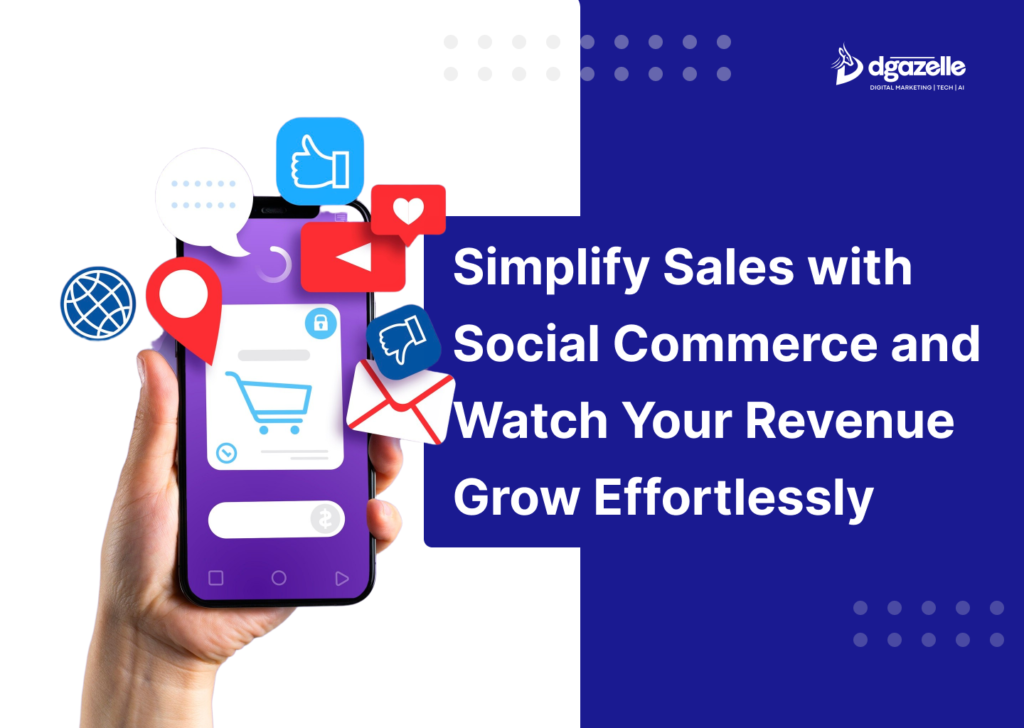
Simplify Sales with Social Commerce and Watch Your Revenue Grow Effortlessly

In October 2021, Li Jiaqi and Viya, two of China’s most famous live-streamers, sold a staggering $3.1 billion worth of items—nearly three times the sales average for Amazon. This jaw-dropping figure shows the power of social commerce, a rapidly growing trend that is changing how people shop online.

Social commerce is all about using social media platforms to generate revenue for your eCommerce business. Whether you like it or not, online shopping is the new normal. Social commerce is transforming how users shop and is projected to grow by $1.2 trillion globally by 2025.

In Nigeria, where social media usage continues to soar, social commerce offers an incredible opportunity for business owners to reach a wider audience. Small enterprises are now able to connect with more customers than ever before, boosting their sales effortlessly.

In this article, we’ll explain how social commerce works and how you can leverage it to grow your eCommerce revenue.

What is Social Commerce?

Let’s start with what social commerce is not. It’s not just about promoting your products on social media and driving potential buyers to your website. That’s traditional social media marketing.

Modern-day social commerce takes things further by bringing the entire shopping journey onto social media. In other words, social commerce allows customers to discover, learn about, and purchase products without ever leaving their favorite social platforms. This seamless experience keeps customers engaged and boosts sales by reducing the friction of switching between apps.

Here’s how a typical social commerce buying experience works:

  • A shopper logs into their favorite social media app.
  • They discover your product through engaging posts, stories, videos, or other interactive elements.
  • Without leaving the app, they buy the product right then and there.

While likes, shares, and comments measure engagement, true social commerce success is about revenue. The better you are at selling in-app, the more your profits grow.

This approach is especially powerful in Nigeria, where social media usage is booming, making it an essential strategy for business owners looking to simplify sales and grow revenue effortlessly.

Ecommerce vs. Social Commerce

Ecommerce and social commerce are often confused, but they serve different purposes in the online shopping journey.

Ecommerce refers to internet shopping through a website or branded app like Amazon, eBay, or Jumia. Shoppers visit these platforms via desktop or mobile, browse products, and complete purchases. It relies heavily on traditional digital marketing strategies like ads and email campaigns to drive traffic to the site.

On the other hand, social commerce is an evolved version of ecommerce influenced by how social media impacts buying decisions. It keeps the entire shopping experience within the social platform itself. From product discovery to checkout, everything happens in-app, making the journey seamless and efficient.

One of the key differences lies in the purchasing process. Ecommerce often involves multiple steps, increasing the chances of cart abandonment. In contrast, social commerce eliminates unnecessary steps, allowing customers to purchase instantly through social media. This streamlined experience reduces friction, leading to higher conversion rates.

Save time and grow your business while we create engaging content that resonates with your audience. Get started today!

Why is social commerce important?

With over 4.5 billion social media users globally, social commerce is expanding at a pace faster than traditional eCommerce, indicating a shift in consumer purchasing behavior toward more integrated social experiences​​.

The growth is largely fueled by the creator economy, where influencers have become pivotal in shaping purchasing decisions, especially among Millennials and Gen Z, who are increasingly using social media for shopping inspiration and transactions​​. This shift represents not just a change in how people shop but where and who they trust, making social commerce a critical focus for modern eCommerce strategies.

Emerging Social Commerce Trends

Staying ahead in social commerce means embracing trends that resonate with your audience. Here are two emerging trends that are shaping the future of social selling:

1. Live Stream Commerce

Livestream shopping is revolutionizing the way people shop online. Influencers and brands are now going live on social media to showcase products in real time. From try-on hauls to product demonstrations, livestreams allow potential buyers to see products in action, ask questions, and make purchases without leaving the app. This interactive shopping experience boosts customer engagement and drives sales.

Although live stream shopping originated in China, it’s rapidly gaining popularity worldwide. For instance, Facebook introduced Live Shopping Fridays, featuring renowned brands like Sephora. In Nigeria, this trend is catching on as local influencers use Instagram and TikTok live sessions to promote products, making it a powerful strategy for reaching younger audiences.

2. Augmented Reality (AR)

AR is changing the way customers experience products online. It allows users to virtually “try on” items or visualize how products would look in real-life settings. For example, shoppers can see how furniture fits in their homes or how makeup shades complement their skin tones—all through their smartphones.

Leading platforms like Snapchat and Pinterest are leveraging AR to enhance shopping experiences. In Nigeria, this presents a unique opportunity for fashion and beauty brands to offer virtual try-ons, increasing buyer confidence and reducing return rates.

By integrating these trends into your social commerce strategy, you can enhance customer experiences, boost engagement, and ultimately grow your revenue effortlessly.

Free up your schedule and watch your brand thrive with our strategic social media management. Contact us now to learn more!

Best Social Commerce Platforms

Social commerce thrives on platforms where users actively engage with content and discover products organically. Here’s a breakdown of the top social commerce platforms and how they can boost your sales:

1. Facebook

Facebook ranks as the leading social commerce platform, with nearly 74% of shoppers discovering new products here. Its seamless shopping experience is powered by Facebook Shops, which allows businesses to create an online store for free. Users can purchase directly through the app or be redirected to your website. You can also create collections, tag products in posts, and run targeted ads to reach potential buyers. If you’re using Wix, you can link it to your Facebook Shop for unified inventory management.

2. Instagram

Instagram is ideal for visually-driven marketing, ranking as the second-most popular social commerce platform in the U.S. with 32.4 million buyers. Its integration with Facebook Shop allows for a unified selling experience. Instagram offers features like Shoppable Ads, Stories, Videos, and Reels, which let users purchase products without leaving the app. The Instagram Drops feature also creates hype around limited-edition products.

3. TikTok

TikTok is a rising star in social commerce, known for its powerful influence on buying decisions. Hashtags like #TikTokMadeMeBuyIt have billions of views, and the platform offers in-app purchases, live shopping, and shoppable ads. Brands leveraging Hashtag Challenge Plus Ads can create buzz around their products, driving massive engagement and sales.

Tips for Building a Successful Social Commerce Strategy

  1. Choose the Right Platforms: Focus on platforms that align with your target audience’s demographics instead of being on every social media channel.
  2. Choose the Right Products: Social commerce works best for products like apparel, electronics, and cosmetics that are impulse buys. For longer purchase journeys, use it to maintain brand awareness.
  3. Be Authentic: Avoid hard sells. Use a conversational, relatable tone that feels genuine and engaging, making your brand approachable and personable.
  4. Actively Listen: Monitor customer interactions, respond quickly, and encourage reviews. Maintain consistent attention and responsiveness across all channels.

Conclusion

Social commerce is a great way to earn revenue for your ecommerce business. By utilizing the power of social media, you can reach a larger audience and sell more products. Plus, social commerce is easy to set up and manage, so you can focus on running your business instead of worrying about marketing. If you’re not already using social commerce to earn revenue for your ecommerce business, now is the time to start.

Struggling with Consistent Social Media? Dgazelle’s Got You Covered!
Leave the planning, posting, and engagement to us. Elevate your online presence effortlessly. Reach out and see the difference!
Subscribe To Our Newsletter

Get updates and learn from the best

Share This Post

Do you want more Sales & Qualified Leads?

Hey, I’m Sunday Samuel. At Dgazelle our core focus is to help individuals and business owners grow thier business predictably & profitably. My only question is, will it be yours?

About Dgazelle

We are a full service Digital marketing, Tech & Ai Solutions Company that is registered in Nigeria and the United States. Our story originates from our experience in advertising, marketing, technology and design. Our work is inspired by art, passion, and one simple principle – To consistently deliver excellence to every individual or business we serve

More To Explore

Uncategorized

Your Website Is Either a Sales System or a Very Expensive Flyer

Most business websites are beautifully designed monuments to wasted potential. They load fast. They look professional. They have clean layouts, carefully chosen fonts, and polished images. Leadership is proud of them. The design team won a project. Everyone agrees the site looks credible. But credibility is not conversion. When measured against the only metric that actually matters—how many visitors become customers—most websites fail completely. They do not guide decisions. They do not capture leads. They do not address objections. They do not make the next step obvious. They exist, they inform, and they let traffic leave without ever attempting to convert it. A website that does not sell is not an asset. It is an expensive flyer that cost thousands of dollars to produce and produces nothing in return. What Most Websites Actually Do Most websites are built to satisfy internal stakeholders, not external buyers. The executive team wants the brand to look premium, so aesthetics become the priority. The product team wants every feature listed, so pages become cluttered with details. The marketing team wants to rank for every keyword, so messaging becomes generic enough to apply to everyone. The result is a website that tries to be everything and ends up converting no one effectively. Visitors arrive with specific intent. They have a problem. They are looking for a solution. They scan the homepage for five seconds to determine if this business can help them. If the answer is not immediately obvious, they leave. No second chance. No follow up. No conversion. A website that does not answer the visitor’s question within seconds is failing at its only job. The Difference Between a Flyer and a Sales System A flyer delivers information. A sales system guides decisions.  A flyer explains what a business does. A sales system explains what a customer gets. A flyer looks good sitting on a desk. A sales system converts visitors into leads and leads into buyers. Most websites are flyers. They describe the business, list the services, include an about page, and provide a contact form. This might feel complete, but it does nothing to move someone from curiosity to commitment. A sales system website is built with one clear purpose: turn visitors into customers. Every page has a specific job. Every headline moves the visitor closer to a decision. Every call to action matches where the visitor is in their journey. If your website does not do this, it is not a sales tool. It is decoration. Where Websites Fail as Sales Systems Most websites do not fail because they are ugly. They fail because they were never designed to sell. The Homepage Does Not Clarify Anything Homepages are often treated as introductions. They describe what the business does, share the company mission, list awards or achievements. This satisfies the internal team but confuses the visitor. A visitor does not care about your mission statement. They care about whether you can solve their problem. If the homepage does not immediately answer who this is for and what outcome they can expect, the visitor leaves. A homepage is not a biography. It is a filter. It should make the right visitor feel like they are in exactly the right place and tell them exactly what to do next. There Is No Clear Path to Conversion Many websites present information but never direct action. A visitor reads about the services. They scroll through testimonials. They check out the portfolio. Then they close the tab, because the site never told them what to do. Conversion does not happen by accident. It happens when the next step is frictionless and obvious. If a visitor has to search for how to move forward, most of them will not bother. Every page should have one primary call to action. Not five options. One clear next step. The Offer Is Hidden or Confusing Most websites explain what they do but never clarify what someone actually gets. Services are listed in vague categories. Features are mentioned without context. The visitor is expected to translate how those services solve their specific problem. That translation rarely happens. People do not buy services. They buy outcomes. If your website does not make the transformation clear—what changes, what improves, what gets solved—visitors will not understand why they should act. Objections Are Ignored Every visitor has doubts. Is this business credible? Will this actually work? What if it does not? How long will this take? What does this cost? Most websites ignore these questions and hope the visitor will ask them later. They will not. They will leave and find a competitor who addressed the objections upfront. A sales system website anticipates doubt and eliminates it before it becomes a barrier. Proof is included. Guarantees are stated. Process is explained. Pricing is transparent. When objections are not addressed, they become reasons not to buy. There Is No Lead Capture for People Who Are Not Ready Most websites treat every visitor as if they are ready to purchase immediately. But most people are not. They are researching. Comparing options. Considering whether the timing is right. If the website does not capture their information, they leave and never return. A lead magnet, a downloadable resource, a free consultation—these are not optional. They are the infrastructure that keeps the business connected to visitors who need more time before they commit. Without lead capture, the website leaks opportunity. What a Sales System Website Actually Does A sales system website is not about looking impressive. It is about converting visitors predictably. It speaks directly to the ideal customer and makes them feel understood immediately. It presents the offer as the obvious solution to a problem they already have. It addresses objections before they are voiced. It builds trust through proof, clarity, and transparency. Most importantly, it makes the next step so clear and so simple that taking action feels easier than leaving. It Starts With One Clear Message A sales system website does not try to speak to everyone.

Content development

The Hidden Difference Between Posting Content and Building a Distribution System

Most businesses create content the way someone might shout into a crowded room—loudly, repeatedly, and with no strategy for who actually hears it. Blog posts are published. Social media updates go live. Videos are uploaded. Emails are sent. The work gets done. The content exists. But the audience does not grow. Engagement stays flat. Traffic remains inconsistent. The assumption is that more content will fix this. So more gets created. The volume increases, but the results do not. This is what happens when content creation is confused with content distribution. Creating content is easy. Making sure it reaches the right people, at the right time, in the right format—that requires a system. What Most Businesses Think Content Marketing Is Most businesses treat content as an output activity.Someone writes a blog post and publishes it. Someone posts on LinkedIn. Someone sends a newsletter. The task is complete. The content is out there. Then nothing happens. The blog post gets a few views. The social post gets minimal engagement. The email has a low open rate. The business assumes the content was not good enough, so they create something different next time.   But the content was probably fine. The problem is that nobody saw it.Content without distribution is the same as content that does not exist. If a business publishes something and does not actively push it in front of an audience, it will sit unread regardless of quality. Why Posting Content Is Not Enough Publishing content is not the same as distributing it. Publishing means making something available. Distribution means making sure people encounter it. Most businesses publish and assume distribution will happen organically. They believe that if the content is valuable, it will be found. This is not how attention works. Attention is not stumbled upon. It is earned, directed, and multiplied through deliberate systems. Algorithms Do Not Reward Posting Social platforms reward engagement, not volume. A business that posts five times a week with no engagement will get less reach than a business that posts once a week with strong engagement. The algorithm does not care about effort. It cares about response. Most businesses post consistently but never build the engagement that triggers algorithmic distribution. Their content stays invisible because the system was never designed to amplify it. Organic Reach Has Collapsed Ten years ago, posting content on social media meant a significant portion of followers would see it. Today, organic reach on most platforms is below five percent. A business with ten thousand followers might reach five hundred people per post without paid promotion. The rest never see it. Posting more does not change this. It just creates more content that goes unseen. Building an audience on rented platforms is not a distribution strategy. It is a gamble that the platform will continue showing your content to people who chose to follow you. Search Traffic Requires Intentional Optimization Publishing a blog post does not mean it will rank in search engines. Most blog content is written without keyword research, without understanding search intent, and without any consideration for how search engines surface content. The result is content that exists but is never found. It does not rank. It does not drive traffic. It sits on a website, consuming server space and producing nothing. Search traffic is not accidental. It is the result of content designed to match what people are searching for, structured in a way search engines can understand, and supported by technical optimization. Email Lists Do Not Build Themselves Email is one of the most effective distribution channels, but only if the list exists and gets used strategically. Most businesses treat email as an afterthought. They send occasional newsletters. They do not segment. They do not test subject lines. They do not analyze what drives opens, clicks, or conversions. An email list that is not actively grown, nurtured, and leveraged is wasted infrastructure. What a Distribution System Actually Looks Like A distribution system is not a single tactic. It is a set of interconnected channels designed to get content in front of the right people repeatedly and predictably.It treats content as an asset that can be reused, repurposed, and distributed across multiple formats and platforms. It does not rely on one channel. It builds owned audiences that the business controls and uses paid amplification strategically to accelerate reach. Most importantly, it measures what works and doubles down on the channels that drive results. Owned Distribution Channels Owned channels are the ones a business controls completely—email lists, blogs with organic search traffic, podcasts with subscribers, communities built on platforms the business owns. These channels are not subject to algorithm changes. They do not disappear if a platform changes its terms of service. They grow over time and compound.Building owned distribution takes longer than renting attention on social media, but it produces lasting leverage. Earned Distribution Through Relationships Earned distribution happens when other people share your content with their audiences.Partnerships with complementary businesses. Guest appearances on podcasts. Collaborations with other creators. Media coverage. These expand reach beyond what the business can achieve alone. Most businesses do not invest in relationships because the return is not immediate. But compounding reach comes from being featured, recommended, and referenced by others. Paid Distribution for Acceleration Paid distribution is not a substitute for owned or earned channels. It is a multiplier. Businesses that use paid ads to amplify content that already performs organically see better results than businesses that rely entirely on paid traffic. The content is tested organically first. Once it proves valuable, paid promotion extends its reach. This reduces waste and increases return on ad spend. Multichannel Repurposing Most businesses create content once and distribute it once. A blog post is published and shared on social media. That is it. The asset is used once and then forgotten. A distribution system repurposes content across formats. A blog post becomes a video, an infographic, a carousel post, an email, a podcast episode, and a LinkedIn article. Each format reaches

Business

The Tech Stack Every Serious Growth-Focused Business Needs

Most businesses use technology the way someone might use a toolbox with missing tools—functional enough to get by, inefficient enough to limit what is possible. There is a CRM that nobody updates. An email platform that sends broadcasts but does not automate. A website that exists but does not track behavior. A payment processor that collects money but does not integrate with anything else. Each tool solves one problem in isolation. None of them talk to each other. Data lives in separate places. Processes require manual steps. Growth is constrained not by effort, but by infrastructure. A serious growth focused business does not run on disconnected tools. It runs on a tech stack—an integrated system where each component feeds the next, eliminates friction, and makes scale possible. What a Tech Stack Actually Is A tech stack is not a collection of software subscriptions. It is a connected infrastructure that automates repetitive work, tracks what matters, and allows a business to operate efficiently as it grows. The right tech stack reduces dependency on memory and effort. It ensures follow up happens automatically. It captures data without manual entry. It connects marketing to sales to fulfillment so nothing falls through gaps. Most importantly, it makes growth scalable. When processes are systemized through technology, adding more customers does not require adding proportional effort. The Core Components of a Growth-Focused Tech Stack A functional tech stack is built around specific jobs that must be done for a business to acquire, convert, and retain customers predictably. Customer Relationship Management A CRM is not a contact list. It is the central system that tracks every interaction with every prospect and customer. It records where a lead came from, what pages they visited, what emails they opened, what objections they raised, and where they are in the sales process. It surfaces this information so the sales team knows exactly what to say and when to say it. Without a CRM, sales is guesswork. With one, it becomes a process that can be managed and improved. Most businesses use a CRM but never configure it properly. Fields are not customized. Pipelines are not structured. Automation is not set up. The tool exists, but it does not do the work it was designed to do. A CRM should reduce effort, not create it. If your CRM requires more manual work than it eliminates, it is configured wrong. Marketing Automation Platform Marketing automation ensures that leads are nurtured consistently without requiring someone to remember to send emails. A lead downloads a resource, and they are automatically enrolled in a sequence that educates, builds trust, and moves them toward a purchase decision. They visit a pricing page but do not buy, and a retargeting campaign activates. They abandon a cart, and a recovery email sends within an hour. None of this requires manual intervention. It happens because the system is designed to respond to behavior. Most businesses treat email as a broadcast tool. They send newsletters and promotions but do not build sequences that nurture leads over time. This leaves revenue on the table because most people are not ready to buy on the first interaction. Marketing automation captures those people and converts them when they are ready. Website and Conversion Tracking A website without tracking is a black box. Traffic arrives, some of it converts, and nobody knows why. Conversion tracking reveals what is working. Which pages drive the most leads. Which traffic sources produce the best customers. Where people drop off in the funnel. What percentage of visitors take action. This data allows a business to improve based on evidence instead of assumptions. It exposes where marketing spend is wasted and where it should be increased. Most businesses track vanity metrics like page views but ignore the metrics that matter—conversion rates, cost per acquisition, customer lifetime value. The numbers that feel good are not the numbers that drive decisions. Lead Capture and Landing Page Tools A homepage is not a lead capture tool. It is a navigation hub. If the goal is to convert visitors into leads, dedicated landing pages are required. Landing pages are built for one purpose: get someone to take a specific action. They remove distractions, focus attention, and make the next step obvious. Most businesses send traffic to their homepage and wonder why conversion rates are low. The homepage is trying to serve everyone, so it converts no one effectively. Lead capture tools integrate with landing pages to collect information and funnel it into the CRM and marketing automation system. This ensures no lead is lost and every lead enters the nurture process immediately. Payment and Billing Systems A payment system should do more than collect money. It should integrate with the rest of the stack so revenue data flows automatically into reporting, CRM records are updated, and fulfillment processes are triggered. Manual invoicing, payment tracking, and reconciliation waste time and create errors. Automated billing systems handle subscriptions, renewals, upgrades, and dunning without intervention. If collecting payment requires manual steps, the system is broken. Analytics and Reporting Dashboard Data that is not visible is not useful. A reporting dashboard pulls information from every part of the stack—website traffic, lead generation, sales pipeline, revenue, customer retention—and displays it in one place. This allows leadership to see what is working, what is not, and where attention should be focused. Decisions are made with data, not opinions. Most businesses have data scattered across different platforms. Website analytics live in one tool. CRM data lives in another. Email performance lives somewhere else. Nobody has a complete picture, so nobody can make fully informed decisions. A centralized dashboard fixes this. Communication and Collaboration Tools Growth requires coordination. Marketing needs to know what sales is hearing from prospects. Sales needs to know what marketing is communicating. Leadership needs visibility into what is happening across the business. Communication tools keep teams aligned without requiring constant meetings. Project management tools track what needs to be done and who is responsible. File sharing

Do You Want To Boost Your Business?

drop us a line and keep in touch