
Optimizing Digital Impact: How Marketing to Target Audiences Generates High-Quality Leads.

Casting a wide net is no longer a successful technique in the congested digital economy of today. Companies that know exactly who they are talking to are the ones that succeed. The key to many successful digital initiatives is target audience marketing, which helps companies generate high-quality leads, boost conversions, and enhance return on investment.

This post will discuss the importance of understanding your audience, how to identify and connect with them, and how it directly affects lead quality.

Target Audience Marketing: What Is It?

The strategic practice of identifying and concentrating your marketing efforts on a certain customer group that is most likely to buy your product or service is known as target audience marketing. Important traits that distinguish this audience include:

Demographics: location, gender, and age

Psychographics (lifestyle, values, and interests)

Behavioral information (online activity, buying patterns)

Needs and pain points

You may cut down on wasted ad spend and create more effective and relevant messaging by focusing on the people who are most likely to interact.

Why Targeted Marketing Drives Better Leads

Marketing to your target demographic produces quality leads people who are actually interested in what you have to offer, rather than merely traffic. Here’s how:

1. Tailored Communications

Potential clients are more receptive to content that is specifically tailored to them. Users are more inclined to trust and convert when they believe a business understands them.

2. Increased Rates of Conversion

Your campaigns target people who have a genuine need or interest rather than trying to appeal to everyone. Higher engagement rates and more sales are frequently the results of this connection.

3. Effective Resource Utilization

The dangers of “spray and pray” advertising are avoided with targeted marketing. You improve total marketing ROI by just allocating resources where there is quantifiable potential.

How to Identify and Reach Your Target Audience
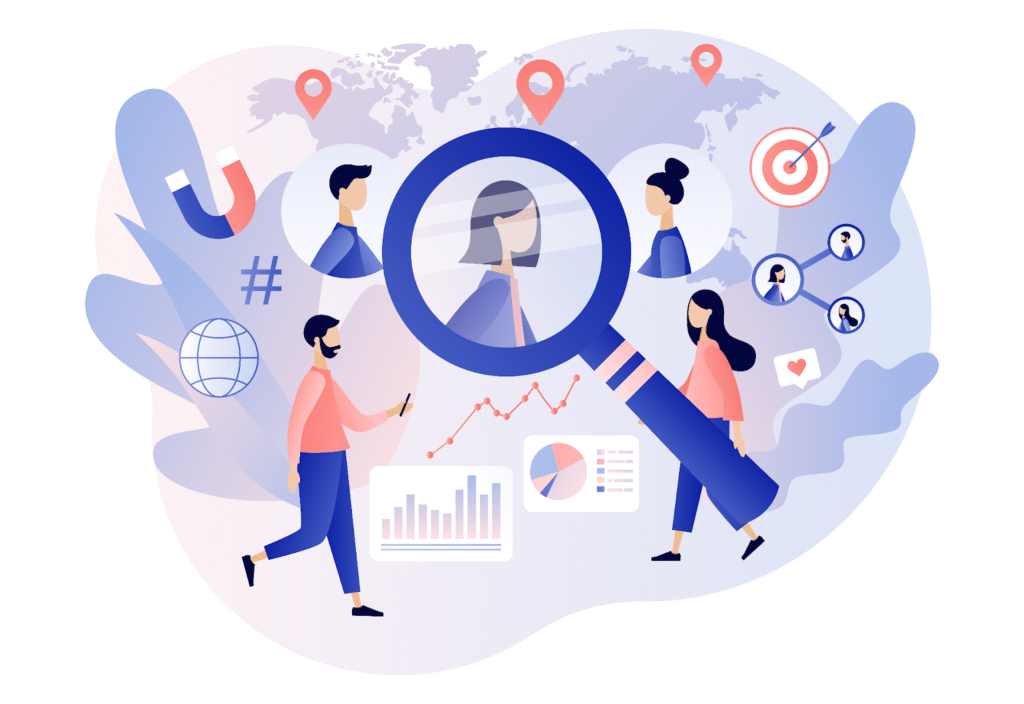
1. Develop Buyer Personas

 To develop comprehensive personas of your ideal clients, use analytics tools, market research, and customer surveys.

2. Examine Current Client Information

You can learn a lot from your current clientele. Who are they? From where did they originate? What matters to them?

3. Make Use of Specific Platforms

Select digital platforms such as Google, Facebook, LinkedIn, Instagram, and others based on where your target audience spends their time.

4. Make Use of Behavioral Targets

Retarget customers according to their previous brand engagements. Delivering timely and pertinent communications is aided by behavioral data.

Example from the Real World: B2B Tech Startup

LinkedIn advertisements were utilized by a B2B SaaS firm that targets mid-size healthcare providers to reach decision-makers, such as IT heads and hospital managers. They experienced a 300% increase in qualified leads in just three months by coordinating messaging with particular concerns (such as compliance and patient data protection). Without precise audience targeting, none of this would have been feasible.

Conclusion

In the age of hyper-personalized marketing, understanding your audience is no longer optional, it’s essential. Target audience marketing not only improves the relevance of your campaigns but also ensures that your digital efforts lead to real business results.

Whether you’re a startup or a growing enterprise, investing in understanding and marketing to the right audience will pay dividends in lead quality, customer loyalty, and long-term growth.

Subscribe To Our Newsletter

Get updates and learn from the best

Share This Post

Do you want more Sales & Qualified Leads?

Hey, I’m Sunday Samuel. At Dgazelle our core focus is to help individuals and business owners grow thier business predictably & profitably. My only question is, will it be yours?

About Dgazelle

We are a full service Digital marketing, Tech & Ai Solutions Company that is registered in Nigeria and the United States. Our story originates from our experience in advertising, marketing, technology and design. Our work is inspired by art, passion, and one simple principle – To consistently deliver excellence to every individual or business we serve

More To Explore

Marketing

Why Your Marketing Needs A Roadmap, Not Random Tactics

Random tactics create inconsistent outcomes. Posting daily, running ads sporadically, or testing campaigns without alignment produces noise rather than growth.  A roadmap aligns resources, timing, and strategy, turning marketing into a coordinated growth engine. Set Long-Term Goals Without defined objectives, marketing becomes reactive. A roadmap ensures every activity supports business goals: Quarterly revenue targets. Customer acquisition goals. Retention and upsell objectives. Clear goals make execution purposeful. Align Campaigns to Objectives Each campaign, ad, or piece of content should contribute directly to a goal. Random posting creates a scattered approach that rarely produces measurable results. A roadmap coordinates channels, messaging, and timing to maximize efficiency. Allocate Budget Strategically Random tactics often waste money. A roadmap ensures spend is intentional: High-performing channels receive more resources. Testing budgets are controlled. ROI is monitored against objectives. This reduces guesswork and increases return. Establish Milestones and Metrics Progress should be measurable. Set clear milestones for campaigns, content, and conversions. Track performance regularly to inform adjustments. Random tactics offer no feedback loop. A roadmap creates a cycle of planning, execution, and optimization. Marketing without a roadmap drifts. It consumes time, energy, and money without predictable outcomes. A structured roadmap aligns objectives, campaigns, budgets, and measurement. When marketing is planned and purposeful, growth becomes repeatable and scalable.

Social Media

How to Use Social Media Analytics to Grow

Social media without measurement is guesswork. Likes, shares, and comments feel good, but they rarely indicate revenue impact. Analytics turn attention into actionable insights, helping businesses focus on what truly drives growth. Here’s how to use social media analytics to grow: Identify High-Performing Content Tracking reach, engagement, and click-through rates reveals what resonates. Which topics generate interaction? Which formats drive attention—video, carousel, or text? What times and days maximize visibility? Patterns allow content to be optimized for results rather than opinion. Monitor Conversion Signals Beyond engagement, track actions that drive business goals: Profile clicks. Website link clicks. Lead form submissions. Metrics tied to outcomes show which posts contribute to revenue, not just visibility. Adjust Strategy Based on Insights Data without action is wasted. Use analytics to refine strategy: Double down on top-performing content types. Rework low-performing messaging. Reallocate resources to high-converting channels. Continuous iteration compounds results. Measure ROI, Not Vanity Metrics Likes and comments are vanity metrics. Revenue contribution is the real measure. Track: Leads generated per post. Conversion rate from social traffic. Customer acquisition cost. This shifts social media from a cost center to a growth engine. Analytics transform social media from noise into strategy. High-performing content, measured conversions, and data-driven adjustments create a pipeline that drives measurable growth. Social media only grows business when attention is connected to action.

Marketing

Landing Pages That Convert Effortlessly

A landing page has one clear purpose: conversion. Yet many businesses treat it as a brochure or portfolio piece. Visitors arrive, browse briefly, and leave without taking action. A high-converting landing page is not about flashy graphics or long copy. It is about clarity, direction, and trust. Every element should guide the visitor toward a specific action. A functional landing page should: Communicate Value Instantly Visitors decide within seconds whether to stay or leave. The headline and subheadline must answer: Who is this for? What problem does it solve? What action should I take next? If a visitor cannot answer these in under five seconds, your page is failing. Clear, concise value propositions create immediate attention and reduce friction. Minimize Distractions Landing pages must focus attention. Remove unnecessary navigation, links, and competing calls to action. One page.One offer.One clear action. Every design choice should support the goal. Any element that does not increase conversion is a potential exit point. Build Trust and Credibility Visitors convert when they feel confident. Include: Testimonials from real clients. Case studies with measurable results. Security and compliance assurances. Social proof reduces hesitation. Proof and authority make visitors comfortable taking the next step. Optimize the Conversion Path From first interaction to action, the path must be seamless: Fast page load times. Clear call-to-action buttons. Minimal form fields. Complicated or confusing paths kill conversions. Simplicity drives results. A landing page is a sales tool, not decoration. Focus on clarity, minimize distraction, establish trust, and streamline the conversion path. When built with intention, landing pages turn curiosity into action and traffic into revenue.

Do You Want To Boost Your Business?

drop us a line and keep in touch