Most businesses think a funnel is a landing page connected to a thank you page. Someone clicks an ad. They land on a page. They fill out a form. They see a confirmation message. The funnel is complete.
Revenue does not follow. Leads do not convert. The business concludes the funnel did not work and builds a different one. This is what happens when funnels are treated as page templates instead of sales processes.
A funnel is not a design project. It is not a sequence of web pages. It is a structured journey designed to move someone from awareness to decision, with each step engineered to reduce friction and increase commitment. When funnels fail, it is rarely because the pages look wrong. It is because the process was never designed to sell.
What Most Businesses Think Funnels Are
Most businesses use funnels as lead capture mechanisms. A visitor lands on a page. They download a free resource. They enter the email list. The funnel ends. What happens next is either unclear or inconsistent. Some leads get followed up with. Others do not. Some receive a sales email. Others get a newsletter. There is no continuity between the funnel and what happens after it.
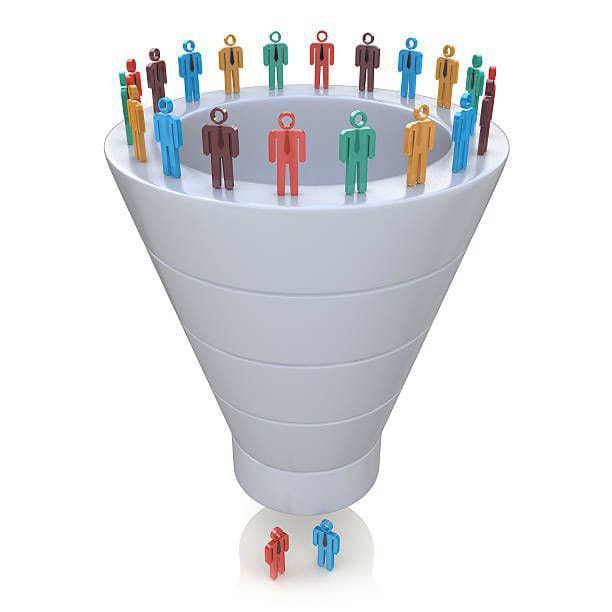
This is not a funnel. It is a form with no follow through. A real funnel does not stop at lead capture. It guides someone through awareness, interest, consideration, and decision. Each stage builds on the previous one. Each step moves the prospect closer to buying. When the process is incomplete, the funnel fails regardless of how well the landing page converts.
Why Funnels Fail When Treated as Pages
Building pages is easy. Building a process that converts is not.
- The Offer Is Not Matched to Awareness Level
Most funnels assume everyone who lands on the page is ready to buy. A cold visitor who has never heard of the business is presented with the same offer as someone who has been researching for weeks. The messaging does not match their stage. The call to action asks for too much commitment too soon. A funnel designed for cold traffic should educate and build trust before asking for a sale. A funnel designed for warm traffic can move faster because the relationship already exists. When the offer does not match awareness level, conversion rates collapse.
- There Is No Value Ladder
Most businesses ask for the sale immediately. A visitor lands on a page and is told to book a call, request a demo, or buy a high ticket service. If they are not ready, the funnel has nothing else to offer. They leave and never return.
A value ladder moves people through progressively higher commitment steps. A free resource builds trust. A low cost offer qualifies intent. A mid tier product demonstrates value. A high ticket service becomes the obvious next step. Each stage prepares the prospect for the next. Without this progression, most people never reach the final offer.
- Follow-Up Is Weak or Nonexistent
A funnel that captures a lead and does nothing with it is incomplete. Most businesses send one or two emails after someone opts in, then stop. There is no nurture sequence. No objection handling. No value delivery. The lead goes cold because the system was never built to keep them engaged. A funnel is not just the pages. It is the email sequences, retargeting campaigns, and sales processes that activate after someone enters the system. Without follow up, the funnel leaks.
- The Process Is Not Tested or Measured
Most funnels are built, launched, and forgotten. Nobody tracks conversion rates at each step. Nobody tests different headlines, offers, or sequences. The funnel either works or it does not, and when it does not, the business builds a new one instead of diagnosing what broke. A funnel is a hypothesis. It should be tested, measured, and improved continuously. Conversion rates reveal where the process works and where it fails. Without measurement, improvement is guessing.
What a Real Funnel Actually Does
A funnel is a sales process translated into automated steps. It qualifies interest. It builds trust. It addresses objections. It moves people from skepticism to conviction. It makes the decision to buy feel natural, not forced. Most importantly, it does this without requiring manual effort at every stage.
- It Matches the Message to the Market
A funnel starts by speaking directly to the person it is designed to convert. The headline names the problem they have. The copy reflects their current situation. The offer presents the outcome they want. When the message matches the market, the right people recognize themselves immediately. The wrong people filter out. This is not a weakness. It is precision. Broad funnels convert poorly because they try to appeal to everyone. Specific funnels convert well because they speak directly to the person most likely to buy.
- It Builds Trust Before Asking for Commitment
Trust is not assumed. It is earned through proof, clarity, and value delivery. A funnel provides social proof early. It shares testimonials from people similar to the prospect. It demonstrates outcomes. It answers the question every visitor is asking: does this actually work? Trust is also built by giving value before asking for anything in return. A free resource that solves a real problem proves competence. An email sequence that educates without pitching builds credibility. When trust exists, the ask becomes easier.
- It Removes Friction From the Decision Process
Every unnecessary step is a place where people drop off. A funnel reduces friction by making each step as simple as possible. Forms ask only for essential information. Calls to action are clear and specific. The path forward is obvious at every stage. If someone has to think too hard about what to do next, they will not do it.
- It Handles Objections Proactively
Every funnel should anticipate the reasons someone might not buy and address them before they become barriers. If price is an objection, the funnel justifies value early. If credibility is a concern, proof is provided upfront. If timing is uncertain, urgency is created without pressure. Objections that are not addressed kill conversions. A strong funnel eliminates doubt before it derails the decision.
- It Nurtures Over Time
Not everyone converts on the first interaction. A funnel captures people who are not ready and continues the conversation until they are. Email sequences educate and build trust. Retargeting keeps the offer visible. Sales follow up moves prospects through the final stages. A funnel does not end when someone opts in. It ends when they buy or definitively opt out.
The Stages of a Complete Funnel
A funnel is not one page. It is a series of stages, each with a specific job.
- Awareness
The prospect becomes aware of a problem or opportunity. The funnel introduces the solution and positions the business as the guide. This stage is about attention and relevance. The message must resonate immediately or the prospect leaves.
- Interest
The prospect is interested but not convinced. The funnel provides value, shares proof, and educates without asking for a commitment. Lead magnets, free resources, and educational content belong here. The goal is to capture contact information and build trust.
- Consideration
The prospect is evaluating options. The funnel addresses objections, demonstrates differentiation, and builds urgency. Case studies, testimonials, comparison content, and product demos work at this stage. The goal is to position the offer as the obvious choice.
- Decision
The prospect is ready to act. The funnel removes friction, clarifies the offer, and makes the next step simple. Clear pricing, easy checkout, consultation booking, or direct sales contact happens here. The goal is to convert intent into action.
- Retention
The prospect becomes a customer. The funnel continues by delivering value, encouraging repeat purchases, and generating referrals. Onboarding sequences, upsells, cross-sells, and referral programs extend the lifetime value of each customer. A complete funnel does not stop at acquisition. It maximizes the value of every relationship.
How to Build a Funnel That Actually Converts
Building a funnel is not about copying templates. It is about designing a process that matches how decisions are made.
- Map the Journey Before Building Pages
Start by understanding how someone moves from stranger to customer.
What is the first touchpoint? What questions do they have at each stage? What objections arise? What proof do they need? Once the journey is mapped, the funnel can be designed to match it.
- Design for One Specific Outcome
A funnel that tries to do too many things converts poorly. Define the single most important action someone should take. Is it booking a call? Purchasing a product? Signing up for a trial? Every element of the funnel should move someone toward that outcome. Anything that distracts gets removed.
- Test One Variable at a Time
A funnel is never finished. It is continuously tested and improved.
Change one element—headline, offer, call to action—and measure the impact. If conversion improves, keep the change. If it drops, revert. Testing multiple changes at once makes it impossible to know what worked. Testing one variable at a time produces clear insights.
- Build Follow-Up Into the System
A funnel without follow up is incomplete. Email sequences should be written and automated before the funnel launches. Retargeting campaigns should be set up. Sales processes should be documented. The goal is to ensure every lead that enters the funnel moves through a structured process, not a series of random touchpoints.
- Measure Conversion at Every Stage
Track how many people enter the funnel, how many complete each step, and where drop off happens. If 1,000 people land on a page and only 50 opt in, the landing page is the problem. If 500 opt in but only 10 buy, the follow up is the problem. Measurement reveals exactly where the funnel breaks so it can be fixed.
Why Most Businesses Build Pages Instead of Processes
Building pages is faster and feels productive. A landing page can be launched in a day. A complete funnel takes weeks to design, build, and test. Most businesses choose speed over structure. But a page without a process behind it is just decoration. It might look professional, but it will not convert consistently.
The businesses that grow are not the ones launching the most funnels. They are the ones building processes that turn attention into revenue predictably.
Funnels Are Systems, Not Templates
A funnel is not something you copy from someone else and expect to work. It is a sales process designed specifically for your market, your offer, and your customer journey. It reflects how decisions are made in your business, not how they are made in someone else’s.
Templates can provide structure, but they cannot replace strategy. If your funnel is not converting, the problem is not the pages. It is the process. And processes can be fixed.