
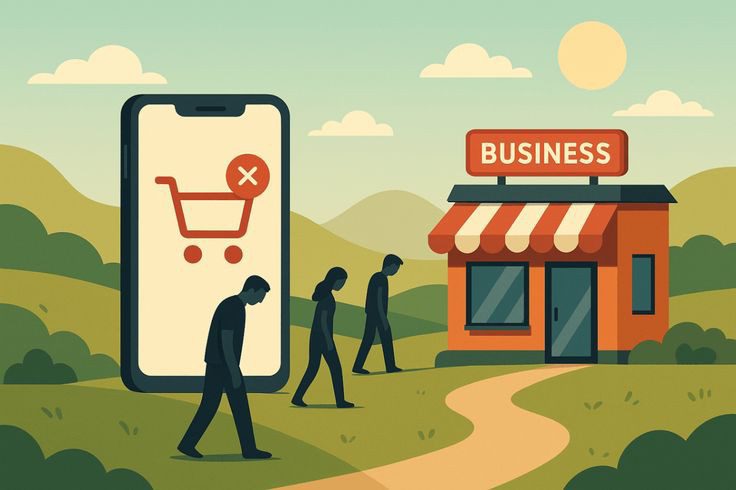
For many businesses, sales become the primary focus of growth efforts. Teams are trained to close faster, campaigns are designed to generate immediate revenue, and success is often measured by short-term numbers.
While sales are essential, an overemphasis on closing deals without considering customer experience can create long-term problems.
A business may succeed in acquiring customers, yet struggle to retain them. Revenue may grow temporarily, but loyalty remains weak, repeat purchases decline, and customer trust becomes difficult to sustain.
This usually happens when businesses prioritize transactions over relationships.
The Difference Between Selling and Building Trust
A sale is a moment. Trust is a process.
Customers do not evaluate businesses only by the promises made during marketing or sales conversations. They evaluate them by the entire experience that follows.
If the experience does not match expectations, trust weakens quickly.
This means that growth is not only about convincing people to buy. It is also about creating experiences that make customers confident in returning, recommending the business, and remaining loyal over time.
Why Short-Term Sales Thinking Creates Long-Term Problems
One common issue is overpromising during marketing and sales. Businesses sometimes focus so heavily on persuasion that they create expectations they cannot consistently meet.
Another problem is neglecting post-sale experience. Once the transaction is complete, communication becomes inconsistent, support weakens, and customer relationships are no longer actively nurtured.
There is also the challenge of customer disconnect. Businesses focused only on acquiring new customers often fail to listen to existing ones, missing valuable feedback that could improve retention and loyalty.
Over time, this creates a cycle where businesses constantly need new customers because they are unable to maximize the value of the customers they already have.
What Sustainable Businesses Do Differently
Businesses that grow sustainably understand that customer retention is just as important as customer acquisition.
They focus on delivering consistent customer experiences, ensuring that the quality promised during marketing matches the reality of the service or product.
They maintain ongoing communication, staying connected with customers beyond the initial transaction through follow-ups, support, and value-driven engagement.
They also create systems for customer feedback and improvement, allowing them to refine their offers based on real experiences and evolving customer needs.
Most importantly, they approach growth with a long-term perspective, recognizing that strong customer relationships often produce repeat business, referrals, and stronger brand credibility.
Why Retention Is a Growth Strategy
Acquiring new customers is important, but retaining existing customers is often more profitable and sustainable.
Loyal customers tend to buy more frequently, trust the business more deeply, and recommend the brand to others. This reduces the pressure to constantly chase new leads and creates a more stable foundation for growth.
Businesses that understand this are usually able to scale more efficiently because their growth is supported by both acquisition and retention.
So…
Sales may drive immediate revenue, but customer experience drives long-term business strength.
At Dgazelle Digital, we help businesses build marketing and customer systems that not only attract customers, but also create experiences that strengthen trust, retention, and long-term growth.
If you would like to receive more insights on building sustainable growth systems, improving customer experience, and scaling your business strategically, we invite you to join our email community by submitting your email in the box below.