5 Things You Need to Know Before You Design a Great Website

a great website is visually appealing

If you’re looking to build up your online presence, you’ll want to give some consideration to building a great website.

A new website can be a powerful tool for meeting your goals and improving your company’s image.
When designing or building a website, whether for your business or for a personal project, you must first plan everything out.


So, before you think about how to design a great website, make sure you’ve checked these five items. You’ll be happy you did!

Photo by Pixabay

What defines a great website?

Many websites are created with a specific purpose in mind. They enable you to buy things, read about products, communicate with others, and obtain information.

But what shows when you have taken the effort to design a great website? Why do some websites leave us wanting more, while others leave us feeling like we’ve had the best time ever? It all comes down to how well they meet the needs of their users and how enjoyable they are to use.

A great website is easy to use

So many online businesses fail to convert their visitors to sales because their website is not easy to use. A great website should be simple and intuitive enough that anyone can use it. If it isn’t, you will lose customers and end up spending more money on support calls than you would on a good web developer in the first place.

A great website is visually appealling

When people visit your website, the first thing they will notice is how it looks. If your website appears dull or out of date, visitors will leave before learning what you have to offer. A great website design will entice visitors to explore more of your site and become acquainted with all of its contents.

a great website that is visually appealing
Photo by Designecologist

A great website is responsiveness

One of the reasons people buy from you is if your website is responsive. Responsive design is a method of creating websites that are optimized for viewing on both large and small screens. This enables you to create a single website that displays differently depending on the device being used to view it.

A great website is clear and organized

When you identify your ideal client, you need to organize your website for them. A great website serves a specific purpose and achieves a specific goal. It explains why you’re there and what you’ll find when you get there. A great website stays relevant by regularly updating itself with new content, such as blog posts and press releases related to the industry or topic being discussed on the site in question.

Your website should look good on all devices (and browsers) so that visitors can easily find what they’re looking for and get the most out of your content.

A great website is fast

A great website loads quickly! A slow loading time will lower your search engine ranking and may drive visitors away from your site. You want your site to load quickly so that you can concentrate on providing value to your customers rather than dealing with technical issues.

Photo by Eser Tekin

5 Things You Need to Know Before You Design a Great Website

The difference between an online vs offline business is an online presence – a great website. There are many things to consider before you design a website, and here are a few things that you should keep in mind:

1. What Web host are you going to utilize?

If you want your site to be up and running quickly, then you need to choose a web host. A web host is required if you want your website to be accessible to anyone with internet access. A web host is essentially the internet storage space for your website. There are a lot of options out there, including free hosting and paid hosting services.

There are numerous types of web hosts available, including shared, virtual private server (VPS), dedicated, and cloud hosting. Each has advantages and disadvantages, so it’s critical to understand which type of hosting is best for your site before you begin designing it.

If you only need one or two pages on your site and don’t expect it to grow significantly in the future, shared hosting will probably suffice; however, if you plan on adding several new pages over time and want a lot of flexibility with how they appear, VPS will be better suited to your needs. Web hosts include Kinsta, Flywheel.

Photo by Markus Spiske

What to consider before choosing a web host?

When it comes to selecting a web host, you will have dozens of options ranging from shared hosting to dedicated servers.

Not all hosts, however, are created equal. Some have more features than others and can be significantly more expensive or less expensive than the competition. Before selecting a web host, it’s critical to understand exactly what you require.

  • How Many Websites Do You Want To Host?
  • What Type Of Website Do You Need?
  • What kind of traffic will my site receive? How much bandwidth will it use?
  • How much disk space do I need?
  • Do I need any special features such as SSL certificates or WordPress optimization?
  • What type of content will you be posting?
  • What can you afford?

2. What Content Management System do you want to use?

CMSs are software applications that allow you to create and manage content for your website. They enable you to update the content of your website without having to learn HTML or code.

There are numerous CMSs available, each with its own set of features, so it’s critical to select one that meets your requirements.

Among the most popular CMSs are:

WordPress is a free open source CMS with an ever-expanding library of plugins and themes available for download from the WordPress marketplace. It is now used by more than a quarter of all websites on the internet (including this one). While it is simple to use and customize, if you want to make changes yourself, you will need some technical knowledge.
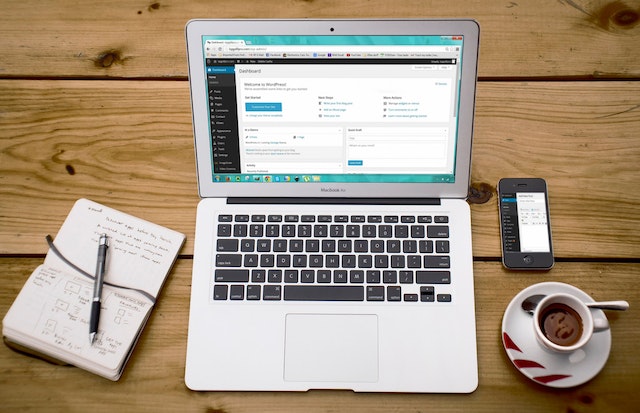
Photo by Pixabay

Joomla! is a free open source CMS that, unlike WordPress, allows you to build a website using modules rather than templates. It is now used by more than 1% of all websites on the internet (including this one). While it is simple to use and customize, if you want to make changes yourself, you will need some technical knowledge.

  • Magento

Magento is a paid eCommerce platform designed specifically for eCommerce websites (such as Amazon or eBay), but it can also be used as a general content management system, similar to WordPress or Joomla!

3. What Content Delivery Network will I Utilize?

The content delivery network (CDN) is a web service that stores duplicates of your website’s content in multiple locations around the world, allowing users to download pages from nearby servers rather than your own (s). It’s especially important if you have a large number of users accessing your site at the same time or if your server isn’t nearby (or both!).

Content Delivery Networks (CDNs) are an excellent way to increase the speed of your website. They assist you in delivering your content from the closest possible location, allowing it to load faster for users.

There are two kinds of CDNs:

  • Web Hosting Provider –

A web hosting provider can provide a CDN service at no extra cost, but they typically only allow you to use their own CDN, which is inconvenient if you need access to multiple providers. Many hosting providers provide free SSL certificates, and some, such as Bluehost and HostGator, even have built-in caching features for WordPress sites.

  • Third-party CDN providers,

Third party providers such as Amazon Cloudfront or MaxCDN, provide more options and flexibility than web hosting providers, but are typically more expensive. If you intend to use any scripts or plugins that rely on Google’s JavaScript libraries or jQuery, it is best if there are multiple solutions available.

What to Consider before choosing a CDN?

There are numerous CDNs to choose from, but which one should you use? The answer is dependent on your specific requirements. Here are some questions to consider before making a decision:

  • What am I willing to spend?

The cost of a CDN varies greatly depending on the number of visitors, bandwidth and storage requirements, and other factors. It’s important to understand that not all CDN services are created equal; some may perform better than others or provide more features at a comparable price point.

  • What type of data am I storing?

If you’re only storing static assets (images, for example), then there are numerous CDN available, with varying price points and features. If you’re storing dynamic data (API calls, database queries), then things get more complex as most CDNs don’t support this functionality.

4. What Theme will I utilize to design my website?

The theme is another important decision to make when designing a website. There are many different types of themes available, each with a unique look and feel. Some themes are intended for specific types of businesses, whereas others are more general.

You might want to select a theme that already incorporates your branding (i.e., your logo and color scheme). This makes it easier for people to recognize your brand when they see it on other websites, such as affiliate or sponsor sites.

Photo by Stephan Seeber

What to consider before picking a theme?

Here are 5 ways to know a great theme for a website:

  1. Text is readable even on small screens.
  2. Images don’t take up too much space.
  3. Navigation is easy to use.
  4. Site load speed is fast.
  5. It’s clean and simple.

5. Who will be designing my website?

The first question you should ask is who will design a great website for your business. If you are in charge of the design process, you should be aware that there are numerous types of designers. Some specialize in corporate websites, while others specialize in ecommerce sites and still others in small business or personal websites.

The type of designer you hire will be determined by the type of site you want to build and the amount of money you have available. For example, if you want to take a small physical business online, a simple informational website with no shopping cart or payment processing capabilities, any competent web designer can create one for you at a reasonable cost.

However, if you want an e-commerce site with an integrated shopping cart system and payment processing capabilities, you’ll have to pay more because these features necessitate specialized knowledge and software packages that not every web designer has access to or understands how to use.

What to consider before choosing a website designer?

Before you start looking for a website designer, here are four things you should know:

  1. The designer must have prior experience in your field.
  2. The designer must be able to clearly and thoroughly explain their process.
  3. Your website designer should be able to handle all aspects of your project.
  4. The designer must be able to communicate effectively with clients and be easy to work with.

Conclusion

As you can see, there are many considerations to take into account when designing a website. This post is meant to give you a brief overview of the most important things to consider when designing your own website. If you want more information on these topics, or if you have any questions, please leave a comment below.
Subscribe To Our Newsletter

Get updates and learn from the best

Share This Post

Do you want more Sales & Qualified Leads?

Hey, I’m Sunday Samuel. At Dgazelle our core focus is to help individuals and business owners grow thier business predictably & profitably. My only question is, will it be yours?

About Dgazelle

We are a full service Digital marketing, Tech & Ai Solutions Company that is registered in Nigeria and the United States. Our story originates from our experience in advertising, marketing, technology and design. Our work is inspired by art, passion, and one simple principle – To consistently deliver excellence to every individual or business we serve

More To Explore

Uncategorized

Your Website Is Either a Sales System or a Very Expensive Flyer

Most business websites are beautifully designed monuments to wasted potential. They load fast. They look professional. They have clean layouts, carefully chosen fonts, and polished images. Leadership is proud of them. The design team won a project. Everyone agrees the site looks credible. But credibility is not conversion. When measured against the only metric that actually matters—how many visitors become customers—most websites fail completely. They do not guide decisions. They do not capture leads. They do not address objections. They do not make the next step obvious. They exist, they inform, and they let traffic leave without ever attempting to convert it. A website that does not sell is not an asset. It is an expensive flyer that cost thousands of dollars to produce and produces nothing in return. What Most Websites Actually Do Most websites are built to satisfy internal stakeholders, not external buyers. The executive team wants the brand to look premium, so aesthetics become the priority. The product team wants every feature listed, so pages become cluttered with details. The marketing team wants to rank for every keyword, so messaging becomes generic enough to apply to everyone. The result is a website that tries to be everything and ends up converting no one effectively. Visitors arrive with specific intent. They have a problem. They are looking for a solution. They scan the homepage for five seconds to determine if this business can help them. If the answer is not immediately obvious, they leave. No second chance. No follow up. No conversion. A website that does not answer the visitor’s question within seconds is failing at its only job. The Difference Between a Flyer and a Sales System A flyer delivers information. A sales system guides decisions.  A flyer explains what a business does. A sales system explains what a customer gets. A flyer looks good sitting on a desk. A sales system converts visitors into leads and leads into buyers. Most websites are flyers. They describe the business, list the services, include an about page, and provide a contact form. This might feel complete, but it does nothing to move someone from curiosity to commitment. A sales system website is built with one clear purpose: turn visitors into customers. Every page has a specific job. Every headline moves the visitor closer to a decision. Every call to action matches where the visitor is in their journey. If your website does not do this, it is not a sales tool. It is decoration. Where Websites Fail as Sales Systems Most websites do not fail because they are ugly. They fail because they were never designed to sell. The Homepage Does Not Clarify Anything Homepages are often treated as introductions. They describe what the business does, share the company mission, list awards or achievements. This satisfies the internal team but confuses the visitor. A visitor does not care about your mission statement. They care about whether you can solve their problem. If the homepage does not immediately answer who this is for and what outcome they can expect, the visitor leaves. A homepage is not a biography. It is a filter. It should make the right visitor feel like they are in exactly the right place and tell them exactly what to do next. There Is No Clear Path to Conversion Many websites present information but never direct action. A visitor reads about the services. They scroll through testimonials. They check out the portfolio. Then they close the tab, because the site never told them what to do. Conversion does not happen by accident. It happens when the next step is frictionless and obvious. If a visitor has to search for how to move forward, most of them will not bother. Every page should have one primary call to action. Not five options. One clear next step. The Offer Is Hidden or Confusing Most websites explain what they do but never clarify what someone actually gets. Services are listed in vague categories. Features are mentioned without context. The visitor is expected to translate how those services solve their specific problem. That translation rarely happens. People do not buy services. They buy outcomes. If your website does not make the transformation clear—what changes, what improves, what gets solved—visitors will not understand why they should act. Objections Are Ignored Every visitor has doubts. Is this business credible? Will this actually work? What if it does not? How long will this take? What does this cost? Most websites ignore these questions and hope the visitor will ask them later. They will not. They will leave and find a competitor who addressed the objections upfront. A sales system website anticipates doubt and eliminates it before it becomes a barrier. Proof is included. Guarantees are stated. Process is explained. Pricing is transparent. When objections are not addressed, they become reasons not to buy. There Is No Lead Capture for People Who Are Not Ready Most websites treat every visitor as if they are ready to purchase immediately. But most people are not. They are researching. Comparing options. Considering whether the timing is right. If the website does not capture their information, they leave and never return. A lead magnet, a downloadable resource, a free consultation—these are not optional. They are the infrastructure that keeps the business connected to visitors who need more time before they commit. Without lead capture, the website leaks opportunity. What a Sales System Website Actually Does A sales system website is not about looking impressive. It is about converting visitors predictably. It speaks directly to the ideal customer and makes them feel understood immediately. It presents the offer as the obvious solution to a problem they already have. It addresses objections before they are voiced. It builds trust through proof, clarity, and transparency. Most importantly, it makes the next step so clear and so simple that taking action feels easier than leaving. It Starts With One Clear Message A sales system website does not try to speak to everyone.

Content development

The Hidden Difference Between Posting Content and Building a Distribution System

Most businesses create content the way someone might shout into a crowded room—loudly, repeatedly, and with no strategy for who actually hears it. Blog posts are published. Social media updates go live. Videos are uploaded. Emails are sent. The work gets done. The content exists. But the audience does not grow. Engagement stays flat. Traffic remains inconsistent. The assumption is that more content will fix this. So more gets created. The volume increases, but the results do not. This is what happens when content creation is confused with content distribution. Creating content is easy. Making sure it reaches the right people, at the right time, in the right format—that requires a system. What Most Businesses Think Content Marketing Is Most businesses treat content as an output activity.Someone writes a blog post and publishes it. Someone posts on LinkedIn. Someone sends a newsletter. The task is complete. The content is out there. Then nothing happens. The blog post gets a few views. The social post gets minimal engagement. The email has a low open rate. The business assumes the content was not good enough, so they create something different next time.   But the content was probably fine. The problem is that nobody saw it.Content without distribution is the same as content that does not exist. If a business publishes something and does not actively push it in front of an audience, it will sit unread regardless of quality. Why Posting Content Is Not Enough Publishing content is not the same as distributing it. Publishing means making something available. Distribution means making sure people encounter it. Most businesses publish and assume distribution will happen organically. They believe that if the content is valuable, it will be found. This is not how attention works. Attention is not stumbled upon. It is earned, directed, and multiplied through deliberate systems. Algorithms Do Not Reward Posting Social platforms reward engagement, not volume. A business that posts five times a week with no engagement will get less reach than a business that posts once a week with strong engagement. The algorithm does not care about effort. It cares about response. Most businesses post consistently but never build the engagement that triggers algorithmic distribution. Their content stays invisible because the system was never designed to amplify it. Organic Reach Has Collapsed Ten years ago, posting content on social media meant a significant portion of followers would see it. Today, organic reach on most platforms is below five percent. A business with ten thousand followers might reach five hundred people per post without paid promotion. The rest never see it. Posting more does not change this. It just creates more content that goes unseen. Building an audience on rented platforms is not a distribution strategy. It is a gamble that the platform will continue showing your content to people who chose to follow you. Search Traffic Requires Intentional Optimization Publishing a blog post does not mean it will rank in search engines. Most blog content is written without keyword research, without understanding search intent, and without any consideration for how search engines surface content. The result is content that exists but is never found. It does not rank. It does not drive traffic. It sits on a website, consuming server space and producing nothing. Search traffic is not accidental. It is the result of content designed to match what people are searching for, structured in a way search engines can understand, and supported by technical optimization. Email Lists Do Not Build Themselves Email is one of the most effective distribution channels, but only if the list exists and gets used strategically. Most businesses treat email as an afterthought. They send occasional newsletters. They do not segment. They do not test subject lines. They do not analyze what drives opens, clicks, or conversions. An email list that is not actively grown, nurtured, and leveraged is wasted infrastructure. What a Distribution System Actually Looks Like A distribution system is not a single tactic. It is a set of interconnected channels designed to get content in front of the right people repeatedly and predictably.It treats content as an asset that can be reused, repurposed, and distributed across multiple formats and platforms. It does not rely on one channel. It builds owned audiences that the business controls and uses paid amplification strategically to accelerate reach. Most importantly, it measures what works and doubles down on the channels that drive results. Owned Distribution Channels Owned channels are the ones a business controls completely—email lists, blogs with organic search traffic, podcasts with subscribers, communities built on platforms the business owns. These channels are not subject to algorithm changes. They do not disappear if a platform changes its terms of service. They grow over time and compound.Building owned distribution takes longer than renting attention on social media, but it produces lasting leverage. Earned Distribution Through Relationships Earned distribution happens when other people share your content with their audiences.Partnerships with complementary businesses. Guest appearances on podcasts. Collaborations with other creators. Media coverage. These expand reach beyond what the business can achieve alone. Most businesses do not invest in relationships because the return is not immediate. But compounding reach comes from being featured, recommended, and referenced by others. Paid Distribution for Acceleration Paid distribution is not a substitute for owned or earned channels. It is a multiplier. Businesses that use paid ads to amplify content that already performs organically see better results than businesses that rely entirely on paid traffic. The content is tested organically first. Once it proves valuable, paid promotion extends its reach. This reduces waste and increases return on ad spend. Multichannel Repurposing Most businesses create content once and distribute it once. A blog post is published and shared on social media. That is it. The asset is used once and then forgotten. A distribution system repurposes content across formats. A blog post becomes a video, an infographic, a carousel post, an email, a podcast episode, and a LinkedIn article. Each format reaches

Business

The Tech Stack Every Serious Growth-Focused Business Needs

Most businesses use technology the way someone might use a toolbox with missing tools—functional enough to get by, inefficient enough to limit what is possible. There is a CRM that nobody updates. An email platform that sends broadcasts but does not automate. A website that exists but does not track behavior. A payment processor that collects money but does not integrate with anything else. Each tool solves one problem in isolation. None of them talk to each other. Data lives in separate places. Processes require manual steps. Growth is constrained not by effort, but by infrastructure. A serious growth focused business does not run on disconnected tools. It runs on a tech stack—an integrated system where each component feeds the next, eliminates friction, and makes scale possible. What a Tech Stack Actually Is A tech stack is not a collection of software subscriptions. It is a connected infrastructure that automates repetitive work, tracks what matters, and allows a business to operate efficiently as it grows. The right tech stack reduces dependency on memory and effort. It ensures follow up happens automatically. It captures data without manual entry. It connects marketing to sales to fulfillment so nothing falls through gaps. Most importantly, it makes growth scalable. When processes are systemized through technology, adding more customers does not require adding proportional effort. The Core Components of a Growth-Focused Tech Stack A functional tech stack is built around specific jobs that must be done for a business to acquire, convert, and retain customers predictably. Customer Relationship Management A CRM is not a contact list. It is the central system that tracks every interaction with every prospect and customer. It records where a lead came from, what pages they visited, what emails they opened, what objections they raised, and where they are in the sales process. It surfaces this information so the sales team knows exactly what to say and when to say it. Without a CRM, sales is guesswork. With one, it becomes a process that can be managed and improved. Most businesses use a CRM but never configure it properly. Fields are not customized. Pipelines are not structured. Automation is not set up. The tool exists, but it does not do the work it was designed to do. A CRM should reduce effort, not create it. If your CRM requires more manual work than it eliminates, it is configured wrong. Marketing Automation Platform Marketing automation ensures that leads are nurtured consistently without requiring someone to remember to send emails. A lead downloads a resource, and they are automatically enrolled in a sequence that educates, builds trust, and moves them toward a purchase decision. They visit a pricing page but do not buy, and a retargeting campaign activates. They abandon a cart, and a recovery email sends within an hour. None of this requires manual intervention. It happens because the system is designed to respond to behavior. Most businesses treat email as a broadcast tool. They send newsletters and promotions but do not build sequences that nurture leads over time. This leaves revenue on the table because most people are not ready to buy on the first interaction. Marketing automation captures those people and converts them when they are ready. Website and Conversion Tracking A website without tracking is a black box. Traffic arrives, some of it converts, and nobody knows why. Conversion tracking reveals what is working. Which pages drive the most leads. Which traffic sources produce the best customers. Where people drop off in the funnel. What percentage of visitors take action. This data allows a business to improve based on evidence instead of assumptions. It exposes where marketing spend is wasted and where it should be increased. Most businesses track vanity metrics like page views but ignore the metrics that matter—conversion rates, cost per acquisition, customer lifetime value. The numbers that feel good are not the numbers that drive decisions. Lead Capture and Landing Page Tools A homepage is not a lead capture tool. It is a navigation hub. If the goal is to convert visitors into leads, dedicated landing pages are required. Landing pages are built for one purpose: get someone to take a specific action. They remove distractions, focus attention, and make the next step obvious. Most businesses send traffic to their homepage and wonder why conversion rates are low. The homepage is trying to serve everyone, so it converts no one effectively. Lead capture tools integrate with landing pages to collect information and funnel it into the CRM and marketing automation system. This ensures no lead is lost and every lead enters the nurture process immediately. Payment and Billing Systems A payment system should do more than collect money. It should integrate with the rest of the stack so revenue data flows automatically into reporting, CRM records are updated, and fulfillment processes are triggered. Manual invoicing, payment tracking, and reconciliation waste time and create errors. Automated billing systems handle subscriptions, renewals, upgrades, and dunning without intervention. If collecting payment requires manual steps, the system is broken. Analytics and Reporting Dashboard Data that is not visible is not useful. A reporting dashboard pulls information from every part of the stack—website traffic, lead generation, sales pipeline, revenue, customer retention—and displays it in one place. This allows leadership to see what is working, what is not, and where attention should be focused. Decisions are made with data, not opinions. Most businesses have data scattered across different platforms. Website analytics live in one tool. CRM data lives in another. Email performance lives somewhere else. Nobody has a complete picture, so nobody can make fully informed decisions. A centralized dashboard fixes this. Communication and Collaboration Tools Growth requires coordination. Marketing needs to know what sales is hearing from prospects. Sales needs to know what marketing is communicating. Leadership needs visibility into what is happening across the business. Communication tools keep teams aligned without requiring constant meetings. Project management tools track what needs to be done and who is responsible. File sharing

Do You Want To Boost Your Business?

drop us a line and keep in touch