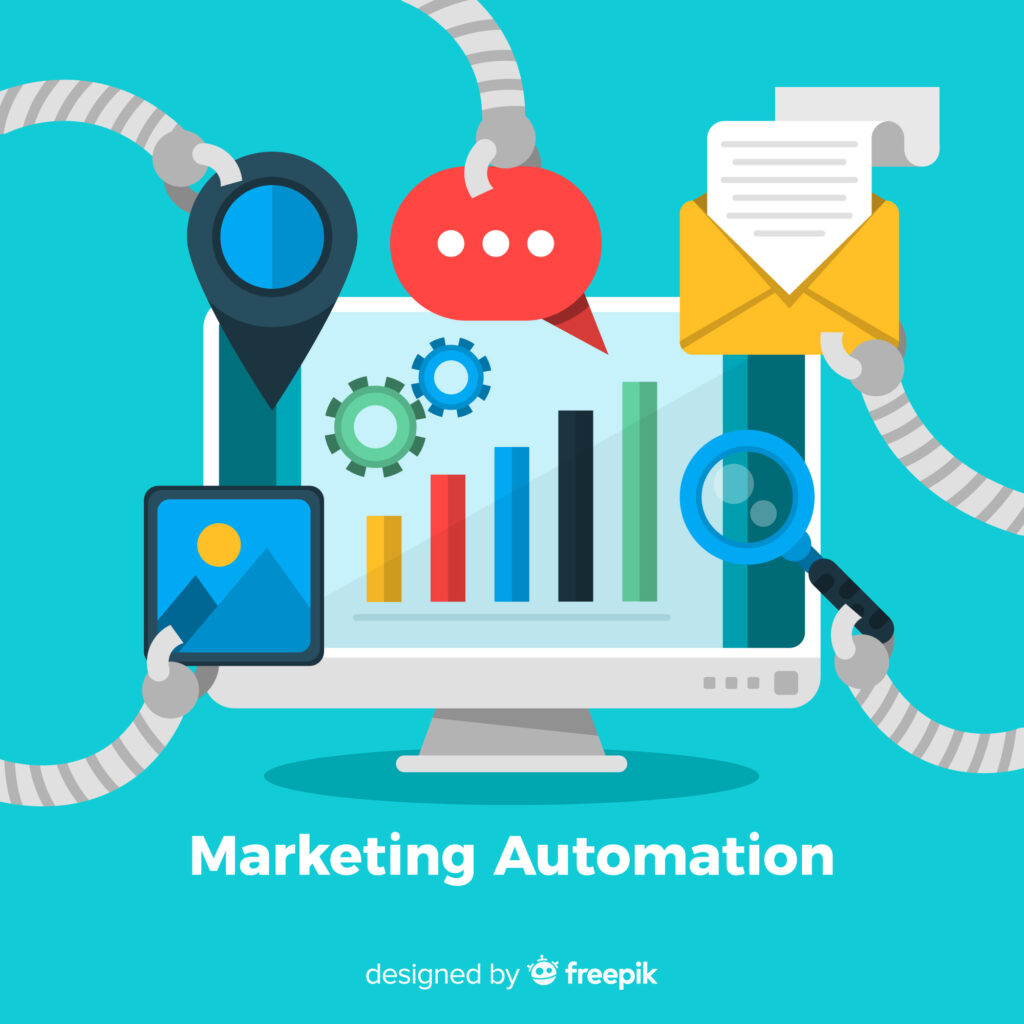
Digital Marketing Automation That Practically Runs Your Small Business for You

I used to believe that marketing automation amounted to lazy marketing. In my opinion, it was spammy, depersonalizing, and not the proper approach.

Since then, I’ve altered my perspective while managing my own small business (and helping to build another business with a small but powerful staff). This is because increasing productivity beyond your physical or mental capacity is necessary when you have few hands available to make things happen. Scott Adams, the creator of Dilbert, once stated:

Losers have goals and winners have systems.

The truth is smart marketing automation is the key to small businesses’ success in the digital marketing arena.

Let’s first define marketing automation before discussing some of the solutions that small and medium-sized businesses can and should use to automate the necessary marketing processes.

What Is Marketing Automation

In essence, marketing automation enables you to establish back-end business processes that perform tasks that you could complete by hand, even if you would prefer to use your time elsewhere. You have to gradually learn when a task is taking too long (or needs to be done when you’d prefer not to be working) and should be automated, even though I also follow Paul Graham’s Do Things That Don’t Scale (until they are ready to scale) theory.

Small business owners already put in far too many hours—believe me, my nerves know. You become indispensable to your company when you run your business and perform numerous tasks that could be automated instead. This causes you to be constantly on the go and obsessively check emails, social media, and other things, which reduces the amount of time you have for your friends, family, and yourself.

I’m confident that many of you are all too familiar with this vicious cycle. What is the first step to taking back some of your time? automation—more especially, automation in marketing.

Things To Automate

In addition to automating personal tasks like paying bills on time, you may automate many of the marketing-related procedures to free up more time for creating effective messaging and audience-reaching tactics.

Even while you can’t (and shouldn’t!) automate everything, you can do the following:

  • Emails that go out every day
  • Emails that need to be sent based on an action taken on your site
  • Social media scheduling
  • Content publishing (not writing)
  • (Recurring) Invoicing
  • Content promotion

This is just the start of my list, and today I’ll show you the tools I use to automate many of the tasks I perform on Dgazelle in order to make the marketing and product work.

Automation of Email Marketing

If you are running a product, email marketing is one of the most crucial and easiest channels to automate.

Consider this: what would happen if you didn’t automate the sending of receipts, email correspondence between individuals you are connecting, or even the sending of system problems to your email? Furthermore, who wants to try to recall who has received a certain email if you are involved in editorial email marketing (including drip programs and more)? Basically, without automation, email marketing is nearly impossible to succeed at.

What then should I use to automate emails? You can look into some of the less expensive but highly reliable solutions available, such as Malierlite or Zoho. if you have informational products especially.

Automation of Social Media

There are several techniques to automate social media that will simplify your life while allowing for a personal touch. At Dgazelle, we prefer scheduling material to be shared throughout the day to keep your audience interested and following you because of the value you provide, but we are not fans of automated social media activity (such automatically favoriting tweets on a certain topic).

Here are some methods for automating this.

  • WordPress plugins: If you use WordPress, you may use the Settings -> Sharing option in your dashboard to automatically post your articles to Facebook and Twitter. Link your various accounts together (you can even link Reddit or Tumblr) so that when your content is posted on your website, it is shared automatically:
  • Buffer: You should be familiar with Buffer as a business if you aren’t already. Their primary product is the Buffer App, which lets you plan material to be shared at particular times throughout the day. They are well-known for their company transparency (salaries, stats, etc.) and their fantastic blog.

I typically use the well regarded Chrome plugin to add content to my Buffer queue whenever I find it on websites, Twitter, Facebook, and other online platforms.

You can link several accounts to the Awesome plan and choose which accounts should share that content. You can choose which times of day you want content published within the app.

The personal plan is free! while the Awesome plan. cost $10/month

Publication and Promotion of Content

With the advent of contemporary content management systems (CMS, for those who are unfamiliar), there is no longer any need to manually publish content on a regular basis. We have automation because of this!

Making appointments in your CMS

You can publish material on a timetable with every CMS that is worth its salt. Why put too much pressure on yourself to finish a piece of material by a certain time on a certain date when you never know when inspiration will strike?

Rather, schedule the publication of your content using the scheduling feature of your CMS. Following a publishing schedule is one of the core principles of content marketing. Thus, take advantage of this and plan your material as far in advance as you can.

Remember, publishing on a schedule does not also preclude you from writing about breaking or newly relevant topics, but not scheduling content usually sets you up to not publish on a schedule.

Your choice!

Plugins to automatically promote contents

There are further ways to use plugins to automatically promote your contents, specifically RSS. You are obviously developing an email list right? and whether you have a publishing schedule (which you do, don’t you?) If so, this is a fantastic method to stay in touch with those who have specifically indicated that they would like to be notified when you post new material.

RSS can still be quite effective, even though I occasionally despise it (and removed it from my own website for a reason).

You can use your favorite mailing platform to establish an RSS-driven campaign and Feedburner to burn a feed. Every time you post, you can use an HTML template to automatically send your list RSS emails with a link back to your website. Just ensure the mailing platform you are using have this feature which majority of them do.

Reoccurring Billing

It is also necessary to establish payment procedures because small businesses operate with fewer employees. You would be negligent if you ignored some of the excellent technologies available to assist you in automating payments, even if invoicing takes time and is occasionally inevitable.

Stripe

One of the best tools available on the Internet, in my opinion, is Stripe. Stripe is transforming online automated payments in the same way that Twilio transformed SMS and other forms of messaging.

Stripe removes the need to manually handle payments and automates recurring subscriptions, whether you run an e-commerce or subscription business (we use it on Dgazelle). After all, with all else you have to do, who has time for that?

Conclusion

As a small business owner, your time is valuable. Digital marketing automation frees you from the routine tasks, helping you reach your audience and grow your business more effectively than ever. With the right automation tools, you can focus on what matters most—building lasting relationships with your customers and expanding your business effortlessly. Embrace automation, and watch your small business thrive in ways you’ve only imagined.

Ready to Grow Faster and Work Smarter? Automate Your Marketing Today! Start leveraging the power of digital automation to take your business to the next level—without the heavy lifting
Subscribe To Our Newsletter

Get updates and learn from the best

Share This Post

Do you want more Sales & Qualified Leads?

Hey, I’m Sunday Samuel. At Dgazelle our core focus is to help individuals and business owners grow thier business predictably & profitably. My only question is, will it be yours?

About Dgazelle

We are a full service Digital marketing, Tech & Ai Solutions Company that is registered in Nigeria and the United States. Our story originates from our experience in advertising, marketing, technology and design. Our work is inspired by art, passion, and one simple principle – To consistently deliver excellence to every individual or business we serve

More To Explore

Web design

Your Website Is Not a Business — It’s Either a Sales System or a Liability

Most business websites exist in a state of expensive uselessness. They look professional. They load quickly. They have pages for services, about us sections, contact forms. Everything appears functional. Yet when measured against what actually matters—turning visitors into customers—most websites fail completely. This is not a design problem. It is a purpose problem. A website is not a digital brochure. It is not a place to store information about your business. It is not something you build once and forget about. A website is either actively converting attention into revenue, or it is costing you money while doing nothing.If your website cannot explain what happens between a visitor landing on your homepage and that visitor becoming a paying customer, your website is a liability. What Most Business Websites Actually Do Most websites are built to satisfy internal preferences instead of external outcomes. Leadership wants the site to look credible, so design becomes the priority. The team wants to showcase every service, so navigation becomes cluttered. Everyone wants to explain what the business does, so copy becomes descriptive instead of directive. The result is a website that speaks but does not sell. Visitors arrive with intent. They have a problem, a question, or a need. They scan the homepage for seconds, not minutes. If the answer to their specific situation is not immediately clear, they leave. No follow up. No second chance. A website that does not guide action is decoration. And decoration does not generate revenue. What a Sales System Actually Looks Like A sales system website is built with one objective: move people toward a decision. It does not try to speak to everyone. It speaks directly to the person most likely to buy and makes the path to conversion obvious. Every page has a job. Every headline answers a question the visitor is already asking. Every call to action matches where the visitor is in their decision process. A sales system website answers these questions instantly: Who is this for? What problem does this solve? Why should I trust this business? What happens if I take action now?   If a visitor cannot answer these questions within seconds of landing on your site, your website is not selling. It is sitting. Where Most Websites Leak Revenue Most websites do not fail because they are ugly. They fail because they were designed without understanding how decisions are actually made. The Homepage Explains Instead of Converts Homepages are often treated as introductions. They describe the business, list services, tell the company story. This satisfies internal stakeholders but confuses external visitors. A homepage is not a biography. It is a filter. It should immediately show the right visitor that they are in the right place and tell them exactly what to do next. If your homepage does not create clarity within five seconds, it creates doubt. And doubt does not convert. There Is No Clear Next Step Many websites present information but do not direct behavior. A visitor reads about your services. They scroll through case studies. They review testimonials. Then they leave, because the website never told them what action to take. Conversion does not happen by accident. It happens when the path forward is frictionless and obvious. If your website does not guide visitors toward one clear action, they will take none. The Offer Is Buried or Unclear Most business websites explain what they do but never clarify what someone actually gets. Services are listed. Features are mentioned. But the visitor is left to translate how those services solve their specific problem. That translation rarely happens. People do not buy services. They buy outcomes. If your website does not make the outcome clear and desirable, the visitor will not act. Follow Up Does Not Exist Most websites treat every visitor as if they are ready to buy immediately. When someone is not ready, the website has no mechanism to stay connected. No lead magnet. No email capture. No way to continue the conversation beyond the initial visit. A single visit rarely produces a sale. A sales system website captures attention, builds trust over time, and converts when the visitor is ready—not just when they happen to land on your homepage. What Happens When a Website Functions as a Sales System When a website is built as a sales system, results become measurable and improvable. Traffic converts at predictable rates. Visitors move through a clear journey. The business knows which pages drive decisions and which pages create confusion. Improvements are made with data, not opinions. Marketing spend becomes efficient because the system behind the traffic is designed to convert. Leads are captured even when visitors are not ready to buy. Follow up is automated, consistent, and designed to move people toward a decision. Sales becomes easier because the website does the qualification work. By the time someone reaches out, they already understand the offer, trust the business, and are ready to move forward. Growth stops being random. How to Turn Your Website Into a Sales System Fixing a website is not about redesigning it. It is about redesigning its purpose. Start With One Clear Conversion Goal A website that tries to convert everyone converts no one. Define the single most valuable action a visitor can take. For some businesses, that is booking a call. For others, it is downloading a resource or requesting a quote. Whatever it is, the entire site should guide visitors toward that one outcome. When the goal is clear, decisions become simple. Does this page move someone closer to conversion or does it distract them? Does this headline create clarity or confusion? Does this call to action match what the visitor needs next?Clarity creates conversion. Complexity kills it. Design the Journey Before the Pages Most websites are built page by page. Services page. About page. Contact page. This approach ignores how people actually move through a decision. A sales system website is built as a journey. What does a cold visitor need to see first?

Marketing

Funnels Are Not Pages — They Are Sales Processes

Most businesses think a funnel is a landing page connected to a thank you page. Someone clicks an ad. They land on a page. They fill out a form. They see a confirmation message. The funnel is complete. Revenue does not follow. Leads do not convert. The business concludes the funnel did not work and builds a different one. This is what happens when funnels are treated as page templates instead of sales processes. A funnel is not a design project. It is not a sequence of web pages. It is a structured journey designed to move someone from awareness to decision, with each step engineered to reduce friction and increase commitment. When funnels fail, it is rarely because the pages look wrong. It is because the process was never designed to sell. What Most Businesses Think Funnels Are Most businesses use funnels as lead capture mechanisms. A visitor lands on a page. They download a free resource. They enter the email list. The funnel ends. What happens next is either unclear or inconsistent. Some leads get followed up with. Others do not. Some receive a sales email. Others get a newsletter. There is no continuity between the funnel and what happens after it. This is not a funnel. It is a form with no follow through. A real funnel does not stop at lead capture. It guides someone through awareness, interest, consideration, and decision. Each stage builds on the previous one. Each step moves the prospect closer to buying. When the process is incomplete, the funnel fails regardless of how well the landing page converts. Why Funnels Fail When Treated as Pages Building pages is easy. Building a process that converts is not. The Offer Is Not Matched to Awareness Level Most funnels assume everyone who lands on the page is ready to buy. A cold visitor who has never heard of the business is presented with the same offer as someone who has been researching for weeks. The messaging does not match their stage. The call to action asks for too much commitment too soon. A funnel designed for cold traffic should educate and build trust before asking for a sale. A funnel designed for warm traffic can move faster because the relationship already exists. When the offer does not match awareness level, conversion rates collapse. There Is No Value Ladder Most businesses ask for the sale immediately. A visitor lands on a page and is told to book a call, request a demo, or buy a high ticket service. If they are not ready, the funnel has nothing else to offer. They leave and never return. A value ladder moves people through progressively higher commitment steps. A free resource builds trust. A low cost offer qualifies intent. A mid tier product demonstrates value. A high ticket service becomes the obvious next step. Each stage prepares the prospect for the next. Without this progression, most people never reach the final offer. Follow-Up Is Weak or Nonexistent A funnel that captures a lead and does nothing with it is incomplete. Most businesses send one or two emails after someone opts in, then stop. There is no nurture sequence. No objection handling. No value delivery. The lead goes cold because the system was never built to keep them engaged. A funnel is not just the pages. It is the email sequences, retargeting campaigns, and sales processes that activate after someone enters the system. Without follow up, the funnel leaks. The Process Is Not Tested or Measured Most funnels are built, launched, and forgotten. Nobody tracks conversion rates at each step. Nobody tests different headlines, offers, or sequences. The funnel either works or it does not, and when it does not, the business builds a new one instead of diagnosing what broke. A funnel is a hypothesis. It should be tested, measured, and improved continuously. Conversion rates reveal where the process works and where it fails. Without measurement, improvement is guessing. What a Real Funnel Actually Does A funnel is a sales process translated into automated steps. It qualifies interest. It builds trust. It addresses objections. It moves people from skepticism to conviction. It makes the decision to buy feel natural, not forced. Most importantly, it does this without requiring manual effort at every stage. It Matches the Message to the Market A funnel starts by speaking directly to the person it is designed to convert. The headline names the problem they have. The copy reflects their current situation. The offer presents the outcome they want. When the message matches the market, the right people recognize themselves immediately. The wrong people filter out. This is not a weakness. It is precision. Broad funnels convert poorly because they try to appeal to everyone. Specific funnels convert well because they speak directly to the person most likely to buy. It Builds Trust Before Asking for Commitment Trust is not assumed. It is earned through proof, clarity, and value delivery. A funnel provides social proof early. It shares testimonials from people similar to the prospect. It demonstrates outcomes. It answers the question every visitor is asking: does this actually work? Trust is also built by giving value before asking for anything in return. A free resource that solves a real problem proves competence. An email sequence that educates without pitching builds credibility. When trust exists, the ask becomes easier. It Removes Friction From the Decision Process Every unnecessary step is a place where people drop off. A funnel reduces friction by making each step as simple as possible. Forms ask only for essential information. Calls to action are clear and specific. The path forward is obvious at every stage. If someone has to think too hard about what to do next, they will not do it. It Handles Objections Proactively Every funnel should anticipate the reasons someone might not buy and address them before they become barriers. If price is an objection, the funnel justifies value early. If credibility is a concern, proof

Online presence

How Real Businesses Build Traffic Assets Instead of Depending on One Platform

Most businesses rent their audience. They build followings on Instagram, Facebook, LinkedIn, or TikTok. They invest time creating content, engaging with followers, and growing reach. The numbers go up. The business feels momentum. Then the platform changes its algorithm. Organic reach drops. Engagement falls. What used to work stops working. The business scrambles to adapt, posts more content, tries new formats, and watches results stay flat. Or worse—the account gets suspended, the platform shuts down, or the audience simply stops seeing the posts. Everything built on that platform becomes worthless overnight. This is what happens when traffic is rented instead of owned. The Difference Between Renting and Owning Traffic Rented traffic exists on platforms controlled by someone else. Social media followers, YouTube subscribers, podcast listeners on Spotify—these audiences belong to the platform, not the business. The platform decides who sees the content, when they see it, and whether they see it at all. A business can spend years building an audience of 50,000 followers and reach less than 2,000 of them per post. The platform owns the relationship. The business is just a tenant. Owned traffic is different. It lives on infrastructure the business controls. An email list is owned. A blog with organic search traffic is owned. A website with direct visitors is owned. These audiences are not subject to algorithm changes. They do not disappear when a platform changes its terms. They compound over time and provide leverage that rented traffic never will. Why Platform Dependency Is Dangerous Most businesses do not realize how fragile their traffic is until it breaks. Algorithms Change Without WarningPlatforms optimize for their goals, not yours. Facebook prioritizes content from friends and family, not businesses. Instagram favors Reels over static posts. LinkedIn boosts certain types of engagement and buries others. YouTube changes recommendations based on watch time and click-through rates. These changes happen constantly. A strategy that works today might fail tomorrow. Businesses that depend on one platform wake up to discover their reach has been cut in half with no explanation and no recourse. Owned traffic does not have this problem. Search algorithms change, but less frequently and more predictably. Email deliverability can be controlled. Direct traffic is unaffected by external changes.   Accounts Can Be Suspended or BannedPlatform policies are enforced inconsistently and often without appeal. A business posts something flagged by an automated system. The account gets suspended. Appeals go unanswered. Years of work disappear. This is not rare. It happens to businesses that follow the rules but get caught in overly aggressive content moderation. It happens when competitors report accounts maliciously. It happens when platforms make mistakes and offer no way to fix them. A business that depends entirely on one platform is one suspension away from losing its entire audience.   Organic Reach Declines Over TimeEvery major platform has followed the same trajectory. Early adopters get strong organic reach. The platform wants to grow, so it rewards creators with visibility. Businesses build audiences. Growth feels easy. Then the platform matures. Organic reach gets restricted. The business is told that to maintain the same visibility, they need to pay for ads.What was free becomes expensive. What felt like an asset becomes a liability. The Platform Does Not Owe You Anything Businesses treat platform audiences as if they are owned, but they are not. The followers, the reach, the engagement—all of it exists at the discretion of the platform. The terms of service make this clear. The platform can change anything, anytime, for any reason. A business that invests everything into one platform is making a bet that the platform will continue serving its interests. That bet fails more often than it succeeds. What a Traffic Asset Actually Is A traffic asset is a source of visitors that the business owns, controls, and can activate repeatedly without asking permission. It does not depend on algorithm changes. It does not disappear if a platform shuts down. It compounds over time, meaning the effort invested today continues producing results years from now. Organic Search TrafficA blog post that ranks in search engines drives traffic every day without additional effort. Most blog content is written, published, and forgotten. It gets a few views, then disappears. But content optimized for search continues attracting visitors months or years after it was created. This is compounding leverage. One piece of content, created once, drives ongoing traffic. Ten pieces drive more. One hundred pieces become a traffic engine that runs independently of social platforms or paid ads. Organic search is not fast. It takes time to rank. But once content ranks, it delivers consistent traffic without ongoing cost.   Email ListsAn email list is the most valuable owned audience a business can build. It does not depend on an algorithm. It cannot be suspended by a platform. It can be contacted directly, repeatedly, and without restriction. A business with 10,000 email subscribers has more leverage than a business with 100,000 social media followers because the email list can be activated anytime. Every subscriber can be reached. Every message can drive action. Email lists grow through lead magnets, content upgrades, and value exchanges. Once built, they become an asset that produces revenue on demand. Direct Traffic and Brand Recall Direct traffic happens when people type a URL directly into their browser or search for a brand by name. This does not happen by accident. It is the result of consistent brand presence, strong positioning, and repeated exposure. Businesses that invest in brand building create audiences that come directly to them instead of being funneled through third party platforms. This traffic is not dependent on SEO or algorithms. It is driven by recognition and trust. Communities on Owned Platforms A community built on a platform the business does not control is rented. A community built on infrastructure the business owns is an asset. Slack groups, Discord servers, private membership sites—these are owned. Facebook Groups and LinkedIn Communities are not. Owned communities provide direct access to an engaged audience.

Do You Want To Boost Your Business?

drop us a line and keep in touch