When business growth slows down, many companies start looking for new tools.
A new email platform promises better engagement. A new social media tool promises faster content creation. A new AI solution claims it can automate marketing entirely.
Before long, the business is paying for multiple software subscriptions, experimenting with new platforms, and constantly searching for the next tool that will unlock growth.
Yet despite all these investments, results often remain the same.
The reason is simple: tools can improve execution, but they cannot replace strategy.
The Tool Trap Many Businesses Fall Into
Marketing technology has never been more accessible.
Today, businesses can automate emails, schedule content, manage customer relationships, track analytics, build websites, and run campaigns using hundreds of available tools.
The challenge is that many businesses mistake having more tools for having a better marketing system.
They spend time learning platforms instead of understanding customers.
They focus on automation before fixing their messaging.
They purchase software before defining a clear growth strategy.
As a result, complexity increases while performance remains stagnant.
Why Strategy Always Comes First
A marketing strategy answers fundamental business questions.
Who are we trying to reach?
What problem are we solving?
Why should customers choose us instead of competitors?
What journey should prospects follow before becoming customers?
Without clear answers to these questions, even the most advanced tools struggle to produce meaningful results.
A business with a strong strategy and basic tools will almost always outperform a business with sophisticated tools and no clear direction.
This is because strategy determines where effort should be focused.
Tools simply help execute that effort more efficiently.
The Real Reason Marketing Results Plateau
Many businesses reach a point where they are doing more marketing but seeing fewer results.
Content is being published consistently. Campaigns are running. Automation is in place.
Yet growth slows down.
In many cases, this happens because the business has optimized execution without improving strategy.
They are reaching the wrong audience.
Their messaging lacks differentiation.
Their offer is unclear.
Their customer journey contains friction.
No tool can solve these foundational problems.
Only strategic clarity can.
What High-Growth Businesses Focus On
Businesses that grow consistently focus on strategy before technology.
They spend time understanding their audience and identifying what influences buying decisions.
They develop clear positioning that differentiates them from competitors.
They refine their offers to ensure customers immediately understand the value being presented.
They create customer journeys that guide prospects naturally from awareness to purchase.
Only after these foundations are in place do they use tools to improve efficiency and scale execution.
This approach produces stronger and more sustainable results.
Technology Should Support Strategy, Not Replace It
Marketing tools are valuable.
They save time, improve organization, automate repetitive tasks, and provide useful insights.
However, their greatest value comes when they support a well-defined strategy.
Without strategic direction, tools simply allow businesses to move faster in the wrong direction.
Growth rarely comes from having more software.
It comes from having greater clarity.
So…
If your marketing results are not where you want them to be, the solution may not be another tool or platform.
It may be time to step back and evaluate the strategy guiding your marketing efforts.
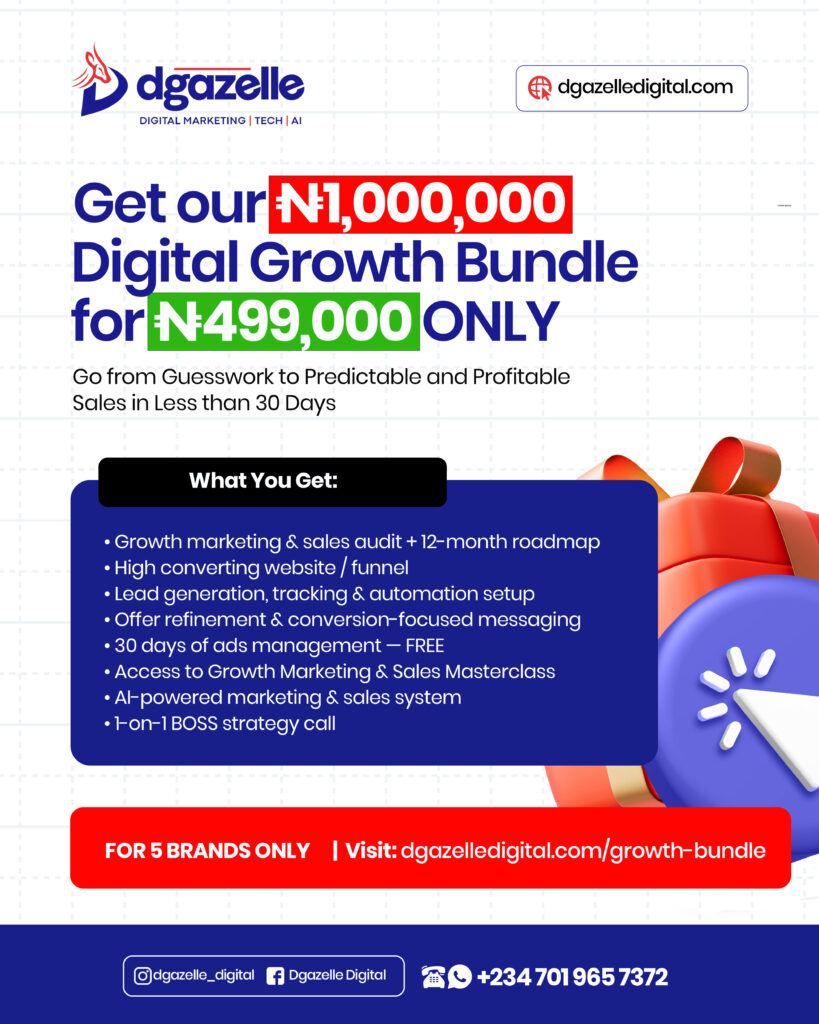
At Dgazelle Digital, we help businesses build growth-focused marketing strategies that align positioning, messaging, customer acquisition, and conversion systems for sustainable results.
If you would like to receive more insights on marketing strategy, business growth, and building systems that scale, we invite you to join our email community by submitting your email in the box below.