Ask ten Nigerian business owners what branding is and nine of them will describe a logo.
A few of the more design-savvy ones will mention colours and fonts. Some will talk about a “brand identity package” they paid a designer to create — the logo in five formats, a colour palette, a pattern, maybe a brand guide nobody has opened since the day it was delivered.
And then they will wonder why, despite having all of that, their business still struggles to stand out. Why clients still choose competitors. Why their marketing doesn’t seem to land. Why they keep competing on price even when they know their service is better.
The answer is almost always the same: what they have is not a brand. It is a logo. And there is a difference between the two that is worth understanding clearly — because it changes everything about how you build a business that attracts clients, commands premium pricing, and grows without depending entirely on word of mouth.
What a Brand Actually Is
A brand is not what you say about your business. It is what other people think, feel, and say about it when you are not in the room.
It is the immediate association that forms in someone’s mind when they hear your business name. The emotion that arises when they encounter your content. The expectation they bring to their first interaction with you. The story they tell someone else when they refer you.
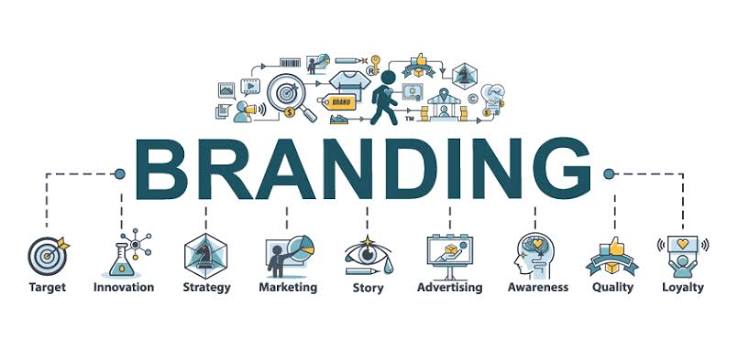
All of that — the perception, the feeling, the expectation, the story — is your brand. The logo is simply one small visual signal within it. The colours are a memory cue. The fonts are a consistency tool. None of them are the brand itself.
This distinction matters because it changes where you invest your attention. Building a logo is a design project. Building a brand is a strategic one — and it requires a fundamentally different kind of thinking.
Why Branding Matters More Than Most Nigerian Business Owners Realise
There is a belief, common among Nigerian entrepreneurs, that branding is for big companies. That it is a luxury reserved for organisations that have already achieved a certain scale — the MTNs, the Dangotes, the GTBanks. That for a small or medium business trying to grow, the priority is sales, not brand.
This belief is expensive.
Here is what a strong brand actually does for a business at any size:
It makes your marketing more effective. Every naira you spend on advertising produces better returns when it is reinforcing a clear, consistent brand message. Ads work harder for businesses people already recognise and trust. The same ad from a well-branded business and an unbranded one will produce dramatically different results with identical targeting and spend.
It reduces price sensitivity. Clients who buy on price alone have no loyalty. They will leave the moment a cheaper option appears. Clients who buy because they believe in your brand — because they trust your expertise, identify with your values, and feel that your business understands them — are far less sensitive to price and far more likely to stay, repeat, and refer.
It attracts better clients. A clearly positioned brand with a strong point of view naturally attracts clients who are aligned with how you think and work — and repels clients who are not a good fit. This sounds counterintuitive but it is one of the most liberating outcomes of intentional branding. Fewer difficult clients, more of the right ones.
It builds compounding value over time. Every touchpoint your brand has with the market — every piece of content, every client interaction, every referral conversation — either builds or erodes brand equity. A business that manages this intentionally accumulates trust and recognition that becomes increasingly difficult for competitors to displace.
The Most Common Branding Mistakes Nigerian Businesses Make
Confusing branding with design
This is the most pervasive mistake. A business hires a graphic designer, gets a logo and a colour palette, and considers the branding done. The design may be beautiful. But without the strategic foundation beneath it — the positioning, the messaging, the defined audience, the articulated values — the design is decoration on a building with no architectural plan.
Design is the expression of a brand. It is not the brand itself. The strategy comes first. The design serves the strategy.
Trying to appeal to everyone
A brand that tries to speak to every possible client ends up resonating with none of them. The fear of narrowing down — of saying “we are specifically for this type of client in this situation” — causes Nigerian businesses to produce brand messaging so broad and generic that it lands nowhere.
The most powerful brands in any market are defined as much by what they are not as by what they are. Clarity about who you serve, who you don’t, and why makes your brand sharper, more memorable, and more magnetic to the right clients.
Inconsistency across touchpoints
A brand is experienced across dozens of touchpoints: the website, the social media, the proposals, the emails, the phone calls, the invoices, the way the phone is answered, the experience of working with the team. When these touchpoints send inconsistent signals — different tones, different visual styles, different levels of quality — the brand impression is fragmented.
Clients cannot form a clear, confident perception of a business that presents itself differently in every context. Consistency is not boring. It is trustworthy. And trust is the ultimate currency of a strong brand.
Copying competitors
It is tempting, especially for newer businesses, to model their brand on what the most successful players in their market are doing. The result is a market full of businesses that look, sound, and feel the same — competing entirely on price because there is no other meaningful differentiator.
A strong brand is built on what is genuinely distinctive about your business: your specific methodology, your particular point of view, the specific type of client you serve exceptionally well. These things cannot be copied because they belong specifically to you. Build from those, not from what your competitors are doing.
Treating branding as a one-time project
Brands evolve. Markets change. Client expectations shift. The businesses whose brands remain strong over time are the ones that treat branding as an ongoing practice — regularly revisiting their positioning, refining their messaging, ensuring that how they present themselves in the market continues to reflect who they are and what they stand for.
A brand built in 2019 and never touched since is almost certainly out of step with where the market is today.
The Strategic Foundation Every Nigerian Business Brand Needs
Before any logo is designed or colour palette chosen, a strong brand requires clarity on five foundational questions.
Who are we for, specifically? Not every business owner. Not every consumer. A specific type of person in a specific situation with specific needs. The more precisely you can describe this person, the more clearly you can build a brand that speaks directly to them.
What problem do we solve — and how do we solve it differently? Every market has multiple solutions to every problem. What makes yours distinct? This is not about features — it is about the specific way you approach the problem, the specific outcome you produce, the specific experience of working with you that is different from the alternative.
What do we stand for? The values that shape how decisions are made inside the business, how clients are treated, and what you are willing and unwilling to do in pursuit of growth. These values, when articulated clearly and demonstrated consistently, become the character of the brand — the thing that makes people say “they are not like the others.”
What is our voice? How does the brand communicate? Direct or gentle? Technical or conversational? Formal or warm? The tone of every piece of communication — from a proposal to a social media caption to a client email — should reflect a consistent voice that feels distinctly yours.
What is our promise? The specific commitment you make to every client — the outcome they can expect, the experience they will have, the standard you hold yourself to. This promise, kept consistently, is what turns clients into advocates.
What Strong Branding Looks Like in the Nigerian Market
It looks like a professional services firm that commands fees three to five times the market average because every touchpoint of the brand experience — from the website to the proposal to the onboarding call — communicates a level of sophistication and care that justifies the premium.
It looks like a real estate company that gets more referrals than any of its competitors because its brand has become synonymous with transparency and reliability in a market where those qualities are rare — and that association is reinforced at every client interaction.
It looks like a digital marketing agency that attracts clients without running ads for itself, because its content, its case studies, and its visible point of view have built a reputation that makes the right clients seek it out rather than the other way around.
In each case, the brand is doing commercial work — attracting the right clients, commanding the right prices, building the kind of reputation that sustains growth independent of any single marketing campaign.
The Relationship Between Branding and Marketing
Branding and marketing are not the same thing — but they are inseparable.
Marketing is what you do to reach people. Branding is what those people find when you reach them. Marketing generates attention. Branding determines whether that attention converts into trust, and whether that trust converts into a client relationship.
This is why marketing without branding is expensive and inefficient. Every campaign you run, every ad you place, every piece of content you publish is either building brand equity or dissipating it. Without a clear brand foundation — defined positioning, consistent messaging, distinctive voice — your marketing is producing impressions without meaning. People see you, but they don’t know what you stand for. They notice you, but they can’t remember you clearly.
Invest in the brand first. Then pour marketing fuel on it.
The Bottom Line
Branding is not a luxury. It is the strategic foundation on which everything else in your marketing and sales process either stands or struggles.
The Nigerian businesses that grow consistently, attract better clients, command better prices, and build genuine market presence are not always the ones with the biggest marketing budgets. They are the ones with the clearest, most consistent, most distinctively human brands.
That clarity is available to any business willing to do the strategic work — to get honest about who they are for, what they stand for, and what makes them genuinely different from every other option in their market.
At Dgazelle Digital, brand strategy is the foundation of everything we build — because a marketing system built on a weak brand is a machine that works harder for less. We help Nigerian businesses define their positioning, develop their messaging, and build a brand that does commercial work every day.
If your business is ready to stop looking like everyone else in your market, let’s start there.