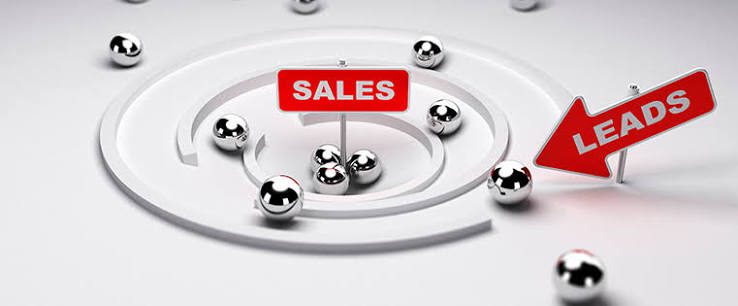
Generating leads can feel like the hardest part of marketing.
You invest in advertising, create content, build your social media presence, optimize your website, and eventually people start reaching out.
Then something unexpected happens.
The leads come in, but sales don’t increase proportionally.
Some prospects stop responding. Others ask for your price and disappear. Some say they are interested but never make a decision. Your sales team follows up, but many opportunities eventually go cold.
At this point, it is easy to conclude that the leads are bad.
But sometimes, the real problem is not lead generation.
It is what happens after the lead arrives.
A Lead Is an Opportunity, Not a Sale
One of the biggest mistakes businesses make is treating every new lead as if they are already a potential customer ready to buy.
In reality, leads exist at different stages of awareness and buying intent.
Someone may have discovered your business for the first time. Another person may understand their problem but be comparing different solutions. Someone else may already know what they want and simply need reassurance before making a purchase.
These people should not all receive the same message.
When businesses treat every lead identically, they often push prospects toward a sale before enough trust or understanding has been established.
That creates resistance.
The Five Reasons Leads Don’t Convert
1. The Lead Doesn’t Fully Understand the Value
A prospect may be interested in your offer without understanding why they should pay for it.
If your sales conversation focuses primarily on features, deliverables, or technical details, the prospect may struggle to connect the offer to their actual business problem.
Customers are ultimately interested in outcomes.
They want to know what changes after they buy.
Will they save time? Generate more sales? Reduce costs? Improve efficiency? Solve a recurring problem?
The clearer the connection between your offer and the customer’s desired outcome, the easier it becomes to justify the purchase.
2. There Isn’t Enough Trust
Interest does not automatically create confidence.
A prospect can believe that they need your service and still hesitate because they are unsure whether your business can deliver.
This is particularly important for expensive or high-consideration purchases.
Customers may want to see testimonials, case studies, reviews, demonstrations, previous results, guarantees, credentials, or other forms of proof before they commit.
If your marketing generates interest but your sales process provides little evidence, prospects are left to make a decision based largely on promises.
And promises alone are often not enough.
3. Your Follow-Up Process Is Weak
Many businesses follow up once or twice and assume that an unresponsive prospect is no longer interested.
But buying decisions rarely happen on a predictable schedule.
A prospect may be interested but distracted. They may need to discuss the purchase with a business partner. Their budget may not be available yet. They may simply need more information before making a decision.
Without a structured follow-up process, these prospects disappear.
Effective follow-up is not about repeatedly asking, “Are you ready to buy?”
It is about continuing to provide relevant information, answering objections, demonstrating value, and staying connected until the prospect is ready to make a decision.
4. Your Sales Process Creates Too Much Friction
Sometimes customers want to buy but the process makes buying unnecessarily difficult.
Perhaps they have to send multiple messages to get basic information.
Maybe the payment process is confusing.
Perhaps your sales team takes too long to respond.
Maybe there are too many steps between expressing interest and completing a purchase.
Every additional point of friction creates another opportunity for the prospect to abandon the process.
A good sales system should make the next step obvious.
If someone is ready to move forward, they should not have to figure out how.
5. You’re Generating the Wrong Leads
Of course, sometimes the problem really is lead quality.
If your marketing is attracting people who cannot afford your offer, do not need your solution, or do not fit your target market, your sales team will struggle regardless of how good the sales process is.
This is why marketing should not focus exclusively on generating the highest possible number of leads.
The goal should be to generate qualified opportunities.
Ten prospects who genuinely need your solution can be more valuable than 100 people who simply clicked an advertisement.
Marketing and Sales Need to Work Together
Another major reason businesses struggle with lead conversion is the disconnect between marketing and sales.
Marketing may promise one thing while the sales team communicates something completely different.
The advertisement might attract customers with a particular offer, but by the time they speak to sales, the offer has changed.
Or marketing may optimize for cheap leads without considering whether those leads have genuine purchase intent.
This creates a gap between customer expectations and the actual sales experience.
Marketing and sales should therefore share information.
The sales team should tell marketing which objections prospects raise, which messages attract serious buyers, and why deals are being lost.
Marketing can then use that information to improve campaigns, content, landing pages, and offers.
The result is a more connected customer journey.
Your Conversion Rate May Be the Biggest Growth Opportunity
Businesses often respond to low sales by trying to generate more leads.
But before increasing your marketing budget, look at your existing conversion rate.
Suppose you generate 200 leads and convert 10 into customers.
Your lead-to-customer conversion rate is 5%.
If you simply generate another 200 leads without improving the sales process, you may continue experiencing the same conversion problem.
But if you improve your messaging, follow-up, offer, sales process, and customer journey and increase conversion from 5% to 10%, those same 200 leads now produce 20 customers.
You have doubled the number of customers without doubling your lead-generation budget.
This is why conversion optimization deserves as much attention as lead generation.
Build a System Instead of Relying on Individual Effort
A predictable sales process should not depend entirely on one salesperson remembering who to call or what to say.
Businesses need systems.
That could include:
A clear qualification process for new leads
Defined sales stages
Standardized follow-up sequences
CRM tracking
Objection-handling frameworks
Testimonials and case studies
Clear offers and pricing structures
Automated reminders and nurturing emails
Regular analysis of conversion rates
These systems create consistency.
They also make it easier to identify exactly where prospects are dropping out of the buying journey.
The Goal Is Not More Leads. It Is More Revenue From the Right Leads.
Lead generation will always be an important part of growth.
But leads are only valuable when they move through a system that can convert them.
If your business is generating inquiries but sales remain inconsistent, don’t immediately increase your advertising budget.
First, examine what happens after someone becomes interested.
Is the value clear?
Is there enough trust?
Is the follow-up consistent?
Is the sales process simple?
Are you attracting the right audience?
Are marketing and sales aligned?
These questions can reveal opportunities that simply generating more leads will never solve.
Finally
A healthy growth system does not stop at generating attention.
It moves people from awareness → interest → trust → decision → purchase → retention.
When these stages work together, every marketing naira has the potential to produce more value.
At Dgazelle Digital, we help businesses build growth-focused marketing and sales systems that connect lead generation, conversion, customer acquisition, and retention—so growth becomes more structured, measurable, and sustainable.
If you’d like to receive more practical insights on marketing, sales, lead generation, conversion, and business growth, we invite you to join our email community by submitting your email in the box below.