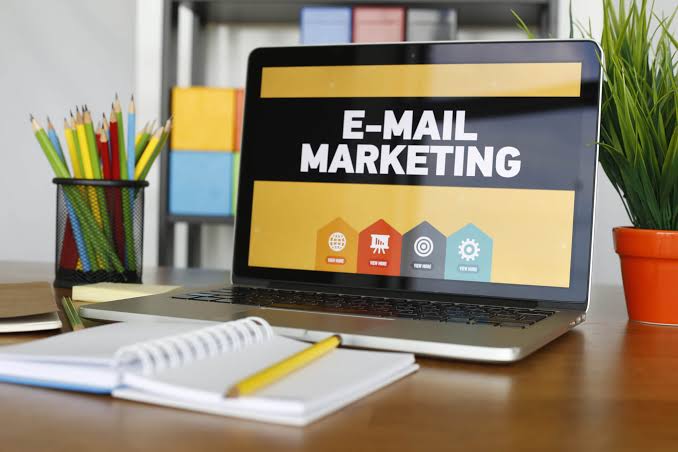
Every few years, someone declares that email marketing is dead.
They said it when Facebook took off. They said it again when Instagram exploded. They’re saying it now with WhatsApp Business and short-form video dominating the conversation. And every single time, the data says the same thing: email is not dead. It is quietly outperforming almost every other digital marketing channel available to business owners today.
For Nigerian businesses specifically, email marketing remains one of the most underutilised and highest-return activities in digital marketing. The businesses that understand this and act on it are building customer relationships and generating revenue in a way that no algorithm change, no platform policy update, and no ad cost increase can touch.
This article explains why email still works, how it works for Nigerian businesses specifically, and what you need to start doing right now to make it work for yours.
The Problem With Renting Your Audience
Before we talk about email, we need to talk about ownership.
Every follower you have on Instagram, every fan on your Facebook page, every connection on LinkedIn — you don’t own any of them. You are renting access to those people from a platform that can change its rules at any time.
Instagram can reduce your reach overnight. Facebook can shut down your page without warning. A new algorithm update can make your content invisible to 90% of the people who chose to follow you. It has happened to businesses that built their entire marketing strategy on a single platform, and it will keep happening.
Your email list is different. Those are people who gave you their contact information directly and said, explicitly, “I want to hear from you.” No platform owns that relationship. No algorithm stands between you and their inbox. If you send an email, it arrives. What happens next is between you and the reader — and no one else.
For Nigerian business owners who have experienced the volatility of social media reach, the inconsistency of ad results, or the frustration of building an audience that suddenly becomes harder to reach, email is the most stable foundation you can build your marketing on.
What the Numbers Actually Say
The global average return on email marketing investment is ₦36 earned for every ₦1 spent. That figure has been consistent for years across industries, company sizes, and markets. No other digital marketing channel comes close on a cost-to-return basis.
Open rates for well-managed email lists typically sit between 20% and 40%. Compare that to the organic reach of a Facebook post — which for most business pages sits below 5% — and the difference becomes stark. When you send an email to your list, roughly one in three people will open it. When you post on Facebook, roughly one in twenty of your followers will see it.
Email also drives purchasing decisions. Studies consistently show that people are more likely to make a purchase from a marketing email than from a social media post. The inbox is a different psychological space from a social media feed. People go to their inbox with intention. They go to social media to scroll. That difference matters enormously for conversion.
Why Nigerian Business Owners Underestimate It
There are a few reasons email marketing is underutilised in Nigeria, and most of them come down to misconceptions rather than reality.
“Nobody reads emails in Nigeria.” This is simply not true. Nigerian professionals, business owners, and educated consumers check their email daily — often multiple times a day. The inbox is where invoices arrive, where bank alerts land, where professional communication happens. It is not an ignored channel. It is a trusted one.
“I don’t have a list.” Most business owners do — they just haven’t organised it. Past clients, enquiries that didn’t convert, contacts from networking events, people who have interacted with your business over the years. These people already have a relationship with your brand. They are the warmest audience you have, and they are sitting in a spreadsheet somewhere doing nothing.
“Email is too complicated to set up.” The tools available today make email marketing accessible to any business owner willing to spend a few hours learning them. Mailchimp, Brevo, and MailerLite all have free plans that handle everything a small or medium business needs — list management, templates, automation, and analytics. The technical barrier is lower than it has ever been.
“I don’t know what to send.” This is the most honest objection — and the one we’ll address directly below.
The Three Types of Emails Every Business Should Be Sending
Not all email marketing is the same. The businesses that get the best results from email understand the difference between three distinct types of email communication and use each one intentionally.
1. The Nurture Sequence
A nurture sequence is a series of automated emails sent to someone after they join your list — whether through a lead magnet, a webinar sign-up, a website form, or a direct invitation.
The purpose of a nurture sequence is not to sell immediately. It is to build trust. Over five to seven emails sent across one to two weeks, you introduce your brand, demonstrate your expertise, share proof of results, address common objections, and gradually move the new subscriber toward a purchasing decision.
A well-written nurture sequence works while you sleep. Someone signs up at 2am, and by the time you wake up, they have already received three emails that position you as the expert, share a relevant case study, and invite them to take the next step. That is leverage.
2. The Broadcast Email
A broadcast email is a one-time email sent to your entire list or a segment of it. New offer. New blog post. Event invitation. Industry insight. Product launch. Seasonal promotion.
Broadcast emails keep your business top of mind with people who already know you but may not have bought yet — or who bought before and could buy again. The frequency depends on your business and your audience, but a minimum of twice a month is enough to maintain presence without overwhelming your subscribers.
The most effective broadcast emails feel personal. They are written in plain language, from one person to another, about something genuinely relevant to the reader’s situation. They are not designed to look like a magazine layout. They are designed to be read.
3. The Re-engagement Email
Over time, every email list accumulates subscribers who have stopped opening your emails. This is normal. Life gets busy. Interests shift. But before you write these people off, a re-engagement sequence can recover a significant portion of them.
A re-engagement email is direct and honest. “We noticed you haven’t opened our emails in a while. We don’t want to keep sending you things you’re not interested in — but before we remove you from our list, we wanted to share one thing that might change your mind.” Then share your most valuable piece of content, your most compelling offer, or simply ask them directly whether they still want to hear from you.
The subscribers who re-engage from this sequence are often highly motivated buyers. The ones who don’t can be removed, which improves your deliverability and keeps your list healthy.
How to Build Your Email List From Scratch
If you have fewer than 500 people on your list — or no list at all — here is how to start building one today.
Start with who you already know. Compile every client you have ever worked with, every enquiry that didn’t convert, every business contact who has expressed interest in what you do. Email them personally and invite them to join your list. Tell them specifically what they’ll receive and why it’s worth their time. This first group is your foundation.
Create a lead magnet. A lead magnet is something valuable you give away in exchange for an email address. It should solve a specific, immediate problem for your ideal client. A checklist. A short guide. A template. A free audit. A webinar invitation. The more specific and useful the lead magnet, the more qualified the people who sign up for it.
Promote it consistently. Add your lead magnet to your social media bio. Mention it in your content. Put it on your website. Include it in your email signature. Every touchpoint where a potential client encounters your brand is an opportunity to invite them onto your list.
Make it easy to sign up. Don’t ask for more information than you need. A first name and an email address is enough to start. Every additional field you add reduces the number of people who complete the sign-up.
What to Actually Write in Your Emails
This is where most business owners get stuck — and where most generic advice fails them. “Provide value” is not a content strategy. Here is something more concrete.
Every email you send should do one of three things: teach something useful, share something credible, or offer something relevant. Usually the most effective emails do two of these at once.
Teach something useful. Pick one specific insight, tip, or framework from your area of expertise and explain it clearly. Not a broad overview — one thing, explained well. The reader should finish the email knowing something they didn’t know before, or seeing something they already knew in a new way.
Share something credible. A client result. A case study. A behind-the-scenes look at your process. A mistake you made and what it taught you. Evidence that you do what you say you do, and that it produces results.
Offer something relevant. When the timing is right — after you have built enough trust through teaching and sharing — make an offer. A consultation. A product. A service. A limited promotion. An offer that arrives after several valuable emails is received completely differently from an offer that arrives cold.
The ratio matters. For every email that makes a direct offer, you should have sent three to five that simply delivered value. That is the sequence that builds a list of people who look forward to hearing from you — and who buy when you ask them to.
The Mistakes That Kill Email Marketing Results
Buying a list. Purchased email lists are a waste of money and a reputational risk. The people on them did not ask to hear from you, which means your open rates will be terrible, your spam complaints will be high, and your sender reputation — which determines whether your emails land in inboxes at all — will deteriorate quickly. Build your list organically. It takes longer and it is worth it completely.
Sending without a strategy. Sending random emails whenever you remember to is not email marketing. It is noise. Every email should have a purpose, a specific audience, and a clear next step you want the reader to take. If you can’t articulate those three things before you hit send, the email isn’t ready.
Writing for the brand instead of the reader. The most common mistake in business email is writing emails about the company — announcements, updates, achievements — rather than about what is relevant and useful to the person reading. Your subscriber does not care about your company milestones. They care about their own situation. Write to that.
Ignoring the subject line. Your email does not exist if it is not opened. The subject line is the single most important element of any email you send, and it deserves more attention than most business owners give it. A great subject line is specific, curiosity-inducing, or directly relevant to a pain the reader is experiencing. “Our February Newsletter” is not a subject line. “The mistake that cost a Lagos business owner ₦4 million” is.
The Bottom Line
Social media will continue to evolve. Algorithms will keep changing. Ad costs will keep rising. Platforms will come and go.
Your email list will stay yours.
For Nigerian business owners who want a marketing channel that compounds over time, that reaches people directly and without interference, and that consistently outperforms other channels on return on investment — email marketing is not optional. It is foundational.
The businesses that build strong email lists today are the ones that will be least affected by whatever disruption comes next. They have an audience they own, a relationship they’ve built, and a channel they control.
At Dgazelle Digital, we build complete email marketing systems for Nigerian businesses — from list-building strategy and lead magnets to nurture sequences, broadcast calendars, and performance tracking. If your business does not have an email list working for it, that is a gap worth closing.