Every day, thousands of Nigerians open Google and type in exactly what they are looking for.
“Digital marketing agency Lagos.” “Interior designer Abuja.” “HR consulting firm Nigeria.” “Where to buy bulk fabric in Kano.”
Some of those searches describe exactly what your business does. The question is: when someone types that search, does your business appear — or does your competitor?
That question is what Search Engine Optimisation is about. And for Nigerian business owners who want to generate leads consistently without paying for every single click, SEO is one of the most important investments they can make in their digital presence.
This article explains what SEO actually is, how it works, and why your business needs it — in plain language, without jargon.
What SEO Actually Means
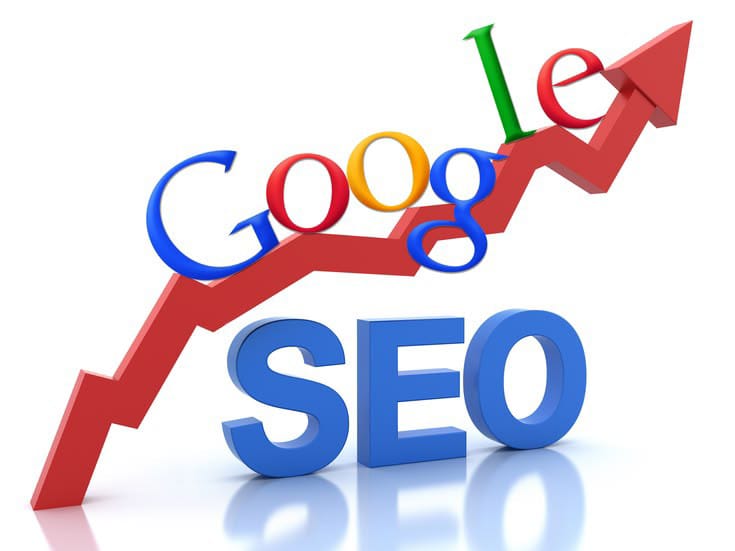
Search Engine Optimisation is the process of making your website and online content more likely to appear when people search for things related to your business.
When someone types a query into Google, the search engine scans billions of pages and decides — in a fraction of a second — which results to show and in what order. That decision is based on hundreds of factors: how relevant your content is to the search, how trustworthy your website appears, how well your pages are structured, how fast your site loads, and much more.
SEO is the work of understanding those factors and making deliberate improvements so that your business appears higher in those results — ideally on the first page, and ideally in the top three positions where the vast majority of clicks go.
The person who clicked on the first result didn’t get there by chance. Someone did the work.
Why the First Page Is the Only Page That Matters
Research is consistent on this point: over 90% of all clicks from Google searches go to results on the first page. The second page receives less than 5% of total traffic. Results beyond the third position on page one receive a rapidly diminishing share.
This means that if your business appears on page two or three of Google for a relevant search, you are effectively invisible to everyone searching for what you offer. They will not scroll to find you. They will click on whoever appeared at the top and work their way down from there.
For Nigerian business owners, this has a direct implication: if you are not investing in SEO, you are handing potential customers — people who are already searching for exactly what you do — to the competitors who are.
The Difference Between Paid and Organic Search
When you search for something on Google, you will often see results with a small “Sponsored” label at the top. These are paid advertisements — businesses paying Google to appear for that search term. Below those ads are the organic results: pages that appear because Google’s algorithm has determined they are the most relevant and trustworthy results for that query.
SEO is the work of earning those organic positions.
The fundamental difference between paid and organic search comes down to one thing: what happens when you stop paying.
With paid ads, the moment your budget runs out or you pause your campaign, your visibility disappears. You were renting space on the search results page, and when the rent stops, so does the presence.
With organic SEO, the content and authority you build accumulates over time. A page that ranks well today will continue to rank and bring traffic for months or years — without ongoing spend. The work you do today compounds. That is why SEO is often described as a long-term investment rather than a short-term expense.
How SEO Actually Works
SEO has three main components, and understanding each one helps you see why it requires a sustained, strategic approach rather than a one-time fix.
On-Page SEO
On-page SEO is everything that happens on your actual website — the content, the structure, and the technical elements that signal to Google what your pages are about and how useful they are.
This includes: the words on your pages and whether they match what your ideal clients are searching for; the headings and how they organise your content; the titles and descriptions that appear in search results; the speed at which your pages load; whether your site works properly on mobile devices; and the internal links that connect your pages to each other.
Most Nigerian business websites have significant on-page SEO problems — not because anyone was careless, but because most web designers are not trained in SEO and most business owners don’t know to ask for it.
Off-Page SEO
Off-page SEO refers to signals from outside your website that tell Google your business is credible and authoritative. The most important of these signals is backlinks — other websites linking to yours.
When a reputable website links to your content, Google interprets that as a vote of confidence. The more high-quality links pointing to your website, the more authority Google assigns to it — and the higher it tends to rank.
Building backlinks takes time and deliberate effort. It involves creating content worth linking to, building relationships with relevant publications and platforms, getting listed in credible directories, and earning mentions from other voices in your industry.
Technical SEO
Technical SEO is the foundation everything else sits on. It covers the structural elements of your website that affect how easily Google can find, read, and index your pages.
A technically sound website loads quickly, works on all devices, has no broken links, is structured in a way Google can navigate clearly, and sends the right signals about which pages matter most. A website with technical problems — even one with great content — will underperform in search because Google simply cannot read it properly.
What Keywords Are and Why They Matter
At the heart of SEO is the concept of keywords — the specific words and phrases people type into search engines when they are looking for something.
Understanding which keywords your ideal clients are using, and creating content that addresses those searches, is how you ensure that your website attracts the right visitors rather than random traffic.
Keywords fall into two broad categories that are useful to understand:
Short-tail keywords are broad, high-volume searches — “digital marketing,” “website design,” “real estate Lagos.” These terms are searched frequently, but they are also extremely competitive. Ranking for them is difficult for most businesses without significant time and resources.
Long-tail keywords are more specific, lower-volume searches — “digital marketing agency for schools in Lagos,” “affordable website design for small businesses Nigeria,” “how to generate leads for a logistics company.” These searches have fewer monthly searches, but the people making them know exactly what they want — which means they are closer to making a purchase decision, and your content is more likely to convert them.
For most Nigerian businesses starting their SEO journey, long-tail keywords are where the opportunity lies. The competition is lower, the intent is stronger, and ranking is achievable within a realistic timeframe.
Why Nigerian Businesses Have a Significant SEO Opportunity Right Now
Here is something that most business owners in Nigeria don’t realise: the SEO landscape for Nigerian-specific searches is remarkably underdeveloped.
The volume of internet users in Nigeria is growing rapidly. More Nigerians are searching Google for products, services, and solutions every day. But the volume of quality, locally-relevant content optimised for those searches has not kept pace.
This means there are thousands of high-intent searches — “HR consulting firm Lagos,” “event planning company Abuja,” “import financing Nigeria” — with almost no quality content competing for them. A business that creates well-optimised, genuinely useful content for these searches can rank on the first page of Google within months, not years.
The window for this advantage will not stay open indefinitely. As more Nigerian businesses invest in SEO, the landscape will become more competitive. The businesses that move now will build authority that becomes increasingly difficult for latecomers to displace.
How Long Does SEO Take to Work?
This is the most common question — and the answer requires honesty.
SEO is not a quick-win strategy. For a new website with no existing authority, realistic timelines for meaningful organic traffic look like this: initial improvements in three to four months, noticeable traffic growth in six to nine months, and significant, compounding results from twelve months onward.
This timeline discourages some business owners. But the framing matters. The question is not “how long before I see results” — it is “what will my organic traffic look like in two years if I start today versus if I wait another year?”
The businesses that rank at the top of Google for competitive Nigerian searches today did not get there recently. They started the work one, two, or three years ago. The best time to start was then. The second best time is now.
This is also why SEO and paid advertising work best together rather than as alternatives. Paid ads generate immediate traffic while SEO builds. By the time your organic rankings are generating consistent traffic, you have also gathered data from your ads about which keywords convert best — data that makes your SEO strategy sharper and more targeted.
What Good SEO Looks Like for a Nigerian Business
To make this concrete, here is what a well-executed SEO strategy looks like for a mid-sized Nigerian service business over twelve months.
In the first three months, the focus is on the foundation: fixing technical issues on the website, conducting thorough keyword research to identify the most valuable searches for the business, optimising existing pages for those keywords, and setting up proper analytics to track progress.
From months three to six, the focus shifts to content. A consistent publishing schedule of well-researched, genuinely useful articles targeting specific keyword clusters begins to build topical authority — the signal to Google that this website is a credible, comprehensive resource on a particular subject.
From months six to twelve, the focus expands to off-page authority: building quality backlinks, earning mentions from relevant Nigerian publications and directories, and doubling down on the content formats and topics that are already gaining traction.
By month twelve, a business that has executed this consistently will have a measurable organic traffic base, multiple first-page rankings for relevant searches, and a steady stream of inbound enquiries from people who found them through Google — without paying for a single click.
The Signs Your Business Needs SEO Attention Right Now
You need to take SEO seriously if:
- Your website receives very little or no traffic from Google search
- When you search for the services you offer in your city, your business does not appear on the first page
- You are spending heavily on paid ads because you have no organic traffic to fall back on
- A competitor who you know is not better than you consistently appears above you in search results
- You have a content strategy but no keyword strategy behind it — you are creating content without knowing whether anyone is searching for it
Any one of these is a signal. More than one is urgent.
Bottom Line?
SEO is not a technical luxury for large companies. It is one of the most practical, high-return marketing investments available to any Nigerian business with a website and an audience that uses Google — which, in 2025, is virtually every business and virtually every audience.
The business owners who invest in SEO today are building an asset. Every article that ranks, every page that attracts organic traffic, every backlink that builds authority — these compound over time into a lead generation system that works continuously, without a media budget behind it.
The ones who wait are paying for every visitor, every enquiry, every lead. That is not a sustainable growth strategy.
At Dgazelle Digital, we build and execute SEO strategies for Nigerian businesses from the ground up — keyword research, on-page optimisation, content strategy, technical audits, and link building — everything required to move your business from invisible to unmissable in search.
If your website is not working as hard as it should, let’s change that.