There is a conversation that happens in Nigerian business circles with depressing regularity.
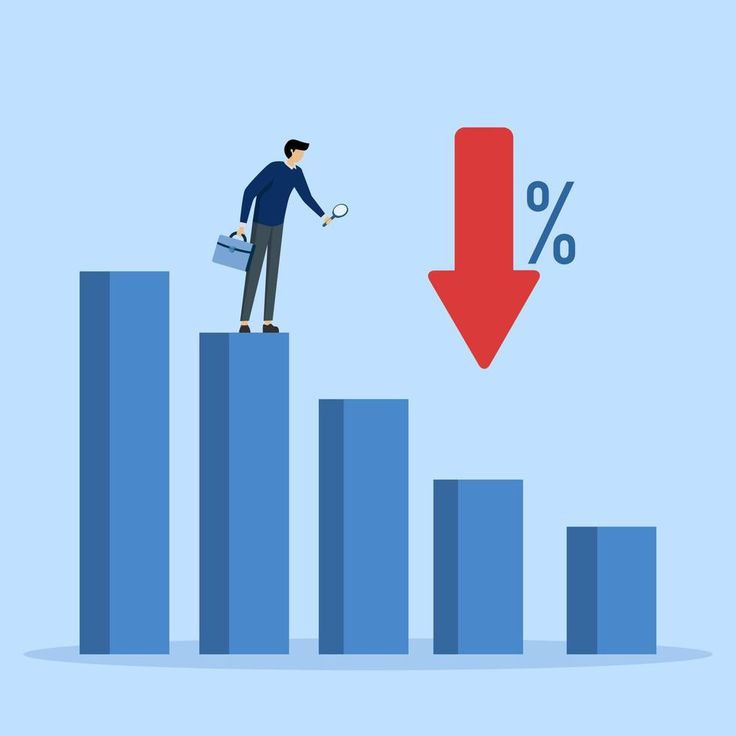
Someone spent ₦200,000 on Facebook ads. Or ₦500,000. Sometimes more. They ran the campaign for a month, watched the numbers — reach, impressions, clicks — and at the end of it had almost nothing to show in terms of actual customers or revenue.
Their conclusion: “Ads don’t work in Nigeria.”
The real conclusion should be: “The way we ran those ads didn’t work.” Because the problem is almost never the platform, and it is almost never Nigeria. The problem is a set of specific, repeatable mistakes that drain ad budgets without producing results — mistakes that are entirely avoidable once you know what they are.
This article names them directly.
Mistake One: Spending Money Before the Foundation Is Ready
The single most expensive mistake a Nigerian business owner can make in digital advertising is running ads before the infrastructure to convert that traffic exists.
An ad is not a marketing strategy. It is an accelerant. It takes whatever you already have and pours fuel on it. If what you have is a weak website, an unclear offer, and no follow-up system — the ad accelerates all of that too. You get more visitors who don’t enquire, more clicks that don’t convert, and a faster rate of burning through your budget with nothing to show for it.
Before you spend a single naira on paid advertising, three things must be in place:
A destination that converts. The page someone lands on after clicking your ad must be built specifically to move them toward one action. Not your general website homepage. A focused landing page with a clear headline, relevant social proof, and a single call to action.
A clear, specific offer. Not “our services.” Something concrete: a free consultation, a specific package, a defined outcome for a defined price. The more specific the offer, the easier it is to write an ad for it — and the easier it is for the right person to say yes.
A follow-up system. Most people who click your ad are not ready to buy immediately. They are researching, considering, comparing. If you have no mechanism to capture their contact and follow up — an email sequence, a WhatsApp opt-in, a retargeting audience — those clicks are gone forever. You paid to bring them in and had no way to continue the conversation.
Running ads without these three things in place is not digital marketing. It is an expensive experiment with a predictable outcome.
Mistake Two: Targeting Everyone
One of the most common things we hear from Nigerian business owners who have run ads before is: “I targeted a broad audience because I didn’t want to miss anyone.”
This instinct is understandable. And it is wrong.
The broader your audience, the less relevant your ad is to any individual within it. And the less relevant your ad, the lower your click-through rate, the higher your cost per click, and the worse your overall return.
More importantly: traffic is only valuable when it comes from the right people. One hundred clicks from business owners who genuinely need your service is worth more than ten thousand clicks from a broad audience who mostly don’t.
Precise targeting is not about excluding people arbitrarily. It is about spending your budget on the people most likely to convert — which means lower cost per lead, higher quality enquiries, and better return on every naira spent.
The discipline of defining your audience narrowly — and writing copy that speaks directly to that specific person’s situation — is one of the most impactful improvements most Nigerian ad campaigns can make.
Mistake Three: Sending Ad Traffic to the Wrong Place
This follows directly from the first mistake, but it deserves its own section because it is so consistently the cause of wasted ad spend.
When someone clicks your ad, where do they go?
If the answer is your homepage, you have a problem. Your homepage is designed to serve multiple audiences with multiple intentions. It has navigation options, multiple sections, multiple calls to action. For someone who clicked a specific ad with a specific message, landing on a page that immediately presents them with fifteen options is disorienting — and most of them will leave within seconds.
A well-run ad campaign sends traffic to a dedicated landing page — one that continues the exact conversation the ad started, presents one clear offer, and asks for one specific action. The message of the ad and the message of the landing page should match so precisely that the visitor feels they are in exactly the right place.
This alignment — called message match — is one of the most reliable levers for improving conversion rates without changing anything about the ad itself. Nigerian businesses that fix this one thing routinely see their lead volume double or triple from the same ad spend.
Mistake Four: Running Ads Without Testing
Many Nigerian business owners treat their first ad as their final ad. They write one version of the copy, choose one image, set one audience, and run it for a month. If it doesn’t work, they conclude that ads don’t work for them.
But the first version of any ad is a hypothesis. You are guessing — based on your knowledge of your audience, your offer, and your market — what will resonate. Some of those guesses will be right. Many will be partially wrong. A few will be entirely wrong.
The businesses that make paid advertising profitable are the ones that test systematically. Different headlines to find out which stops the scroll. Different body copy to find out which builds desire most effectively. Different images or video formats. Different calls to action. Different audience segments.
Testing does not require a large budget. It requires structure and patience. Run two versions of an ad simultaneously, with one variable changed. Give each version enough budget and time to gather meaningful data. Kill the loser. Iterate on the winner. Repeat.
Over three to six months of disciplined testing, this process produces an ad that has been refined by actual market feedback — not assumptions. And that ad, by definition, performs better than anything that could have been written from guesswork alone.
Mistake Five: Measuring the Wrong Things
Reach. Impressions. Clicks. Cost per click.
These metrics are available in every ads dashboard, and they are seductive because they move. They give the appearance of progress. A campaign that reached 50,000 people and generated 3,000 clicks feels like it did something.
But reach does not pay salaries. Impressions do not close deals. The only metrics that matter for a business running ads are: how many qualified leads did this produce, what did each lead cost, and how many of those leads converted into paying customers?
If you cannot answer those three questions about your current or most recent ad campaign, you do not have enough information to know whether the campaign worked. You have data, but not insight.
Setting up proper tracking — connecting your ads to a system that can tell you not just who clicked but who enquired and who bought — is not optional. It is the difference between managing a marketing investment and guessing with money.
Mistake Six: Stopping Too Early
Paid advertising on platforms like Facebook and Instagram is powered by machine learning. The algorithm needs data — specifically, data about who is converting — to optimise your campaign delivery over time.
In the early days of a campaign, the algorithm is learning. It is testing your ad against different people within your target audience to find the ones most likely to respond. This learning phase typically takes one to two weeks and a minimum number of conversions before the algorithm has enough data to work efficiently.
Many Nigerian business owners see low results in the first week, panic, and either change everything or stop the campaign entirely. In doing so, they reset the learning phase — or abandon it right before it starts to optimise.
Patience in the early phase of a campaign is not passivity. It is allowing the system to do what it is designed to do. The intervention point is not day five. It is after the learning phase is complete and you have real data to act on.
Mistake Seven: No Strategy for the Leads You Do Generate
This one is quietly responsible for an enormous amount of wasted Nigerian ad spend, and it rarely gets discussed.
Even when an ad campaign generates leads — enquiries, DMs, form submissions — many businesses fail to convert those leads into customers. Not because the leads were bad, but because there was no structured follow-up process.
The lead came in. Someone was going to call them back. The call didn’t happen for two days. By then the prospect had moved on, found an alternative, or simply gone cold.
In competitive markets, speed and consistency of follow-up is a significant competitive advantage. Research consistently shows that the probability of converting a lead drops dramatically after the first hour. A lead contacted within five minutes is far more likely to convert than one contacted five hours later.
Beyond speed, the quality of the follow-up matters. A WhatsApp message that says “Hello, we saw your enquiry” is not a follow-up. A message that references the specific thing they enquired about, acknowledges their situation, and clearly states the next step is.
Your ads can only deliver the lead to your door. What happens next is your responsibility — and it is where most Nigerian businesses are quietly losing the revenue their ad spend was supposed to generate.
What a Profitable Ad Campaign Actually Looks Like
To summarise everything above, here is what a well-structured Nigerian ad campaign looks like in practice:
The offer is specific and valuable enough that the right person immediately wants it. The landing page continues the ad’s message and asks for one clear action. The targeting is narrow enough that most people who see the ad are genuinely relevant. The copy speaks directly to a specific pain or desire the target audience is experiencing right now. There are at least two versions of the ad running simultaneously to generate comparison data. Tracking is set up to measure leads and conversions, not just clicks. The follow-up system is ready before the ads go live — not built after the leads start coming in. The campaign is given enough time and budget to exit the learning phase before major decisions are made about its performance.
None of these are complicated. But each one requires deliberate attention before the first naira is spent.
In essence…
Nigerian businesses are not losing money on ads because digital advertising doesn’t work in Nigeria. They are losing money because they are running campaigns without the foundations, the strategy, or the measurement systems that make advertising profitable.
The solution is not to spend more. It is to spend smarter — with clarity on the audience, the offer, the destination, the follow-up, and the metrics that actually matter.
At Dgazelle Digital, we build and manage paid advertising campaigns for Nigerian businesses end-to-end — from strategy and copy to landing pages, audience targeting, testing frameworks, and lead follow-up systems. Every element of the campaign is built to work together, because a great ad connected to a weak funnel is still a waste of money.
If your ad budget is leaving without bringing customers back, let’s look at why — and fix it.