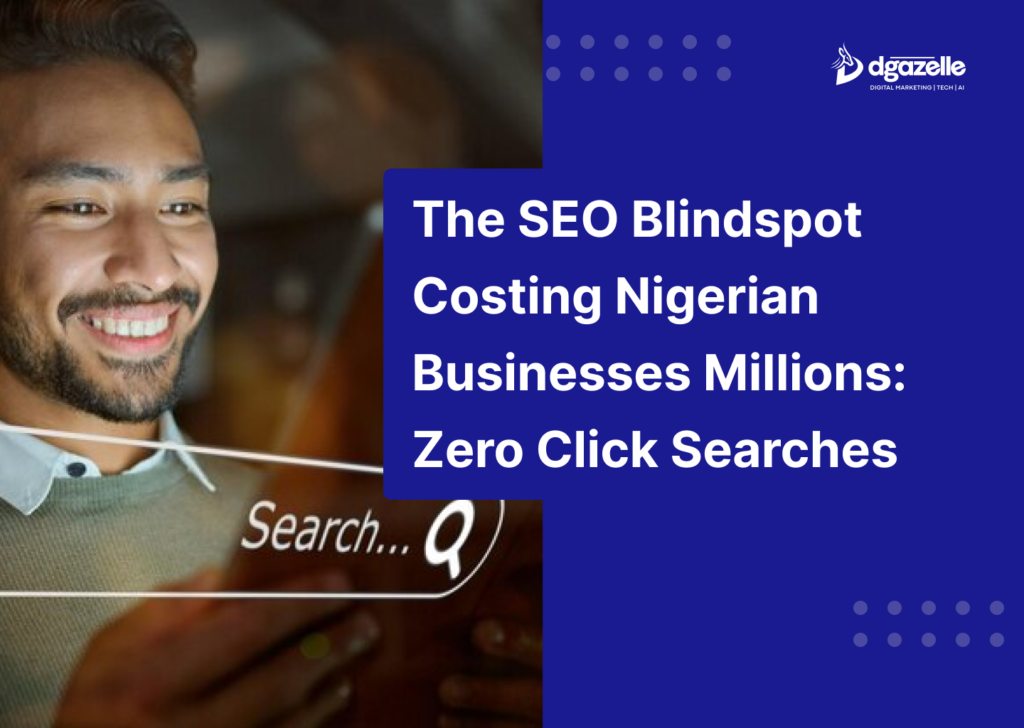
The way people search online is changing, and Nigerian businesses that rely on SEO to drive traffic and sales may be losing out—without even realizing it. The culprit? Zero click searches.
Every day, millions of Nigerians turn to Google for answers. But instead of clicking on a website, they get their answers directly on the search engine results page (SERP) and move on. No website visits. No conversions. No sales.
If your business depends on organic search traffic, this trend could be silently costing you leads and revenue. But the good news? With the right SEO strategy, you can turn zero click searches into an opportunity rather than a loss.
What Are Zero Click Searches?
Zero click searches happen when users find the information they need directly on Google’s SERP without clicking on any website.
For example, if someone searches for today’s exchange rate or “best phones under ₦100,000,” Google might display the result instantly—pulling data from third-party sources. You’ve likely done this yourself when checking football scores, flight statuses, or definitions.
While zero click searches improve user experience, they reduce website traffic—which means fewer potential customers, less ad revenue, and missed sales opportunities. And with 62.41% of searches now ending with zero clicks (up from 54.11% in 2017), businesses need to adapt fast.
The big question is: How do you stop losing traffic to zero click searches—and turn them in your favor? But first why is it happening
Why Zero Click Searches Are Growing
Zero click searches aren’t just a passing trend—they’re becoming the new normal, and businesses that rely on organic traffic need to take action.
A study by SparkToro’s Rand Fishkin, using Datos’s clickstream analysis, revealed that 58.5% of U.S. searches and 59.7% of European searches resulted in zero clicks. The same pattern is growing in Nigeria as search engines evolve.
So, why are clicks declining?
1. Google’s Own Features Are Taking Over
Google now answers most searches directly on the results page with AI Overviews, featured snippets, and knowledge panels. Instead of clicking on a website, users get instant responses—costing businesses valuable traffic. Beyond that, Google is sending more traffic to its own platforms, like:
- YouTube (for videos and tutorials)
- Google Flights (for travel bookings)
- Google Maps (for local business searches)
2. People Are Searching Beyond Google
Websites aren’t just competing with Google anymore. Consumers are finding content on:
- Social media – Nigerians now turn to TikTok, X (formerly Twitter), and Instagram for news, reviews, and recommendations.
- AI tools – Platforms like ChatGPT and Perplexity are emerging as alternative search engines.
- YouTube – As the world’s second-largest search engine, more users prefer video explanations over text.
- Amazon & Jumia – Nigerians searching for products often skip Google and go straight to e-commerce platforms.
How Nigerian Businesses Can Win in the Age of Zero Click Searches
How users find answers directly on search engine results pages (SERPs) without clicking through to a website—are changing the SEO procedure. Businesses must adapt by focusing on structured data, local search, and multi-platform visibility to maintain traffic and brand awareness.
Zero click searches aren’t going away, but the right SEO strategy ensures your business still gets noticed and converts visitors into customers. Need an SEO strategy tailored to your business? Let’s talk!
1. Implement Schema Markup
Schema markup is structured data that helps search engines and AI-driven models understand and display your content effectively. By implementing the right schema types, you improve your chances of appearing in zero click search results like featured snippets and product listings.
Here are key schema types to prioritize:
- Product Schema – Enhances visibility for e-commerce pages by displaying product details such as price, availability, and reviews directly in search results.
- Review Schema – Highlights customer feedback and ratings, improving credibility and encouraging engagement.
- Organization Schema – Provides essential business details, increasing brand visibility in knowledge panels.
- Local Business Schema – Helps local businesses rank better in local search results and map packs by providing location-based information.
Using schema markup increases the likelihood of Google recognizing and surfacing your content in prominent SERP positions.
2. Strengthen Local SEO
For businesses with a physical presence or service area, optimizing for local search is crucial. Local SEO strategies help brands appear in search features such as map packs, knowledge panels, and local featured snippets.
Here are key actions to improve local search visibility:
- Optimize Your Google Business Profile – Ensure your listing is complete with accurate business hours, services, images, and descriptions.
- Encourage High-Quality Reviews – Positive customer reviews boost credibility and influence rankings in local search results.
- Ensure Consistent Name, Address, and Phone (NAP) Citations – Having the same business details across directories improves trust with search engines.
- Build Local Backlinks – Acquiring links from reputable local sources strengthens your authority and increases search rankings.
By focusing on local SEO, businesses can improve their chances of being featured in high-visibility SERP positions for location-based searches.
3. Track and Adjust Your SEO Strategy
To measure the effectiveness of your zero click search strategy, continuous monitoring is essential. Rank tracking tools provide insights into performance, showing whether content adjustments are needed.
Using a tool like Ubersuggest’s Rank Tracking, businesses can:
- Import a list of keywords they want to track
- Monitor ranking changes over time
- Identify opportunities to optimize further based on performance data
If rankings decline or stagnate, revisiting content strategies—such as improving clarity, updating information, or adding structured data—can help regain visibility.
4. Expand Beyond Google with Search Everywhere Optimization
Search behavior is evolving, with users increasingly seeking answers on multiple platforms beyond traditional search engines. To maintain visibility, businesses must optimize for different channels, including:
- Traditional Search Engines – Google, Bing, and other search engines remain essential, requiring ongoing keyword optimization and content updates.
- Social Media Platforms – More people now search on platforms like TikTok, Instagram, and X (formerly Twitter), making content optimization for these channels important.
- AI-Powered Search – AI chatbots and search assistants, such as ChatGPT, Perplexity, and Gemini, are becoming prominent sources of information. Optimizing for AI-driven search involves enhancing content authority and structuring data for easy AI interpretation.
- E-commerce Search – Product discovery is shifting to platforms like Amazon, Jumia, and Konga, requiring businesses to refine product descriptions, reviews, and pricing strategies for maximum visibility.
By diversifying search presence, businesses can reach audiences across multiple platforms, reducing dependence on traditional organic search traffic.
Conclusion: Future-Proof Your SEO with Smart Strategies
As zero click searches continue to grow, businesses must embrace a multi-faceted SEO approach. Implementing structured data, optimizing for local search, tracking performance, and expanding search visibility across platforms will ensure continued success in an evolving digital world. By adapting to these changes now, businesses can maintain relevance, increase brand awareness, and drive meaningful engagement despite the shift in search behavior.
Ready to drive more organic traffic? Dgazelle’s proven SEO strategies will improve your rankings and boost conversions. Let’s elevate your website today